- Transmission fluid lubricates and cools automatic transmissions, powering hydraulics; replacement prevents failure.
- Use specific oil for automatics; manuals may use engine oil, hypoid, or manual gearbox oil.
- In Romania market many options; always consult owner’s manual for exact specification.
- Dexron/Mercon for automatics; HFM for heavy trucks; synthetic and engine oil alternatives; F-type obsolete.
Transmission fluid plays a vital role in the operation and performance of any vehicle. It lubricates the internal components of the transmission system and helps ensure optimal vehicle performance, making it as essential as any other automotive fluid.
Incorrect oil choice or neglecting its replacement can lead to premature wear of components, reduced efficiency, and even complete transmission failure.
How to determine what oil to use for the transmission
Before choosing the right oil, answer a fundamental question: does your car have an automatic or manual transmission? The vehicle type (passenger car, light commercial vehicle, or truck) also influences the oil selection.
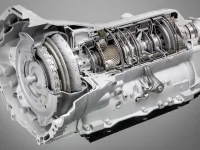
In automatic transmissions, the oil in the transmission not only lubricates but also cools the internal components. The hydraulic system of the automatic transmission depends entirely on the transmission fluid for the operation of torque converters, hydraulic pumps, and control systems.
For automatic transmissions you use a specific transmission oil, while for manual boxes you may use engine oil, hypoid oil, or oil dedicated for manual gearboxes. For maximum safety, always consult the owner’s manual, where the manufacturer specifies the exact type and viscosity recommended.
In the Romanian market there is a wide variety of transmission oils, classified by transmission type, required performance, operating temperature, and technical specifications. All of these factors directly influence the performance of the transmission and, consequently, that of the entire vehicle.
Types of transmission oil available
HFM transmission oil (Highly Friction Modified)
This type of oil, commonly used in heavy trucks and commercial vehicles, has a high friction index and is formulated to withstand heavy loads and severe operating conditions.

Dexron/Mercon transmission oil
The most widespread type for automatic transmissions, developed for the most common types of automatic gearboxes. These oils are chemically modified to protect the internal parts of the transmission and to ensure smooth gear changes. Dexron is GM standard, while Mercon is Ford standard.
Synthetic oil
Used less frequently, primarily for high-performance automatic transmissions. They are more expensive than Dexron or Mercon but offer superior resistance to large temperature differences, help prevent wear from friction, and resist oxidation of metal components. The increased durability justifies the higher cost.
F-type transmission oil
An outdated standard, no longer used today. It was designed for automatic transmissions in vehicles from the 1970s-1980s and has since been replaced by more advanced formulations.
Engine oil as an alternative
Although it may seem unusual, engine oil is frequently used to lubricate manual transmissions, sharing properties with transmission oil. It can also withstand much higher temperatures than conventional transmission oil, making it a practical option for certain applications.

Hypoid transmission oil
Resistant to extreme temperatures and very durable under friction, it is found in manual transmissions and differentials operating under severe conditions. It contains additives specially designed to protect hypoid gears.
The crucial role of transmission oil
Transmission oil performs several vital functions for the transmission system:
Lubrication of internal components
Reduces friction between gears, bearings, synchronizers, and other moving parts, preventing premature wear and ensuring smooth operation.
Seal maintenance
Maintains elasticity and sealing of rubber and other material seals, preventing leaks and maintaining system pressure.
Protection of metal parts
Forms a protective film between metal surfaces in direct contact, preventing corrosion and wear from metal-to-metal contact.
Improved shaft rotation
Facilitates smooth rotation of the transmission shafts, reducing internal resistance and improving transmission efficiency.
Operation at high temperatures
Resists the temperatures generated during operation, maintaining lubricating properties even under extreme conditions.
Power transfer (automatic transmissions)
In automatic transmissions, the oil transmits power through the hydraulic system, acting as the transfer medium for the torque converter.
When to change the transmission oil
Before establishing a replacement schedule, be sure to consult the vehicle’s technical manual for the manufacturer’s specific recommendations. There is no universal fixed interval; it varies by transmission type, year of manufacture, and operating conditions.
Automatic transmissions
Some modern automatic transmissions are designed as “lifetime fill” and theoretically do not require changing transmission oil. However, it is recommended to perform a change every 100,000–160,000 km to maintain optimum performance.
For high-performance vehicles or those used in severe conditions (t hauling, sporty driving, extreme temperatures), the interval may be reduced to around 60,000 km.
DSG and dual-clutch transmissions
The VAG group recommends changing oil in DSG transmissions at 100,000 km. However, many experienced owners opt to replace it between 60,000–80,000 km to prevent known issues in these complex systems.
Manual transmissions
Oil changes are more frequent, with a recommended interval of 48,000–100,000 km, depending on manufacturer specifications and usage conditions.

Signs that the oil needs changing
- Dark color or burnt smell of the oil
- Difficult gear changes
- Unusual noises from the transmission
- Slipping or delayed gear engagement (automatic transmissions)
- Visible oil leaks under the vehicle
Proper maintenance of the transmission system, including regular oil changes, is the most cost-effective investment to extend the life of the gearbox and maintain vehicle performance.