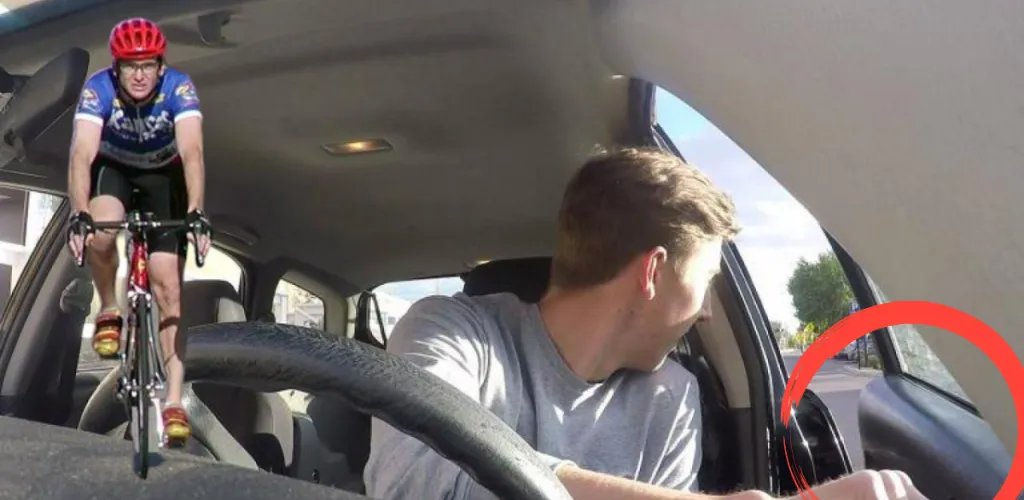
- Dutch reach opens with the right hand, prompting a shoulder turn to spot cyclists.
- Stop, rotate body, check mirror and shoulder, then open door slowly.
- Cyclist injuries from car doors are a major international safety issue.
- Taught by Dutch driving schools from early on; improves visibility and reduces reaction time.
The Netherlands is renowned not only for its exceptional road quality but also for the road safety practices promoted from driving school. One of the most important techniques taught to Dutch drivers is opening the car door with the right hand—a simple method that can prevent numerous cyclist accidents.
The Dutch reach technique - a simple solution for traffic safety
The Dutch driving technique consists of accessing the doors with the right hand, in other words, the hand that is farthest from the opening mechanism. This approach has a clear and well-founded safety rationale.
When a driver tries to open the door with the hand that is not the usual one, the body is forced to rotate naturally toward the door. This movement obliges the driver to look over their shoulder and check the area behind the vehicle, becoming more aware of a cyclist coming from behind.
In the Netherlands these recommendations are taught from the early days of driving school, forming an integral part of basic road education. This practice has become so widespread that the method is internationally known as the “Dutch reach“.
Worrying statistics about cyclist accidents
The problem of cyclists injured by car doors is a valid international issue. The figures are alarming and demonstrate the importance of adopting simple yet effective preventive measures.
According to a Daily Mail report in 2011, approximately 600 cases are recorded annually where cyclists in the United Kingdom are injured as a result of car-door collisions. In large cities, where bicycle traffic is heavier, the problem becomes even more acute.
Bicyclists struck by car doors are most prone to serious injuries because the impact can fling them directly into the path of other vehicles in traffic. Hence the crucial importance of prevention techniques.

Photo source: promotor.ro
How to apply the Dutch door-opening technique
Implementing this safety technique is surprisingly simple and requires no additional equipment or vehicle modifications. The only requirement is to form a new habit in driving behavior.
Steps to correctly apply the technique:
- Stop the vehicle completely - never try to open the door while the car is still moving
- Use the right hand to open the door - even if it feels unnatural at first
- Rotate your body toward the door - this natural motion helps you see the rear area better
- Check the side mirror before you begin to open the door
- Look over your shoulder to ensure no cyclist or motorcyclist is coming
- Open the door slowly - a sudden opening can still be dangerous even after a check
Advantages of the Dutch reach:
- Improved visibility - body rotation provides a better viewing angle
- Reduced reaction time - the automatic check helps prevent accidents
- Formation of safety habits - becomes second nature after practice
- Zero cost - requires no financial investment
The Netherlands - European leader in road infrastructure quality
The quality of road infrastructure in Europe varies greatly, often a topic of contrasting discussions. The map shown in this article provides valuable information about road quality across Europe, with the Netherlands occupying a leading position.
According to the Global Competitiveness Report 2019, published by the World Economic Forum, the Netherlands holds the title of the country with the best roads in Europe. This ranking is no accident—massive investments in infrastructure and a strong emphasis on road safety make the Dutch road network a model for the continent.

Evaluation methodology
To conduct this study, 12,987 company directors from 139 countries were surveyed, answering 78 questions. One question asked: “What is the quality of your country’s road infrastructure?”
For evaluation, respondents could use a 1 to 7 scale, where:
- 1 = extremely poor roads
- 7 = best roads in the world
European ranking of road quality
The graphic below provides a clear view of the differences between East and West in terms of road quality. Many former Soviet states in Eastern Europe score below 4, while in Western Europe most countries score between 4 and 5.
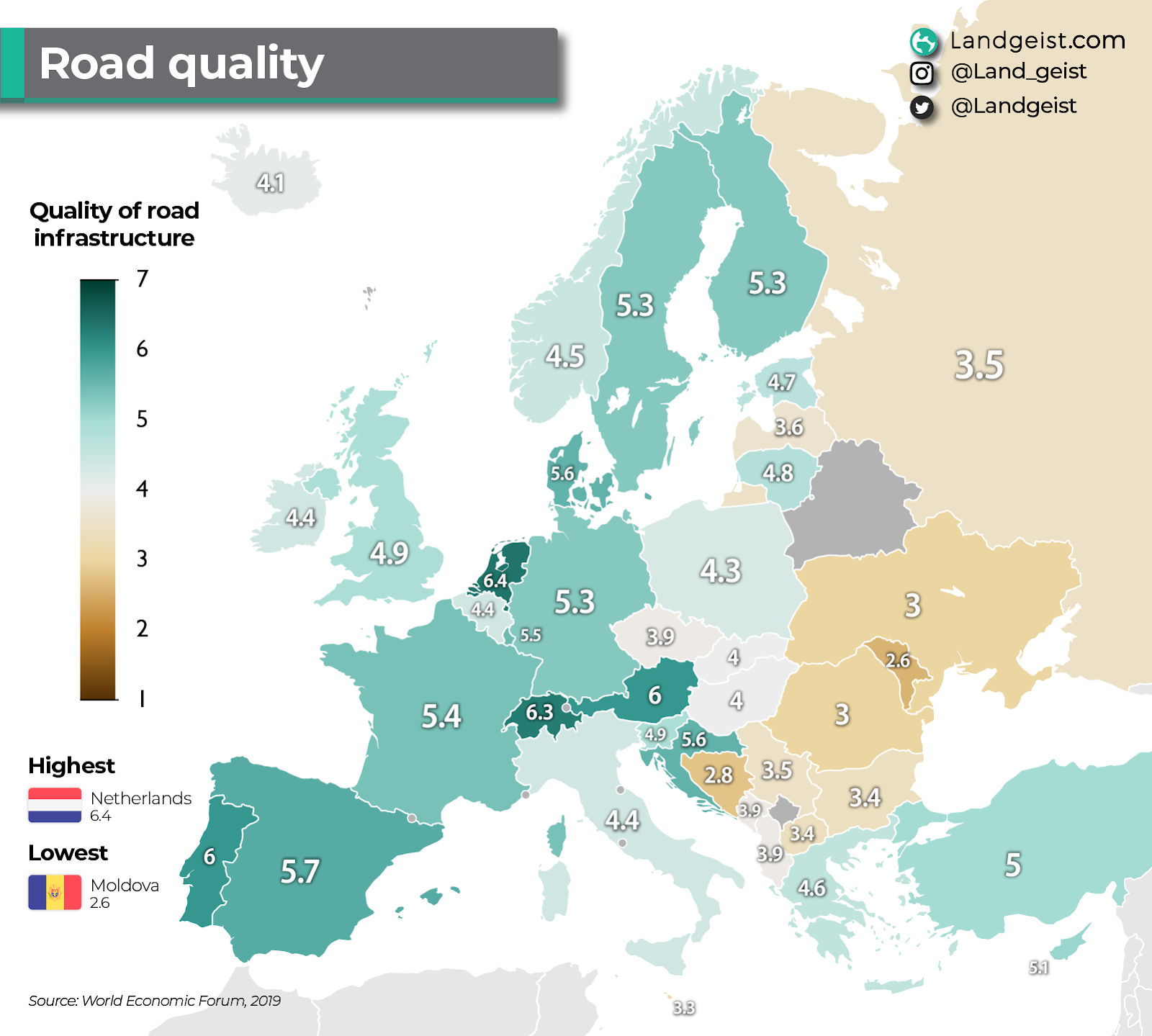
Photo source: Global Competitiveness Report 2019
Top 10 European countries with the best roads:
- Netherlands - 6.4 points (global rank 2)
- Switzerland - 6.3 points (global rank 3)
- Austria - 6.0 points
- Portugal - 6.0 points
- Spain - 5.7 points
- Croatia - 5.6 points
Globally, the top road quality belongs to Singapore (6.5 points), with Hong Kong (6.1) and Japan (6.1) following in global ranking.
Countries with the weakest roads in Europe:
The bottom five European countries present a concerning picture:
- Malta - 3.3 points (global rank 106)
- Ukraine - 3.0 points (global rank 114)
- Romania - 3.0 points (global rank 119)
- Bosnia and Herzegovina - 2.8 points (global rank 121)
- Moldova - 2.6 points (global rank 127 out of 141 countries)
Lessons for Romania from the Dutch model
The Netherlands example shows that investments in infrastructure and road education go hand in hand. Romania, ranked 119th worldwide with a score of only 3.0, has much to learn from the Dutch approach.
Aspects that could be implemented in Romania:
- Include safety techniques in the driver education curriculum
- Safety campaigns for existing drivers
- Improve infrastructure for cyclists
- Promote sustainable transport in urban environments
The Dutch technique of opening a door with the right hand is a perfect example of how simple measures can have a major impact on road safety. In a context where Romania records worrying figures for both infrastructure and road accidents, adopting such preventive practices could significantly improve traffic safety.
Implementing these measures does not require major infrastructure investments, but rather a shift in mindset and proper road education. The sooner these safety practices are adopted, the more lives will be saved and the fewer accidents will occur.