- Winter accidents account for 17%; adverse weather raises risk, especially in Romania.
- Keep at least 10x normal following distance; adjust for road, precipitation, and visibility.
- Correct steps for skids: ease off throttle, avoid hard braking, steer into skid, steady, re-accelerate.
- Winter transmission tips: manual start in second below 2000 rpm; automatics use Winter/Snow mode.
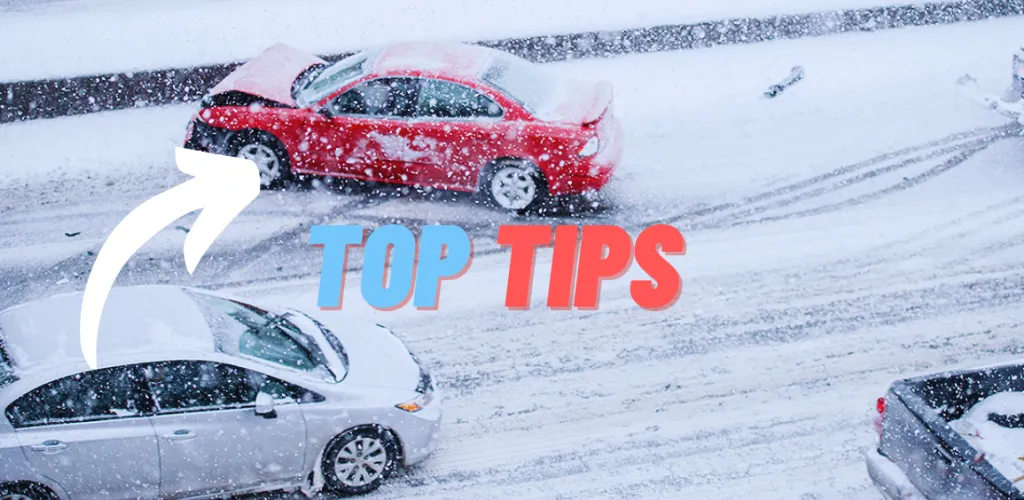
International statistics show that 17% of road accidents occur during the winter months, with most caused by adverse weather conditions such as heavy rain and abundant snow. In Romania, this percentage could be even higher given road infrastructure and driving habits.
Winter driving represents one of the biggest challenges for drivers, requiring heightened attention and the application of specific techniques to prevent accidents. Preparation in advance and knowledge of professional tricks can make the difference between a safe journey and a serious crash.
Correct braking distance on slippery surfaces
When the road surface becomes slick due to snow, ice, or rain, tire grip is dramatically reduced, affecting the vehicle’s braking capability. On icy surfaces, braking distance can increase up to 10 times compared to normal conditions.
Adapted safety distance rule
Professionals recommend keeping at least 10 times the normal following distance between your vehicle and the one ahead. This distance should be continuously adjusted based on:
- Road surface condition
- Intensity of precipitation
- Visibility
- Travel speed
The 10-second rule is essential: make sure you have enough time to stop the vehicle completely in an unforeseen situation. It is always safer to leave more space than to risk not having enough.
Professional techniques for skid management
Skids on ice or snow are among the most dangerous situations a driver can face. An incorrect instinctive reaction can turn a manageable situation into a serious crash.
Correct steps for controlling the skid
- Ease off the accelerator immediately – applying extra throttle will worsen the skid
- Avoid hard braking – this can lock the wheels and remove any control
- Steer into the direction of the skid – if the car slides left, steer left
- Maintain steady steering input – avoid abrupt movements
- Gently re-apply throttle once you feel you have regained control
Training reflexes
Experts recommend practicing these techniques in a controlled environment, such as an empty snowy parking lot, to develop the correct reflexes before you need to use them in traffic.
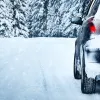
Winter transmission optimization
One of the less known professional techniques is using a higher gear on slippery surfaces. This method may seem counterintuitive, but it has solid technical reasons.
The physical principle
Shifting to a higher gear keeps:
- Engine RPM at a low level – reducing the raw power transmitted to the wheels
- Lower torque at the wheels – preventing wheel spin
- Smoother acceleration – avoiding abrupt movements that cause grip loss
Practical application
For manual transmission vehicles:
- Start in second gear instead of first
- Keep revs below 2000 rpm
- Use progressive acceleration
For automatic transmission, many modern models have a Winter or Snow mode that automatically optimizes these parameters.

Adapting speed to real road conditions
Speed limits are set for ideal driving conditions – dry roads, good visibility, and maximum grip. In winter, these conditions are rarely met.
Factors affecting safe speed
Reduction in tire grip:
- On fresh snow: grip drops by 30-40%
- On ice: grip can drop up to 90%
- On black ice: grip is almost non-existent
Calculation of the optimal speed:
- In light snow: reduce speed by 20-30%
- On icy surfaces: reduce speed by 50-70%
- In blizzard conditions: speeds under 30 km/h
Proper use of fog lights
Fog lights are not just an accessory – they are an essential safety element in winter conditions.
When to use them
Mandatory activation:
- Visibility below 100 meters
- Dense fog
- Heavy snowfall
- Torrential rain
Deactivation necessary: It is equally important to switch off fog lights when visibility improves. Incorrect use can:
- Blind other road users
- Lead to penalties
- Reduce your own visibility
Vehicle preparation for winter
Essential pre-season checks
Braking system:
- Check pads and discs
- Test ABS
- Check brake fluid
Tires:
- Tread depth (minimum 4 mm for winter)
- Correct pressure (checked cold)
- Uniform wear
Heating and demisting system:
- Functioning heating system
- Condition of windshield washer fluid
- Test defogging/defrosting of windows
Winter emergency kit
In the trunk you should always have:
- Chains or snow socks
- A foldable shovel
- Sand or grit for traction
- Tow rope
- Blanket and extra clothing
- Emergency supplies (water, non-perishable food)
Safe winter driving is not only about following general rules, but about understanding the physical principles that govern vehicle behavior in adverse conditions. Applying these professional techniques, combined with proper car preparation and a preventive mindset, can significantly reduce the risk of accidents in the cold season.