- Tire age, correct pressure, and tread depth are crucial for winter safety.
- Romania requires winter or all-season tires once snow arrives; no deadline.
- Summer tires lose grip below 7°C as rubber hardens.
- Winter tires provide better traction and stability on snow and wet roads.
With the first snowfall and falling temperatures, the technical condition of tires becomes crucial for road safety. The vehicle’s stability on the road depends directly on the mounted tires, and the cold season requires additional precautions to avoid dangerous situations. The age of tires, correct pressure, and tread depth are decisive factors that can prevent serious accidents.
The risks associated with tires in poor condition are multiple: getting stranded on the road, tire blowouts, loss of grip, or hydroplaning. All these situations can be avoided by adopting a proper maintenance strategy and understanding the specifics of each tire type.
Correct tire choice for the winter season
With the first snowfall, drivers must consider the obligation to mount winter tires or all-season tires on passenger cars, thereby actively contributing to road safety and compliance with legal provisions. In Romania, winter or all-season tires must be mounted on vehicles when the first snow arrives; there is no specific deadline stated in law for fulfilling this obligation.
Correct decisions in tire selection can make the difference between a safe drive and a serious accident. Each tire type has specific characteristics that make it suitable for certain weather conditions.
Types of tires available on the market
Summer tires
Summer tires are the most commonly found on vehicles in Romania and perform well in wet and dry conditions at temperatures above 7°C. Their synthetic rubber composition becomes rigid at low temperatures, significantly reducing grip and safety.
These tires have a simpler tread pattern, optimized for water evacuation in summer but insufficient for winter conditions.
Winter tires - technology for maximum safety
According to specialists, winter tires are designed for extremely harsh weather conditions. The tread elements of winter tires are optimized to disperse mud, snow, and water as efficiently as possible. They have special channels and three-dimensional grooves adapted to wet roads in winter.

Vehicles equipped with winter tires are easy to drive on snow, thanks to good stability and strong traction in both wet and dry conditions.
Technological evolution of winter tires
The first winter tires were invented in 1934 in Nokia, Finland, by Nokian Tyres - Nokia Kelirengas, originally for trucks. The first winter tire for passenger cars, Hakkapeliitta, appeared in 1936.
Modern winter tires contain a higher proportion of natural rubber and silica to prevent the synthetic rubber from hardening in cold conditions, giving them superior traction at low temperatures. The tread pattern with numerous small blocks increases traction on snow and allows water to escape more easily from under the tire, reducing the risk of hydroplaning.
In Scandinavia, many snow tires have metal studs to improve grip on snow or ice, but these are prohibited in most other countries due to damage caused to the road surface.

All-season tires - the practical compromise
All-season tires are a convenient alternative for drivers, eliminating the need to change tires each season. Technically, they combine the characteristics of summer tires with those of winter tires.
The material they are made from is closer to that used for winter tires, designed specifically for European regions with a moderate climate.
Limitations of all-season tires
Experts warn that these tires do not excel compared to dedicated winter tires. All-season tires can wear much faster in summer, and in winter they offer considerably less grip, resulting in weaker traction.
The hybrid tread profile — with spaced blocks for snow grip in the center and closely spaced blocks for grip in warm conditions — represents a compromise that does not reach the peak performance of any season. They are recommended for low-power vehicles and for drivers who prefer a calm driving style.
Correct tire mounting
Replacing the full set of tires
Road safety requires replacing all four tires at the same time. For vehicles with all-wheel drive, this rule becomes even more important — changing only two tires can cause serious problems for the drivetrain, leading to excessive wear of differentials and transmissions.
According to auto experts, for front- or rear-wheel-drive vehicles, tires can be changed in axle pairs, but it is recommended to replace all four tires at once to achieve the best performance and similar wear rates.
Proper winter tire maintenance
Checking tire pressure at regular intervals
Low temperatures have a significant impact on tire pressure — the rubber can lose a substantial amount of pressure during winter. For every 10°C drop in ambient temperature, tire pressure decreases by about 0.1-0.2 bar.
Underinflated tires are more prone to sudden deflation and consume more fuel. Monthly checks are essential, and cars manufactured after 2014 are equipped with TPMS systems that warn drivers about tire pressure loss.
Cleaning and inspecting tires
Dirt on tires can conceal serious problems that pose safety risks. Snow removal salt, mud, and grime contribute over time to corrosion or tire deterioration.
Regular inspection allows early detection of:
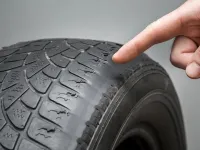
- Cracks in sidewalls
- Uneven wear
- Foreign objects embedded in the tread
- Structural deformities
Tread depth and road safety
Importance of functional tread
Treads maintain the necessary grip and help meet the braking values specified by manufacturers. They are the elements that remove water accumulated between the road and the tire, preventing hydroplaning.
Tires must be replaced when tread depth approaches 4 mm for winter tires and 3 mm for summer tires. Romanian law requires a minimum depth of 1.6 mm, but experts recommend replacement much earlier.
Preventing hydroplaning in winter
Understanding hydroplaning
Hydroplaning occurs when there is a significant amount of water between the tires and the roadway, causing the car to effectively ride on a layer of water. It can lead to a complete loss of steering and braking control.
Strategies to avoid hydroplaning
Speed is the critical factor in preventing hydroplaning. When it rains heavily, speed should be reduced to 15-20 km/h to allow the tread to remove water from under it.
Essential preventive measures:
- Avoid driving through road irregularities where water collects
- Maintain a large distance from other road users
- Avoid abrupt braking that reduces grip
- Maintain a steady, reduced speed on wet pavement
Installing quality tires
In Romania’s climatic conditions, installing new, high-quality tires is an investment in safety. Only tires in perfect condition can effectively withstand extreme weather phenomena and provide the necessary protection on the road.
Proper winter tire care is not just a matter of comfort but a vital safety measure for all road users. Investing in quality tires and maintaining them properly directly reduces accident risk and increases driving confidence on any road surface.