- Lambda sensor measures exhaust oxygen to help ECU regulate air–fuel mix
- It uses a zirconia ceramic element, heating, protection tube, and electrical connector
- Rich exhaust yields higher voltage; lean yields lower voltage, guiding fuel injection
- Older cars use a single sensor before the catalytic converter; modern cars use two sensors
The lambda sensor, also known as the oxygen sensor, is a crucial component in modern engine management. It constantly monitors the oxygen level in the exhaust gases and transmits these vital data to the engine control unit (ECU). Proper operation of the lambda sensor is essential for maintaining the correct air–fuel mixture, reducing emissions, and optimizing fuel efficiency.
Any failure of this component can have significant consequences for engine performance, fuel consumption, and compliance with emission standards. For this reason, understanding how it works and recognizing the signs of a faulty lambda sensor are essential for any vehicle owner.
What is the lambda sensor and how it works
The lambda sensor is a sophisticated electronic component that determines the oxygen concentration in the exhaust gases. Developed originally by Bosch in the 1960s, it became standard on all passenger cars beginning in 1980, when emission requirements became stricter.
Technical construction
The lambda sensor is composed of several essential elements:
- Ceramic element: Made from porous zirconia oxide, which forms the heart of the sensor
- Heating element: Ensures the optimal operating temperature (approximately 300-400°C)
- Protection tube: Protects the component from impurities and the extreme temperatures in the exhaust gases
- Electrical connector: Transmits the signal to the ECU through specialized wires
This is mounted on exhaust gallery and works on the principle of electrical conductivity, evaluating the difference in oxygen concentration between the exhaust gases and the outside air.

Operating principle
The lambda sensor works as a galvanic cell, generating an electrical voltage based on the difference in oxygen concentration. When the mixture is rich (less oxygen in the exhaust gases), the sensor generates a higher voltage (0.6-0.9V). When the mixture is lean (more oxygen), the voltage drops (0.1-0.4V).
Types and placement of the lambda sensor
Configurations according to emission standards
Older vehicles (Euro 3 and earlier):
- A single lambda sensor placed before the catalytic converter
- Monitors only the air–fuel mixture
Modern vehicles (Euro 4 and above):
- Sensor 1: Placed before the catalytic converter - monitors the mixture
- Sensor 2: Placed after the catalytic converter - checks catalyst efficiency
This dual configuration allows for much more precise control of emissions and rapid detection of any deterioration in the catalytic converter.
The crucial role of the lambda sensor in the engine system
The lambda sensor is directly connected to the ECU via dedicated wires and sends data in the form of an electrical signal measured in volts. The ECU uses this information for:
Air–fuel mixture control
- Real-time adjustment: The ECU constantly modifies the amount of fuel injected
- Optimizing combustion: Maintains the ideal stoichiometric ratio (14.7:1 for gasoline)
- Compensation for variable conditions: Altitude, temperature, atmospheric pressure
Emissions monitoring
- Problem detection: Quickly identifies any deviation from emission standards
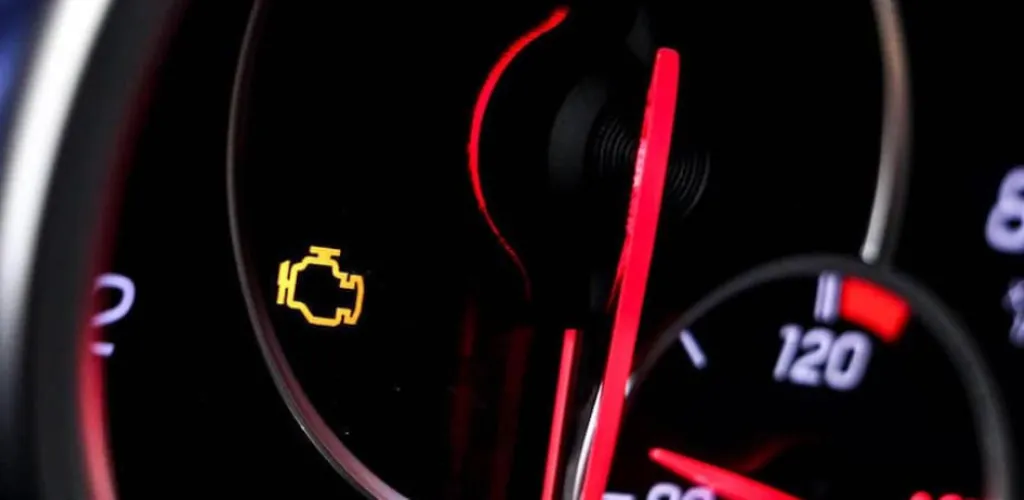
- Warning lights activation: Signals problems via the Check Engine light
- Catalyst protection: Prevents damage through continuous monitoring
When the lambda sensor does not function correctly, the ECU receives erroneous data, leading to:
- Incorrect air–fuel mixture
- Reduced engine performance
- Increased fuel consumption
- Emissions above legal limits
Symptoms indicating a faulty lambda sensor
Early recognition of symptoms can prevent costly catalyst damage and maintain optimum vehicle performance.

1. The “Check Engine” light is on permanently
This is the most evident indicator of a lambda sensor problem. The ECU detects:

- No signal: The sensor does not transmit any signal
- Constant signal: The value does not change with operating conditions
- Values outside the parameters: The voltage stays below 0.1V or above 0.9V constantly
- Slow response time: The sensor reacts too slowly to mixture changes
2. Increased fuel consumption
A faulty lambda sensor can cause a fuel intake increase of 10–15% due to:
- Forced rich mixture: The ECU injects more fuel than necessary
- Incomplete combustion: Fuel does not burn efficiently
- Open-loop operation: The engine runs on predefined maps rather than real feedback
3. Unstable and oscillating idle
Idle problems manifest as:
- Fluctuations in RPM: The engine “searches” for the correct idle
- Unexpected stalling: The engine can stall at idle
- Vibrations: Uneven burning creates vibrations
- Starting difficulties: The engine starts hard, especially when cold
4. Excessive black smoke from exhaust
The appearance of exhaust black smoke indicates:
- Too rich a mixture: Excess fuel does not burn completely
- Carbon particles: Build up in the exhaust system
- Catalyst damage: Black smoke can also indicate catalyst problems

5. Reduced engine performance
- Weak acceleration: The engine responds slowly to throttle input
- Power loss: Reduction in available maximum power
- Uneven behavior: Operating in jumps or irregularly
Testing and diagnosing the lambda sensor
Testing with a voltmeter
Although a basic check can be performed with a voltmeter, this does not provide a complete picture. Normal values are:
- Rich mixture: 0.6-0.9V
- Lean mixture: 0.1-0.4V
- Transition: A healthy sensor switches rapidly between these values
Note: A sensor can show correct voltage values but have a slow response time, which makes it defective in practice.
Professional diagnosis
Correct checking requires:
- Professional auto tester: Can monitor real-time parameters
- Exhaust gas analysis: Measures actual concentrations of CO, CO2, HC and NOx
- Dynamometer test: Checks performance under controlled conditions
- Visual inspection: Verifies the physical condition of the sensor and connectors
Consequences of driving with a defective lambda sensor
Immediate impact
- Increased consumption: Up to 15% more fuel
- Reduced performance: Loss of power and throttle response
- Polluting emissions: Exceeding legal standards
- ITP failure: The vehicle will not pass the emissions test
Long-term consequences
- Catalytic converter deterioration: Replacement costs can run into thousands
- Premature engine wear: Incorrect burning affects internal components
- Deposits buildup: Carbon in the combustion chamber and on valves
- Injector deterioration: Incorrect operation can affect the injection system

Replacement and maintenance of the lambda sensor
Can a lambda sensor be repaired?
Unfortunately, the lambda sensor cannot be effectively repaired. Available options are:
Cleaning:
- Can attempt cleaning with specialized products
- Chances of success are low (under 20%)
- Temporary solution, not permanent
Replacement:
- The only definitive and reliable solution
- Ensures optimal long-term operation
- Necessary investment for correct performance
Factors that influence price
Vehicle type:
- Mass-market cars: 200-500 lei
- Premium vehicles: 500-1200 lei
- Sports/performance cars: over 1200 lei
Pieza quality:
- OEM (Original Equipment Manufacturer): Best quality, high price
- Premium aftermarket: Good quality, balanced price
- Economy: Lower price, but limited durability
Replacement procedure
- Diagnosis: Confirm that the problem is with the lambda sensor
- Dismantling: Vehicle on a lift, remove the faulty sensor
- Check connections: Clean and inspect wires
- Installation: Install the new sensor with the correct torque
- Calibration: Reset error codes and ECU adaptations
- Testing: Verify operation under real conditions
Tips to extend sensor life
Preventive maintenance
- Use quality fuel: Avoid dubious fueling stations
- Replace the air filter regularly: A clogged filter affects the mixture
- Periodic checks: Annual service at an authorized workshop
- Avoid very low revs: The sensor operates best at elevated temperatures
Early warning signs
- Changes in fuel consumption
- Changes in engine sound at idle
- Unusual odors from the exhaust
- Slow response to acceleration
The lambda sensor may seem like a small, insignificant component, but its role in the proper operation of the modern engine is crucial. Investing in the timely replacement of a faulty sensor is far cheaper than the costs of major repairs that can result from neglecting this issue. A healthy exhaust system, with functioning lambda sensors, ensures not only optimal performance but also compliance with environmental standards and the vehicle’s long-term value.
