- The valve body is the hydraulic brain of an automatic transmission, routing ATF to components.
- It uses hydraulic pressure, control valves, solenoids, and regulators to shift gears.
- Sensors and ECU data drive the valve body for smoother, faster gear changes and protection.
- Faults cause noises, shifting slippage, and lubrication problems from sticking valves or poor ATF flow.
An automatic transmission is one of the most complex systems in modern cars, and at its heart lies the valve body—a critical component that orchestrates the gear-changing process. This sophisticated hydraulic system determines the vehicle’s performance and driving comfort, which is why understanding how it works and what can go wrong is essential for any car owner.
The hydraulic valve body acts as the brain of the automatic transmission, controlling the flow of ATF (Automatic Transmission Fluid) to various components to achieve optimal gear changes based on driving conditions.
Valve Body Operation Principle
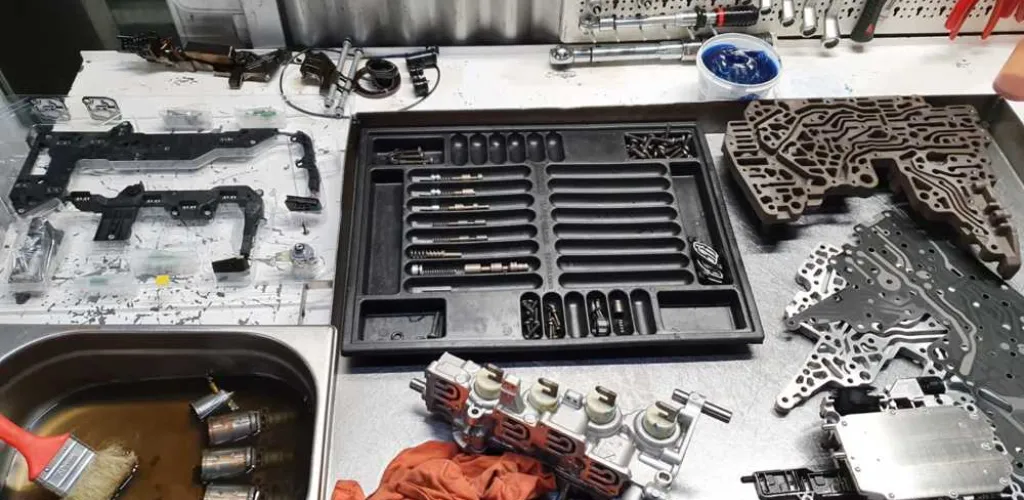
The valve body operates on hydraulic pressure, using transmission fluid to actuate different components of the automatic transmission. It consists of:
- Hydraulic channels and passages
- Control valves
- Electronic solenoids controlled by the ECU for precise commands
- Pressure regulators
When shifting gears or when the ECU determines a gear change is needed, the valve body redirects hydraulic pressure to the corresponding clutches and bands inside the transmission.
Key Functions of the Hydraulic Body
Gear Shifting Control
The manual valve, directly connected to the shift lever, allows manual selection of operating modes (P, R, N, D). This ensures that hydraulic pressure is directed to the correct circuits for each selected position.
Adaptation to Driving Conditions
Modern valve body systems are equipped with advanced sensors that monitor:
- engine load and rpm
- throttle position
- vehicle speed
- ATF temperature
- pressure in the lines
- brake pedal position
Communication with the ECU
These sensors transmit crucial information to the electronic control unit, which analyzes the data and sends precise commands to the valve body solenoids. This real-time communication enables:

- smoother and faster gear changes
- optimized fuel economy
- protection of transmission components
- adaptation to the driver’s driving style
Common Symptoms of a Faulty Valve Body
Identifying valve body problems early can prevent costly damage to the entire transmission. Here are the main warning signs:
Noises and Knocks During Braking
Noises typically appear during:
- deceleration
- braking
- gear changes
- and even during normal driving (with advanced wear)
These noises usually indicate uneven hydraulic pressure or valves sticking in the valve body.
Shifting Slippage
This symptom manifests as:

- the shifter jumping into neutral on startup (from D or R)
- loss of gears while driving
- inability to maintain a gear
- uneven acceleration relative to the selected gear
Shifting slippage indicates that hydraulic pressure is not maintained consistently, which can lead to premature wear of internal clutches.
Lubrication and Operation Problems
A more complex and severe issue arises when:
- ATF fluid does not circulate properly
- lubrication pressure is insufficient
- valves stick in intermediate positions
- response to commands becomes delayed
This can lead to:
- braking difficulty when the transmission tries to downshift
- transmission overheating
- accelerated wear of internal components
- complete degradation of the transmission
Delays in Gear Changes
An important signal of valve body failure is:
- slow shifting between gears
- significant loss of power on acceleration
- the transmission sticking in neutral
- engine RPM rising without corresponding acceleration
Common Causes of Valve Body Failure
To prevent these problems, it is important to understand the main causes:
Neglected Maintenance
- infrequent ATF changes
- using the wrong type of fluid
- contamination with impurities
- transmission overheating
Natural Wear
- deposits in hydraulic channels
- wear of valves and springs
- corrosion of metal components
- aging of seals and gaskets
Electrical Faults
- faulty or stuck solenoids
- wiring problems
- defective sensors
- ECU communication errors
Diagnosis and Early Intervention
The on-board computer of modern vehicles will signal most serious faults with warning lights, but often this happens only when the problem is already advanced. Therefore, recognizing early symptoms is crucial.
What to do at the first symptoms:
- Immediate check at a workshop specialized in automatic transmissions
- Check the ATF level and condition
- Scan the on-board computer for error codes
- Avoid heavy use of the vehicle until repair
Repair costs
Repairing or replacing a valve body can cost between 1,500-4,000 lei, depending on:
- The make and model of the vehicle
- System complexity
- Degree of damage
- Need to replace other components
Ignoring problems can lead to replacement of the entire transmission, with costs that can exceed 8,000-15,000 lei.
Preventing Valve Body Failures
To avoid high repair costs and extend the life of the transmission:
- Change ATF fluid according to the manufacturer’s recommendations (usually every 60,000-100,000 km)
- Use only ATF fluid specified for your model
- Avoid overheating the transmission through aggressive driving
- Perform periodic checks at specialized service centers
- Do not ignore early symptoms — quick intervention can save the transmission
In conclusion, the valve body is a vital component that requires proper attention and maintenance. Early recognition of wear symptoms and prompt intervention can prevent costly faults and ensure optimal operation of the automatic transmission for many years of use.