- Recirculates exhaust to reduce NOx and improve engine efficiency
- Found on both diesel and petrol engines; diesel deposits clog the valve
- Aids downsized engines by reducing fuel use and smoothing combustion
- In diesels, raises exhaust temperature to aid DPF regeneration
The Exhaust Gas Recirculation (EGR) valve is one of the essential components of modern emissions control systems. This part, present on most contemporary vehicles, plays a crucial role in reducing nitrogen oxides in exhaust gases, helping to meet increasingly strict environmental standards.
Although it may seem like a simple component at first glance, the EGR system requires a deeper understanding of combustion processes and how exhaust gases can be used to optimize engine performance and minimize environmental impact.
What is the EGR valve and how does it work?
The EGR valve is a device found on modern engines, whose main purpose is to reduce pollutant emissions by reintroducing a portion of the exhaust gases produced during combustion. These gases are reintroduced back into the engine through the intake manifold, creating a controlled recirculation circuit.
The acronym EGR stands for “Exhaust Gas Recirculation.” The EGR valve, or EGR valve, or simply “EGR” refers to the same technical component.
The EGR valve can be found on diesel engines (where it is more important) as well as on petrol engines. The EGR is presented as an optimal, cheap, and necessary solution to reduce pollutant emissions, especially NOx.
In general, more EGR problems are observed on diesel engines, because deposits accumulate more than in petrol engines. Particles resulting from diesel combustion are more numerous and clog the EGR valve much faster, causing a loss of the vacuum necessary for correct operation.
Historical evolution of the EGR system
EGR emerged from the need to reduce NOx emissions, but beyond this it offers other important advantages: it reduces engine knocking and lowers the need for the engine to run with high-quality fuel.
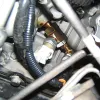
First attempts to reduce NOx with the help of EGR were made as early as 1940. However, after many years of experiments and technical developments, only in 1970 was the EGR considered a feasible measure to lower emissions in diesel engines.
From 1972 to 1980, the EGR valve was used on all gasoline engines in America. It was only in 1990 that there was a move away from EGR on gasoline engines and consideration of applying it to diesel, where the benefits were more evident.
From 1990, family diesel cars and trucks began to have EGR. Only from the 2000s did this valve become very common on the European market. In 2010 it was shown that the EGR role is not only to reduce carbon emissions but also to substantially reduce fuel consumption.
Modern benefits of the EGR system
The EGR valve is now used by manufacturers who employ downsizing. For gasoline engines with direct injection, the following improvements have appeared:

- Reduces fuel consumption by optimizing combustion temperature
- Reduces the chances of misfiring at partial loads
- Reduces the need to run on premium or additive gasoline
For diesel engines, the EGR helps raise the exhaust gas temperature, aiding the regeneration of the diesel particulate filter (DPF) and improving the efficiency of post-treatment systems.
Role and operation of the EGR valve
The main role of the EGR system is to reduce NOx emissions as a result of the high combustion temperatures. These NOx form at temperatures above 1700°C, so the goal is to lower the maximum temperatures to avoid excessive NOx formation.
The EGR valve directs a small portion of the exhaust gases back into the combustion chamber and lowers the maximum ignition temperature of the fuel. By introducing inert gases (spent exhaust that can no longer participate in the combustion), it reduces the oxygen concentration in the mixture, resulting in a lower combustion temperature.
Types of EGR systems
There are two main types of EGR:
- Simple recirculation system - basic variant, cheaper and with reduced maintenance
- Intercooler-cooled recirculation system - higher maintenance but superior efficiency
The intermediate cooling system has a component made of several central tubes through which the exhaust gases circulate. Coolant flows next to these tubes and absorbs heat from the exhaust gases, increasing the density of the burnt gases introduced into the engine and improving the efficiency of the entire process.
Modern electronic control
Initially, this EGR system was electro-pneumatically operated, with the advantage of isolating the electronic part of the EGR from high-temperature components. Today, most exhaust gas recirculation valves are electrically actuated and commanded directly by the Engine Control Unit (ECU).
The advantage of this modern system is the much faster response time of the EGR valves—under 100 milliseconds—thus the engine response is much better and more refined.
EGR operating conditions
The EGR valve does not operate all the time. The Engine Control Unit (ECU) sends commands to the EGR valve to permit a controlled amount of exhaust gas to enter the intake.
The EGR valve should be closed in the following situations:
- When the car is idling
- At the engine’s maximum rpm
- Under high loads when the engine must deliver maximum performance
The EGR works best under light to moderate loads, when emissions are above average and engine load is not at the upper limit.

The device that controls the flow of exhaust gases inside turbocharged engines is the pintle, which can reduce the pressure in the intake manifold and optimize the flow of recirculated gases.
Operating parameters
The EGR is set to operate under specific conditions:
- Diesel: usually between 1200-3200 rpm
- Petrol: usually between 1800-4600 rpm
These values vary by manufacturer and depend on the ECU calibration strategy for each engine.
The gas cooling process
A portion of the exhaust gases exiting the engine is reintroduced into the engine after being cooled from about 750°C to around 160°C. This is achieved via the engine coolant circulating through the heat exchanger integrated into the EGR system.
Cooling the gases is essential for:
- Increasing the density of recirculated gases
- Further reducing the combustion temperature
- Protecting intake components
- Optimizing the overall process efficiency
Symptoms of a defective EGR
The EGR valve can become stuck either closed or open. In both cases, this is very damaging to the engine, so starting may be difficult, you may see dark smoke due to deposits when accelerating, and torque and power can drop.

Main symptoms of EGR failure
The most evident symptoms are the following:
- Rough running at idle
- Significant loss of power
- Slower acceleration and higher fuel consumption
- Black smoke from the exhaust
- Check Engine light illuminated
- Abnormal engine vibrations
- Cold-start difficulties
EGR stuck open
If the valve remains stuck open, effects are immediately noticeable. The engine will run terribly or even stall at idle and in motion. This happens because too large a amount of inert gases enter the engine, severely affecting the combustion process.
EGR stuck closed
When the EGR is stuck closed, symptoms are subtler at first, but over time can lead to:
- Increased NOx emissions
- Higher combustion temperatures
- Premature wear of engine components
- Problems with post-treatment systems (DPF)
EGR cleaning and maintenance methods
The EGR is responsible for carbon and varnish buildup in the intake route. If neglected, deposits will increase resistance to gas flow into the intake, the engine will run dirtier, and it will not operate within optimal parameters.
Professional cleaning
To correct the issue, it is ideal to go to a service for a full machine diagnostic, so you can identify the problem with minimal time and money.
The EGR can be physically cleaned with special cleaning additives that can be sprayed in accordance with the product’s technical sheet. It is ideal to clean the entire circuit from the intake to the intake manifold for maximum efficiency.

Home cleaning with gasoline
A more classic method to clean the EGR is to do it with gasoline. The process involves:
- Removing the EGR valve
- Soaking the EGR in gasoline for about 30 minutes
- This allows deposits to be removed quickly
- Cleaning remaining deposits with a brush
- Finishing with brake cleaner spray to remove residues
Materials needed:
- About 1-1.5 liters of gasoline
- A clean cloth
- Protective gloves
- A stiff-bristled brush
- Brake cleaner spray (for final cleaning)
This method of cleaning the EGR with gasoline is cheaper, but you must have caution and some extra tools for removing it. With 20-30 RON you can fix the EGR problem, but technical experience for removal and installation is required.
Replacing the EGR valve
If the EGR is faulty on the electronic side or is heavily clogged, it can be replaced with a new one, either OEM or aftermarket. It is advisable to avoid second-hand EGR valves, as prices are not very high and rarely exceed 450 lei.
Considering that a failure can trigger other, more expensive parts (such as the particulate filter), investing in a new valve is economically justified.
EGR on petrol engines
As mentioned earlier, the EGR was initially used on petrol engines. It is smaller than the diesel version, but it serves the same fundamental role. It is smaller because it traps far fewer soot particles and clogs rarely or not at all.

On modern petrol engines, the EGR provides additional benefits:
- Improves fuel economy
- Reduces the tendency to detonation (knock)
- Allows the use of a higher ignition advance
- Reduces the need for high-octane fuels
Can I drive with a faulty EGR?
This is a more complex question because there is no exact definition of a faulty EGR. It can be stuck open, stuck closed, or clogged. If it begins to show one of the symptoms mentioned above and the Check Engine light appears on the dashboard, it would be ideal not to drive the car until the issue is resolved.
The car may still run in some cases; in the worst case, it may not start at all. Even if the car starts, it is not recommended to drive with:
- A car that tends to stall while driving
- Frequent misfires
- Inconsistent idle
- Overheating
Risks of driving with a faulty EGR
Driving with a faulty EGR can lead to:
- Damage to the particulate filter (in diesel)
- Premature engine wear
- Increased fuel consumption
- Excessive pollution
- Problems with periodic technical inspections
- Fines for emission limits
Conclusion
The EGR valve is an essential component of modern emission control systems, contributing significantly to reducing pollution and improving engine efficiency. Understanding how it works and keeping the system in good condition not only ensures compliance with environmental standards but also supports engine longevity and lowers operating costs.
A regular maintenance program, including checking and periodic cleaning of the EGR system, can prevent most issues and ensure optimal vehicle operation over the long term.