- PCV valve recycles crankcase emissions back to the intake to burn.
- At idle, it barely opens; at acceleration, it fully opens.
- Faulty PCV can trigger check engine light, rough idle, misfires, and oil leaks.
- Most PCV valves are plastic with springs; turbo cars use unidirectional valves.
Introduction
The PCV valve (Positive Crankcase Ventilation) is part of the positive crankcase ventilation system and is considered a long-standing emission device used on a large number of vehicles. This component plays a crucial role in the proper operation of the engine and in protecting the environment.
Over time you may have heard about the PCV valve on a gasoline or gas-fueled engine, but there is a good chance you have not fully appreciated how important this small component is for engine health.
What is the PCV valve and how does it work?
Operating Principle
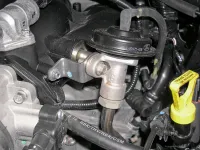
The PCV valve is located vertically and its job is to remove crankcase emissions from the engine, routing them back into the intake so they can be burned again in a later engine cycle. In this way, the car pollutes less.
At idle:
- Throttle plate closed
- Gas flow is low
- PCV valve is barely open
- A small volume of gases enters the intake
- High vacuum in the intake manifold
During acceleration:
- Throttle plate open
- PCV valve opens fully
- Gas flow fully enters the intake
- Vacuum is lower and crankcase ventilation is at maximum
In case of backfires:
- Throttle plate and PCV valve close
- Backflow of gases into the crankcase is prevented
Types of PCV valves
Typically PCV valves are built from plastic hoses with an internal spring and two pressure connectors. For cars equipped with a turbocharger a unidirectional PCV valve is required, built differently, which operates only at low RPM or in idle.
There are also more complex valves with 3 vacuum connectors controlled by electrical vacuum solenoids and offering multiple operating modes.
Symptoms of a faulty PCV valve
1. Check Engine light
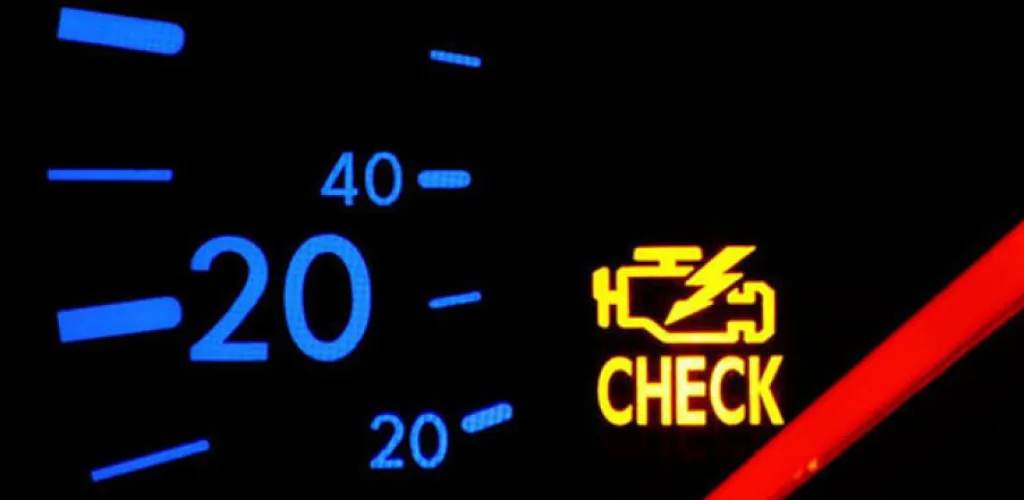
One of the most common problems when the PCV valve is faulty is the Check Engine light illuminating on the dashboard. The ECU stores a fault code that can be read with an OBD2 scanner.
2. High or oscillating idle
Since the PCV valve controls the air flow between the crankcase and the intake manifold, a fault can produce symptoms similar to an intake air leak:
- Idle speed rise when idling
- Idle is erratic
- Engine stalls suddenly
3. Issues with the air-fuel mixture
A faulty PCV valve can cause:
- Mixture too lean — when the valve stays open too long
- Mixture too rich — when there are restrictions in the system
These imbalances lead to improper engine operation.
4. Misfires
Because of an improper mixture, you may feel misfires during idle or acceleration:
- Lean mixture — cylinders do not ignite correctly
- Rich mixture — spark may be lost, unburned fuel reaches the exhaust
5. Slow acceleration
Due to an incorrect air-fuel mixture, the car may feel slower to accelerate at both low and high RPMs, more noticeable at lower speeds.

6. Increased oil consumption and leaks
When the PCV valve or hoses are blocked by moisture:
- Crankcase pressure rises
- Oil is forced upward into the cylinders
- Leaks appear at gaskets and seals
- Oil consumption increases dramatically
7. Colored smoke from the exhaust
Blue smoke: When the valve or hoses are blocked, oil enters the combustion chamber and burns, producing blue smoke.
Black/white smoke: When the valve causes an improper mixture (lean or rich), black or white smoke can appear from the exhaust.
8. Hard starting
A faulty PCV valve can cause difficulty starting the engine, especially in cold conditions.
9. Oil deposits on components
When the valve does not operate correctly, oil deposits can form on the PCV valve, in the intake tract, and on other components.
How to check the PCV valve
Checking with the oil cap
- Start the engine and let it idle
- Remove the oil filler cap carefully
- If the cap is strongly sucked in — there is too much vacuum, the valve may be faulty
- If the cap “pops off” — pressure is too high, the valve may be blocked
Flammable spray test (WARNING: DANGEROUS METHOD)
WARNING: This method can cause fires. Use only if you have experience and a fire extinguisher handy.
- With the engine running, spray flammable spray near the intake openings
- If the engine revs, there are leaks in that area
- Check the valve and hoses to identify the leak
Visual inspection
- Remove the PCV valve from its position
- Check the inner spring — it must be functional
- Test by shaking — you should hear the spring move
- If nothing is heard — the valve may be blocked
Checking the hoses
- Visually inspect the hoses for:
- Cracks or splits
- Moisture or oil inside
- Aging material
- Start the engine to detect leaks
- Test flexibility — aged hoses become stiff
Where the PCV valve is located
Locating the PCV valve depends on the vehicle type and age:
Older cars (without turbo)
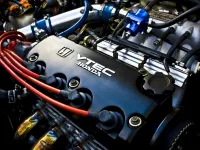
- Common position: on the valve cover (top or side)
- Alternatively: between the intake manifold and the valve cover
- Identification: trace the hoses from the valve cover to the intake system
Newer cars with turbo
- Common position: inside the hose, under the intake
- Examples: Audi, Skoda, Volkswagen, Seat with 1.8T engine
- Difficulty: can be tricky to locate and access
Tips for locating
- Check the vehicle’s technical manual
- Look for hoses connecting the crankcase to the intake
- When unsure, consult a specialized service
Common PCV fault codes
- P052E — PCV regulator valve performance
- P0171 — Fuel system too lean (bank 1)
- P0300 — Random/multiple cylinder misfire
- P053A — Open crankcase ventilation heater circuit
- P0174 — Fuel system too lean (bank 2)
- P0507 — Idle speed higher than expected
Replacement interval
There is no fixed replacement interval specified for the PCV valve. The lifespan depends on:
Factors influencing the lifespan:
Driving style:
- Long highway trips: may last up to 150,000 km
- Short urban trips: may fail after 50,000 km
Why short trips affect the valve:
- Oil does not reach the optimal temperature for moisture evaporation
- Oxidation and valve clogging accelerate
- Oil degrades faster
Operating conditions:
- Extreme temperatures
- Oil quality used
- Oil change intervals
- Vehicle age
Recommendations:
- When buying a used car — replace the valve if you don’t know when it was last changed
- Periodic checks — at every major service
- At the first symptoms — don’t delay replacement
Problems caused by freezing
Inside the PCV valve and hoses can be condensate, moisture, or other liquids. In cold temperatures, these can freeze and completely block the flow.
Consequences of freezing:
- Total blockage of the ventilation system
- Dramatic rise in crankcase pressure
- Excessive oil consumption
- Massive leaks through gaskets and seals
- Damage to engine components
Prevention:
- Use high-quality oil
- Warm up the engine before driving in cold weather
- Periodically clean and inspect the system
- Proactively replace in the cold season
Replacing the PCV valve
Costs
The PCV valve is a relatively inexpensive part:
- Part: 50–250 RON (depending on car make)
- Labor: 100–300 RON (depending on ease of access)
- Total: 150–550 RON for a full replacement
DIY vs. professional service
DIY replacement:
- ✅ Saves labor costs
- ✅ Simple procedure for older cars
- ❌ Risk of improper installation
- ❌ Can be more complex on newer cars
Professional service:
- ✅ Warranty on the work
- ✅ Expertise and specialized tools
- ✅ System check
- ❌ Higher cost
Steps for replacement (DIY)
- Identify the exact position of the valve
- Disconnect the hoses (mark them for reassembly)
- Remove the old valve
- Clean the contact areas
- Apply sealing compound (teflon tape or high-temperature silicone)
- Install the new valve
- Reconnect the hoses in the correct order
- Test operation
Important tips:
- Do not confuse hoses during reassembly
- Use OEM or quality equivalent parts
- Do not use universal hoses — each type has precise specifications
- Replace hoses if damaged
- Check other components of the system
Relationship with other systems
The PCV valve interacts with several engine systems:
Intake system
- Influences the amount of air entering the engine
- May affect MAF/MAP sensor operation
- Impacts the ECU’s air-fuel mixture calculation
Exhaust system
- Recirculated gases influence emissions
- May affect lambda sensor operation
- Impacts catalyst efficiency
Lubrication system
- Controls crankcase pressure
- Prevents oil contamination
- Protects gaskets and seals
Preventive maintenance
To extend the life of the PCV valve:
- Change the oil at the recommended intervals
- Use oil of appropriate quality per specifications
- Periodically inspect the ventilation system
- Clean hoses and connections
- Avoid very short trips when possible
- Warm up the engine before driving in cold season
Conclusion
The PCV valve is a small but essential component for proper and environmentally friendly engine operation. Although affordable, neglecting it can lead to serious and costly engine problems.
If you notice symptoms such as excessive fuel consumption at idle, increased oil consumption, misfires, or colored smoke from the exhaust, have the PCV valve checked promptly. Timely replacement of this part can save significant money and considerably extend the engine’s life.
Remember that this valve is not controlled by the computer and does not communicate with the ECU, but faults can trigger errors in other sensors and affect the overall engine management system.