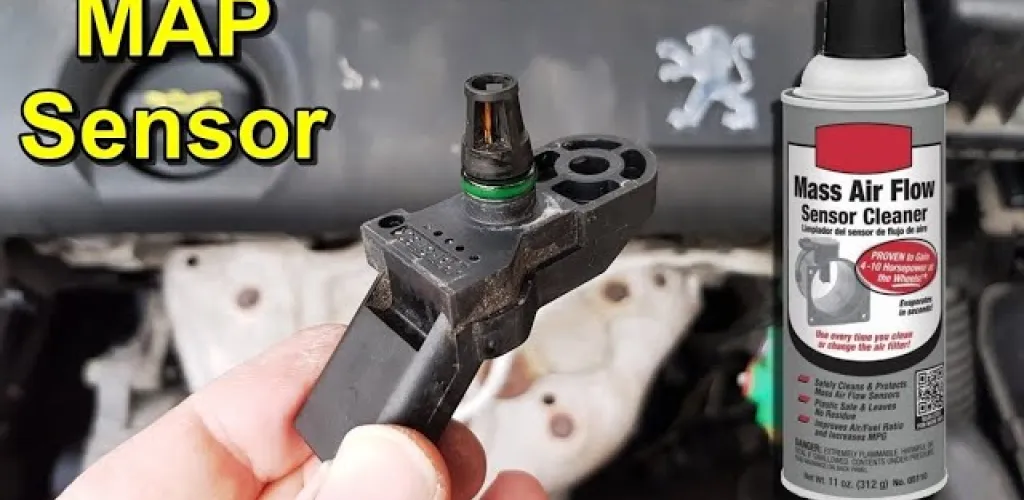
- MAP sensor measures manifold pressure to optimize air-fuel and engine performance
- Dirty MAP leads to increased fuel consumption, rough idle, hesitations, and CEL
- MAP on the manifold with vacuum line; MAF in the air duct
- Test steps: locate sensor, verify ~4.7V, apply vacuum, expect ~1V drop with immediate response
The MAP sensor (Manifold Absolute Pressure) is one of the vital components of any modern car. Without proper operation of this element, engine performance drops dramatically, and neglecting issues can lead to damage to other parts of the intake and exhaust system.
The MAP sensor’s main role is to measure and relay to the ECM the pressure in the intake manifold. This information is crucial for optimizing the air-fuel mixture and the engine’s efficient operation.
Role and operation of the MAP sensor
In fuel-injected engines, the Engine Control Module (ECM) precisely calculates the required amount of fuel based on information from several sensors:
- Engine RPM - for adapting to the operating range
- Coolant temperature (ECT) - for thermal compensation
- Intake air temperature (IAT) - for calculating air density
- Air-fuel ratio (AFR) - for optimizing combustion
The amount of air remains the most critical information for the ECM in determining fuel dosing. For this reason, engines are equipped with MAP sensors (mounted on the manifold) or MAF sensors, and modern turbocharged versions often use both types.
Identifying the type of sensor
To determine which type of sensor your vehicle is equipped with, check the intake tube. The MAF sensor is easily visible and accessible, mounted directly in the air duct. The MAP sensor, however, is usually located on the intake manifold, downstream of the throttle body, or in the engine compartment, connected via a vacuum line.
Symptoms of a defective or dirty MAP sensor
Even with regular maintenance, engines accumulate dust, dirt, carbon, and soot over time that can contaminate sensors. These impurities cause multiple problems:
- Increased fuel consumption - incorrect air-fuel dosing
- Idle stalling / rough idle - unstable idle
- Acceleration hesitation - delayed throttle response
- Check Engine light - ECM detects anomalies
- Spark plug fouling - carbon deposits
- Airflow disruption - reduced intake efficiency
- Injector blockage - faulty injector operation
- Engine overheating - suboptimal combustion
MAP sensor functionality testing
Testing a MAP sensor can be done by any driver with the proper equipment: a vacuum pump and a multimeter. For a professional check, seek assistance at the next technical inspection.

Step-by-step testing procedure
Step 1: Identification and removal Locate the MAP sensor on the intake manifold and disconnect it or disconnect the vacuum line.
Step 2: Checking the voltage With ignition on, measure the voltage on the signal wire using the multimeter.
Step 3: Testing with vacuum pump Use a vacuum pump to simulate pressure variations and observe the sensor’s response.
Step 4: Interpreting the results A functional sensor should read about 4.7V at atmospheric pressure and drop by about 1V when vacuum is applied. The response should be immediate to pressure changes.

Advantages of MAP sensor design
MAP sensors do not contain moving parts, which eliminates the risk of mechanical failures. The main issue is contamination with carbon deposits from the combustion chamber. If the voltage responds slowly to pressure changes, the sensor needs cleaning.
MAP Sensor Cleaning - Step by Step Guide
Cleaning the MAP sensor is a simple operation that can significantly improve engine performance and fuel economy.
Required equipment
- Protective gloves
- Safety glasses
- Special product for cleaning electrical components
- Soft cloths or lint-free paper towels
- Soft brush (optional, for the vacuum hose)
Detailed cleaning procedure
Step 1: Preparation and setup Put on protective gloves and safety glasses to protect against chemical splashes. Ensure you have a specialized cleaner for electrical components.
Step 2: Disconnecting the sensor Turn off the engine and let it cool. Carefully disconnect the MAP sensor’s electrical connector and remove it from its position.
Step 3: Cleaning the exterior Using a soft cloth or lint-free paper towel, apply the cleaner to the exterior surface of the sensor. Clean all accessible areas carefully.
Step 4: Cleaning the interior Moderately spray the cleaning solution into the sensor port. Note: do not use excessive amounts of cleaner. Shake off the excess liquid and allow the sensor to dry completely.
Step 5: Checking and cleaning accessories Inspect the vacuum hose and the port on the intake manifold. If dirty, clean them accordingly. For these less sensitive components, a soft brush may be used.
Step 6: Drying and reinstalling Wait for all components to dry completely before reinstalling. Reinstall the MAP sensor in its original position and reconnect all connectors.
Benefits of regular cleaning
- Improved engine performance - quicker throttle response
- Reduced fuel consumption - optimized air-fuel dosing
- Extended service life - maintains measurement accuracy
- Prevention of costly problems - avoids damage to other components
- Idle stability - smooth operation across all RPM ranges
Recommendations for preventive maintenance
To keep the MAP sensor in optimal operating condition, follow these recommendations:
- Periodic cleaning - every 20,000–30,000 km or yearly
- Use of high-quality fuels - to reduce deposits
- Regular replacement of the air filter - to protect the intake system
- Check vacuum lines - to maintain system sealing
- Monitor symptoms - for early problem detection
MAP sensor cleaning represents a simple, cost-effective, and quick method to optimize engine operation. This preventive maintenance procedure can prevent costly issues and significantly improve the driving experience.
