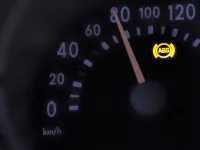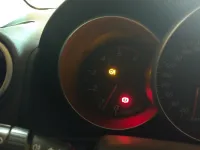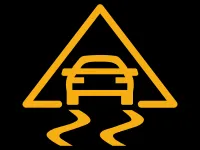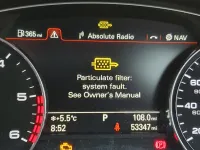
Nowadays, cars are full of technology. The ECU, or the car’s computer, is connected to hundreds of sensors to constantly keep the entire vehicle under control. As soon as a situation arises that creates an imbalance in the car’s operation, the ECU will identify it, and if the problem is serious and considered to require urgent repair, it will illuminate a warning light on the car’s dashboard.
The purpose of warning lights is simple. They alert the person behind the wheel that the car needs to be checked. The importance of warning lights varies greatly—we can have lights indicating that we’ve run out of windshield washer fluid to lights notifying us that we’ve run out of engine oil or brake fluid.
It’s very important for you to know the main dashboard warning lights and what they signify. You can’t go to the mechanic every time the windshield washer fluid light or the seatbelt light comes on. First and foremost, you should be concerned about the color of the warning lights.
Dashboard warning lights come in several colors, and each color indicates how serious the situation is. The Hyundai ix35 has green, blue, yellow, orange, and red warning lights.
Yellow warning lights inform you when there’s a problem, but it’s not very serious—you can still drive the car. For example, a yellow brake warning light notifies you that your brake pads are worn out. Brake pads have a sensor, and when the disc reaches that sensor, it illuminates a warning light on the dashboard. This way, you can still drive the car safely for up to 1,000 km.
If the same brake warning light on the Hyundai ix35 illuminates in red, the problem is much more serious. The braking system is no longer functioning. Whether you’ve lost brake fluid, the power brake isn’t working, or the car’s ABS isn’t functioning, the red warning light always tells you to pull over safely as soon as possible.
The oil warning light on the Hyundai ix35 is in the same situation. If it’s yellow, you don’t have a serious problem—the car’s oil level has dropped below what it needs, and it’s telling you to check and top up the level. However, if the oil warning light comes on in red, pull over immediately. Why? Because either you’ve completely run out of oil, or the oil pressure is greatly reduced. In any case, if you continue driving like this, you’ll seize the car’s engine.
We wanted to give you these examples so you understand how important dashboard warning lights are and how crucial it is to have at least a basic knowledge in this area. Many people just want to get rid of the warning lights on the dashboard without solving the underlying problem that caused them to light up.
We found on a major automotive site in Romania people who were looking for solutions to erase dashboard warning lights in order to sell the car without informing the future owner of any damages: “Can you tell me how I can erase the warning lights? Specifically, the Check Engine light? I heard that you can remove the dashboard and put a sticker over the wire of the bulb that lights up. Does anyone know if this is possible?”
Yes, there are people who do this and especially who are looking for this. They want to erase the dashboard warning lights at any cost. Others promise that they can erase all the warning lights on the dashboard with a scanner and post various ads with their services on automotive websites or classified sites. They promise that in exchange for 100-150 lei, they will come to your home, perform a complete diagnostic of your car, and then erase all the errors. After they leave and block your phone number, five minutes of driving later, surprise—the warning lights reappear on the car’s dashboard!
Why do the dashboard warning lights on the Hyundai ix35 keep reappearing even though I’ve erased them with a scanner?
Because if you have a permanent error, it takes the car’s computer about 30 seconds to detect the problem again and relight the warning light. The permanent error can be a burnt sensor, a disconnected one, an injector with high corrections, etc. Until the faulty part is repaired, the warning lights will reappear indefinitely.
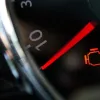
The big problem is that we’ve heard of mechanical workshops without scanners and of mechanics who don’t know how to interpret error codes, especially since they’re written in English. We’ve seen cars that came to us for remapping, with transmission replacements, with sensors removed from the transmission and then reconnected, which had 10-15 errors due to disconnection. Warning lights can come on and fill the scanner with errors even if the car has been without a battery for a long time. Clients told us that mechanics who charged them over 10,000 lei didn’t have a scanner and didn’t perform any diagnostics on the car.
Thus, you naturally ask yourself a question. If a mechanic who does this all day doesn’t know how to read errors and doesn’t know how to erase them, how would you know how to do this? And even worse, if he has a scanner and doesn’t know how to interpret the errors, how does he make the repair and what is he charging you for?
How to erase the dashboard warning lights on the Hyundai ix35?
Simple. If you haven’t yet found a mechanic specialized in your car brand that everyone says is the best, start looking for one. On Facebook groups, forums, friends, etc. Once found, we guarantee that he will have all the necessary equipment and knowledge to repair your car correctly and quickly. After identifying the errors, he will immediately know what problems the car has. After the repair, he will erase the errors, and the warning lights will disappear. It’s the only logical, economical, and quick solution to erase the dashboard warning lights on the Hyundai ix35.