- Most punctures under 0.5 cm can be repaired; larger holes require replacement.
- Punctures in tread are repairable; sidewall holes require replacement.
- Correct method is a patch-plug repair performed after removing the tire.
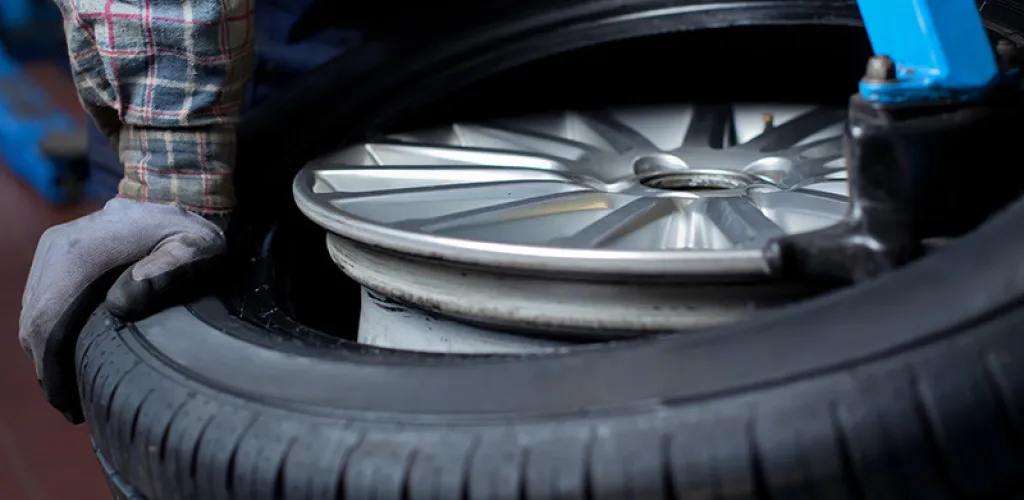
- Tire must be removed from rim for an approved repair.
The tire pressure monitoring light on the dashboard has come on. Before you realize what’s happening, you’ll hear a flap-flap-flap and your vehicle will feel as if it’s being held back by a heavy anchor. Move to a safe parking area and call a tow service.
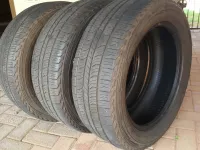
This is a flat tire. Nearly all drivers have faced this unpleasant situation at least once in life. The immediate question is: can the tire be repaired or must it be replaced entirely? The answer depends on several factors we will analyze in detail.
When a deflated tire can be repaired
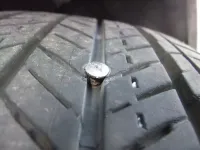
Yes, it is possible to repair a deflated tire in most cases. Almost all tire punctures are caused by nails, screws, or objects with a diameter smaller than 0.5 cm.
This is good news, because repair procedures do not recommend repairing a tire with a hole larger than 0.5 cm; instead, the tire should be replaced.
Location of the puncture determines repair feasibility
If your tire is punctured on the tread area, it is likely to be repaired. This area is the thickest and most resistant part of the tire, designed to withstand constant pressure and wear.
On the other hand, if the puncture is in the sidewalls, repairing the tire is not recommended, and replacement is required. The sidewalls flex continuously during driving, and attempting to seal a hole will quickly fail after driving, potentially resulting in a future puncture or, in the worst case, an explosion.
The correct tire repair method
There is a single correct method to repair a punctured tire. This method is a combination of a patch and a plug, known in the industry as a “patch-plug” or mushroom repair.
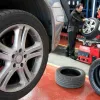
Step-by-step repair process
- Tire removal - The tire must be completely removed from the wheel for inspection and repair
- Cleaning and preparation - The punctured area is cleaned and prepared for the repair
- Applying the plug - The plug is pushed through the hole from inside the tire
- Securing the patch - The attached patch is sealed over the hole on the outside
- Final check - The seal is tested and the tire is remounted
Why other methods are inadequate
Any other repair method is inadequate, including:
- A patch applied only on the inside
- A simple plug driven through the puncture
- Temporary repair sprays
- Sealing gels
An important rule is that if the tire is not removed from the rim to be repaired, it is not an approved repair under safety standards.
The importance of a quick repair for steel-belted tires
Steel belted radials are found in almost all modern tires. If your steel-belted tire has been punctured, repair is required as soon as possible to prevent tire damage.
If water seeps into the steel belts, it can corrode or rust, causing tire failure while driving. This can be an extremely dangerous situation, especially at high speeds.

When the tire should be replaced instead of repaired
There are situations where repair is not a safe option:
- Large punctures - Holes larger than 6 mm in diameter
- Damage to the sidewall - Any puncture in the sidewall area
- Old and worn tires - With tread below the legal limit
- Previous repairs - Tires already repaired multiple times
- Structural damage - Cracks, cuts, or casing deformations
Costs and lifespan after repair
A correctly repaired tire can perform as well as a new one, with the caveat that it must be monitored more closely. The cost of a professional repair typically ranges from 30-80 lei, depending on the complexity of the case and the workshop chosen.
It’s important to know that a repaired tire can be used for its remaining lifespan, but it is not recommended to use it as a long-term emergency spare tire.
Repairing a puncture correctly is not only about saving money, but also about safety. A repair performed to standard can save you hundreds of lei and allow you to continue using the tire without safety concerns.