- Windshield is a critical structural component, boosting rigidity and roof support.
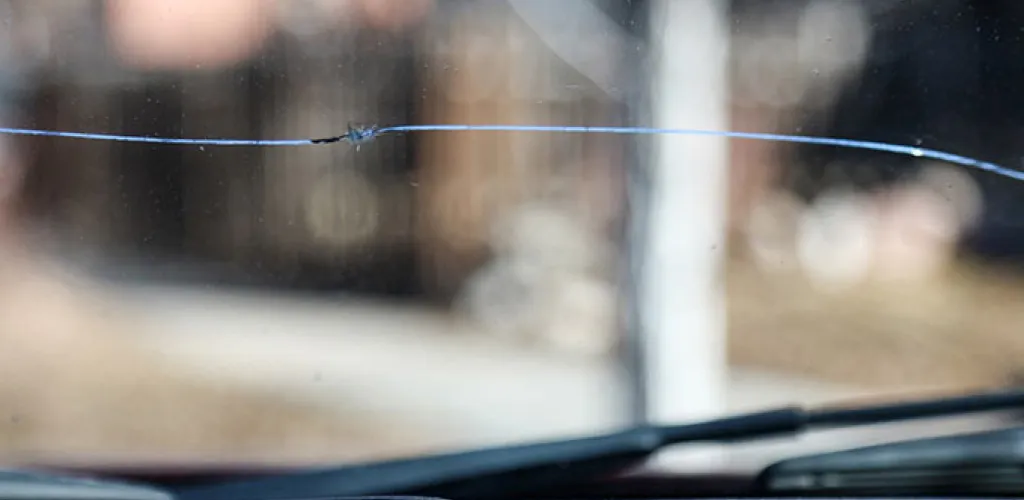
- Cracks can reduce structural strength by up to 50% and affect airbags.
- Major cracks or those in the driver’s zone require replacement.
- Legal and insurance issues include fines, ITP failure, and possible coverage denial.
Many drivers think a small crack in the windshield is just a minor cosmetic issue, but the reality is much more complex. The windshield is not just a transparent window to observe traffic — it is a vital structural component of your vehicle with a crucial role in occupant safety.
Driving with a cracked windshield can have serious safety consequences and can turn a simple crack into a major accident. Let us analyze the risks in detail and understand why repairing or replacing the windshield should be an absolute priority.
Structural role of the windshield in vehicle safety
Structural integrity of the body
- Improves chassis rigidity
- Prevents body roll in corners
- Provides a roof support
- Prevents sudden roof collapse
Protection in different types of crashes
In the event of a frontal collision, the windshield works in tandem with the designed deformation zones. When impact energy reaches the passenger compartment, an intact windshield maintains the structural integrity of the body, preventing excessive deformation. During a rollover, the curved shape and rigidity of the windshield provide significantly greater protection against roof collapse. Similar to the egg-shell principle, the curved shape distributes pressure evenly and prevents structural failure.
Concrete dangers of driving with a cracked windshield
Compromising structural safety
- Reduces structural strength by up to 50%
- Allows rapid crack propagation under pressure or temperature changes
- Compromises airbag operation — the windshield acts as a mounting point for the passenger airbag
Risks to visibility and concentration
- Image distortion
- Reduced visibility in bright light or at night
- Driver distraction — the driver involuntarily focuses on the crack
- Issues with passing the ITP — a cracked windshield can be grounds for rejection
Effects of weather conditions
- Temperature differences — expansion and contraction of glass
- Vibrations caused by poorly maintained roads
- Air pressure at high speeds
- Moisture entering the crack and freezing
Types of cracks and level of danger
Minor cracks (under 15 cm)
- May be repaired if not in the direct field of view
- Requires prompt intervention to prevent spread
- Repair cost is much lower than full replacement
Major cracks (over 15 cm)
- Requires complete windshield replacement
- Presents an immediate safety risk
- Can cause complete glass failure on a minor impact
Cracks in the driver’s zone
- Extremely dangerous regardless of size
- Directly affect visibility
- Requires immediate windshield replacement
Legal and Insurance Aspects
- Fine for compromising road safety
- Failure to pass the ITP if the crack affects visibility
- Insurance issues – some companies may refuse compensation if the vehicle was not in proper technical condition
Emergency measures and recommendations
Immediate actions when a crack appears
- Avoid sudden temperature changes — do not run the air conditioning at maximum
- Drive with increased caution — avoid potholes and strong vibrations
- Schedule a repair quickly — the longer you wait, the higher the cost
- Temporary application of clear film — only as an emergency measure
When to replace the windshield completely
- Cracks larger than 15 cm
- Multiple impact points
- Cracks in the driver’s zone
- Cracks reaching the edge of the windshield
- Deterioration of the inner safety laminate
Modern windshield technology
Modern windshields use laminated glass — two sheets of glass joined by a plastic interlayer (PVB - Polyvinyl Butyral).
This construction:
- Prevents fragmentation into sharp pieces
- Maintains visibility even after impact
- Offers UV protection — blocks harmful radiation
- Includes advanced features — heating, rain sensors, cameras for ADAS systems
Conclusion
Driving with a cracked windshield is not just an aesthetic issue — it is a serious compromise of your safety and that of other road users. Even a small crack can have severe consequences in an accident, significantly reducing the protection offered by the vehicle.
Investing in windshield repair or replacement is one of the most important safety decisions you can make as a driver. The cost of a repair is negligible compared with the risks you take driving with a damaged windshield. Don’t leave your safety and that of your passengers to chance — schedule a repair at the first sign of windshield damage.