- Engine displacement influences power, torque, acceleration, and fuel consumption.
- More cylinders generally increase power but raise cost, emissions, and complexity.
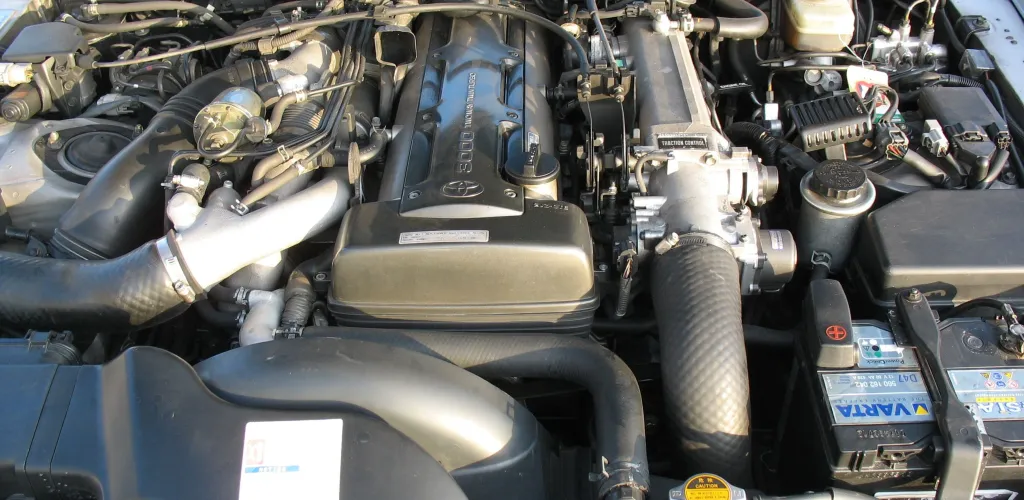
- Cylinder arrangement affects engine size, weight, vibration, and performance trade-offs.
- Inline engines are simple and affordable; V engines boost power and reduce length.
For any vehicle owner, understanding how the engine works is the key to proper maintenance and efficient driving. The engine, rightly regarded as the heart of the car, is a complex assembly of components that work in perfect harmony to deliver the power needed to move the vehicle. Knowing a few fundamental aspects will help you better understand your car’s behavior and make more informed maintenance decisions.
To maximize your vehicle’s potential and avoid costly problems, it’s essential to understand three basic engine characteristics that directly influence performance, fuel consumption, and long-term reliability.
Engine capacity – determinant of power and fuel consumption
Impact of capacity on performance
Motors with large displacement (over 2.0 liters) generally offer:
- Higher power and torque
- Faster acceleration
- Improved towing capacity
- Higher fuel consumption
Motors with small displacement (under 1.6 liters) are characterized by:
- Lower fuel consumption
- Lower pollutant emissions
- Lower maintenance costs
- Limited power for heavy loads
On the engine cover or in the technical documentation, you will find this information listed as 1.0, 1.4, 1.6, 1.9, 2.0, 2.5, and so on, representing displacement in liters.
Number of cylinders – power architecture
Cylinders are the chambers where the combustion process takes place, where the chemical energy of the fuel is transformed into mechanical energy. The number of cylinders affects not only engine power but also its operating characteristics, including vibrations, sound, and smoothness of operation.
Common cylinder configurations
3-cylinder engines:
- Compact and light
- Low fuel consumption
- More pronounced vibrations
- Used in small urban cars
4-cylinder engines:
- The most common configuration
- Good balance between power and efficiency
- Moderate, well-controlled vibrations
- Reasonable maintenance costs
6-cylinder engines:
- Smoother operation
- Higher power
- Higher consumption
- Used in premium vehicles
8, 10, 12 or 16-cylinder engines:
- Reserved for luxury and sports vehicles
- Exceptional power
- Very smooth operation
- Higher consumption and maintenance costs
Cylinder arrangement – the geometry of performance
The way cylinders are arranged in the engine block influences the engine’s dimensions, weight distribution, vibration characteristics, and overall vehicle performance.

Inline engines
In this configuration, the cylinders are arranged in a single straight line. This is the most common solution thanks to:
- Simplicity of construction - fewer moving parts
- Lower production and maintenance costs
- Accessibility for repairs
- Compact width dimensions
V engines
Cylinders are split into two banks set at an angle (typically 60°, 90°, or 120°), forming the letter V. This configuration offers:
- Shorter length overall
- Lower center of gravity
- Higher power for the same number of cylinders
- Smoother operation in multi-cylinder engines
W engines
A more complex configuration that effectively combines two V engines, resulting in a W-shaped layout. These engines:
- Drive two synchronized crankshafts
- Offer exceptional power in a relatively compact space
- Are used in luxury vehicles such as Bentley or Bugatti
- Require advanced manufacturing technology
Special configurations
Boxer (opposed) engines:
- Cylinders are laid out horizontally, opposite each other
- Very low center of gravity
- Reduced vibrations
- Used by Porsche and Subaru
Radial engines:
- Cylinders are arranged radially around the crankshaft
- Historically used in aviation
- Very rare in modern automotive industry
Wankel rotary engines:
- A completely different principle of operation
- Used by Mazda in the past
- Compact but with durability and emissions challenges
Understanding these three fundamental aspects will help you better appreciate the engineering behind your car and make informed decisions about maintenance and any potential future purchase. Each configuration has its advantages and drawbacks, and the right choice depends on your specific use needs and personal preferences.