- No universal interval; common guide is 4 years or 80,000 km.
- Heavy use or extreme conditions increase replacement frequency.
- Brown/dark color, dirt, foaming indicate replacement; noises or hard steering.
- Process: drain, refill with correct fluid, bleed air, test.
The power steering system is one of the essential components of any modern vehicle, and power steering fluid plays a crucial role in its operation. Keeping this hydraulic fluid within optimal parameters is not only a matter of comfort but also of safety on the road.
The purpose of power steering fluid is to ensure easy handling and precise steering of the vehicle. The power steering system assists maneuverability by directing engine power to one front wheel or the other in front-wheel drive applications. Using a hydraulic system, the power steering operates with a pump driven by the accessory belt to create pressure. This hydraulic pressure is produced by a rotary pump driven by the car’s engine.
What does power steering fluid do?
Power steering fluid is a specialized hydraulic fluid that transmits power in the power steering system. It operates under high pressure and is subjected to extreme temperatures, which is why its quality degrades over time.
Its functions include:
- Lubricating the internal components of the system
- Protecting against corrosion and wear
- Ensuring the seals stay sealed
- Dispersing the heat generated during operation
What is the service interval for power steering fluid?
Unlike other automotive fluids, there is no universal interval for changing power steering fluid. Most manufacturers recommend the following intervals:
Standard interval
- Every 4 years or 80,000 km (whichever comes first)
- Some premium brands may extend the interval to 100,000–120,000 km
- Vehicles with heavy use may require more frequent changes
Factors that influence the interval
- Driving style (city vs. highway)
- Extreme climatic conditions
- Fluid quality used
- Overall condition of the power steering system
How to identify when the fluid needs replacement?
A qualified mechanic will typically recommend changing the power steering fluid if it shows a brownish color during inspection. However, there are several signs you can watch for:
Visual indicators:
- Color has shifted from red/yellow to brown
- Fluid looks dark or dirty
- Particles are suspended in the fluid
- Foaming or bubbles are present in the reservoir
Operational symptoms:
- Steering feels hard to maneuver
- Unusual noises when turning
- Vibrations transmitted through the steering wheel
- Delayed steering response
The process of changing the fluid
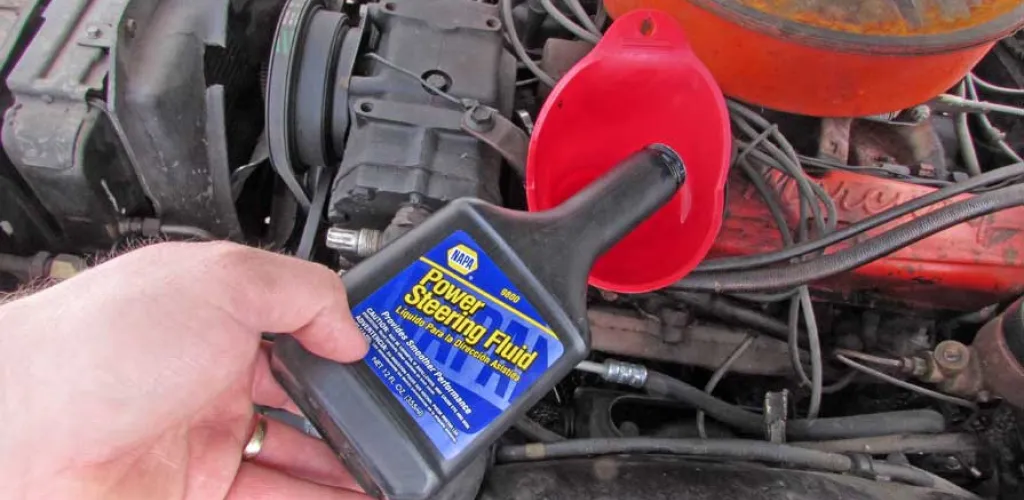
Changing the power steering fluid involves draining the old fluid and then adding a new one. Depending on the car type, a specific type of power steering fluid may be required.

Steps of the process:
- Identify the correct type — A qualified mechanic will verify this before changing
- Complete drainage — Old fluid must be removed from the entire system
- System cleaning — In extreme cases, a flush may be necessary
- Refill with new fluid — Following the manufacturer’s specifications
- Bleeding the air — Removing air bubbles from the system
- Function testing — Verifying that everything operates correctly
Types of power steering fluids
There are several types of fluids, each with its own properties:
ATF (Automatic Transmission Fluid)
- Used by many brands (Ford, Chrysler, Mazda)
- Available in Dexron and Mercon variants
- Typically less expensive than specialized fluids
Specialized fluids:
- PSF (Power Steering Fluid)
- Brand-specific fluids (Mercedes, BMW, Audi)
- Synthetic fluids for higher performance
Why maintenance matters
A degraded power steering fluid can cause:
- Premature wear of the power steering pump
- Deterioration of seals and gaskets
- Corrosion of metal components
- Progressive loss of steering assist
- High repair costs for pump replacement
Fluid changes can be time-consuming, and it’s important to do them correctly. A qualified mechanic can perform the hydraulic fluid change quickly and smoothly, ensuring the system operates at optimal parameters.
Final recommendations
To keep the power steering system in peak condition:

- Check your vehicle’s manual for the interval specific to your car
- Regularly check the fluid level and color
- Rely on an authorized service for the fluid change
- Do not mix different types of fluids
- Replace the fluid promptly after any steering system repairs
Investing in proper maintenance of power steering fluid is far cheaper than repairing a damaged pump or other components of the system.
Photo source: autosneed.com, knowhow.napaonline.com