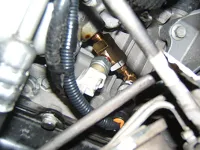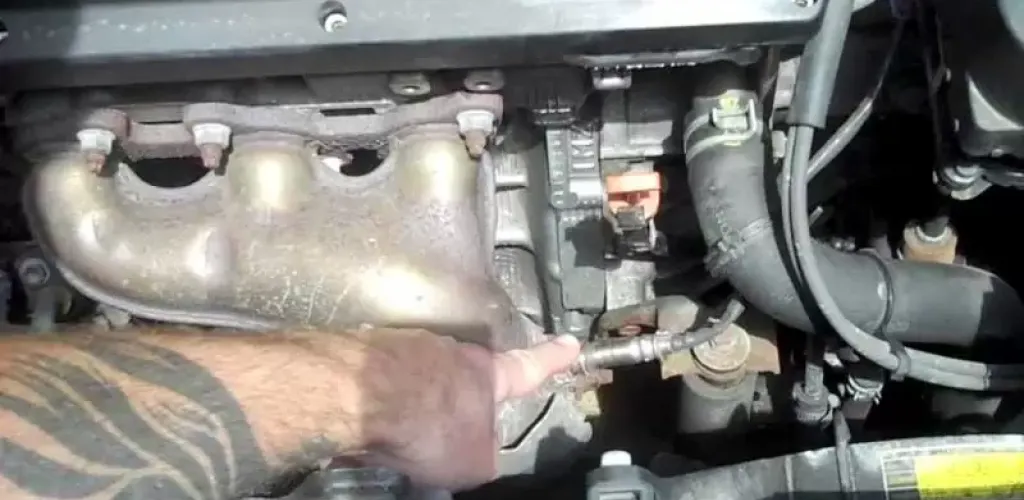
- Bank 1 is the engine side with Cylinder 1; Bank 2 is the opposite.
- On V-engines, Bank 1 is the cylinder-1 side; Bank 2 is the other.
- Upstream sensors precede the catalyst; downstream sensors follow it.
- Typically two O2 sensors per bank, one upstream and one downstream.
Oxygen sensors are essential components of your car’s emissions system, but correctly identifying them can seem confusing. In this comprehensive guide, we’ll explain what Bank 1 and Bank 2 mean, how the O2 sensors are positioned on your engine, and how you can use an OBD2 scanner to locate them precisely.
Historically, automakers began equipping vehicles with new components designed to reduce exhaust gas emissions in the 1970s. This came in response to government regulations of the era that mandated the adoption of technologies to reduce pollution.
As technology progressed, a range of sensors was developed to provide direct feedback on the efficiency of the emissions system. The most important of these was the oxygen sensor, or O2 sensor. These sensors enable the vehicle’s ECM and PCM to distinguish between two possible combustion conditions: rich or lean mixtures.
However, even today, many car enthusiasts face questions about the location and operation of oxygen sensors. More specifically, the challenge of identifying a particular O2 sensor relative to its accompanying sensors is often raised. Fortunately, this process is much less complicated than you might assume.
What Bank 1 and Bank 2 Mean
There are two specific names used when outlining the location of a particular oxygen sensor. The first refers to the engine bank that corresponds to an O2 sensor.
Bank 1 - the side housing Cylinder 1
When dealing with V-engine configurations, one side of the V is referred to as Bank 1, while the other is Bank 2. The ordering of these banks or engine sections is always based on the location of Cylinder 1.
For example, many V8 engines are arranged with cylinders 1, 3, 5, and 7 on one bank (Bank 1), while cylinders 2, 4, 6, and 8 are located on the opposite side and are considered part of Bank 2.

Regardless of configuration, the term Bank 1 is used to describe the side of the engine block that houses the first cylinder. Some engines are labeled along their blocks, providing data related to engine bank orientation. In other cases, you may need to consult the vehicle’s factory service documentation to determine one bank from the other.
Upstream vs Downstream Positioning
The second name used to describe the location of a vehicle’s O2 sensor refers to its orientation upstream versus downstream.
Upstream Sensors
In most cases, the vehicle’s exhaust system will have two independent oxygen sensors for each engine bank. One of these two sensors will be located upstream of the vehicle’s exhaust catalyst.
Downstream Sensors
The other sensor will be located downstream of the catalyst. In short, the terms upstream/downstream are used to describe the position of the O2 sensor relative to the exhaust catalyst, taking into account the direction of the exhaust flow. This is easiest to understand by imagining a vehicle’s exhaust as a river flowing from the engine toward the rear of the car.
Identifying the Position of Oxygen Sensors
Bank 1 Sensor 1
The oxygen sensor for a vehicle (Bank 1, Sensor 1) will be located upstream of the catalytic converter on the bank that corresponds to the engine’s first cylinder. If we are talking about a 4- or 3-cylinder engine, Bank 1 refers to the sensor located above the catalytic converter, along the exhaust path.
Bank 2 Sensor 2
The oxygen sensor for a vehicle (Bank 2, Sensor 2) will be located downstream of the catalytic converter on the bank that corresponds to the engine’s first cylinder. If we are talking about a 4- or 3-cylinder engine, Bank 2 refers to Sensor 2, which is located much further downstream from the catalytic converter. Between the two sensors we basically have only the catalytic converter.
How Many Oxygen Sensors Are on an Engine
V-Engines
In most cases, there will not be more than two oxygen sensors per bank. This is because all engines require an O2 sensor at each end of each catalytic converter used. Therefore, V-configured engines use a total of four individual oxygen sensors to feed data to the vehicle’s PCM.
Inline Engines
Inline engines use only 2 oxygen sensors. This is because engines with this configuration have a single engine bank and, therefore, use a single catalytic converter. This means only one O2 sensor upstream and one downstream are required.
How to Locate an O2 Sensor Using an OBD2 Scanner
An OBD2 scanner can also be used to determine the exact location of a particular sensor. This process is fairly quick, taking only a few minutes to complete. Additionally, locating an O2 sensor by these means is a fairly thorough method, saving both money and effort by eliminating any chance of replacing a correctly functioning O2 sensor by mistake.
Steps for Identification
Before attempting to locate a specific O2 sensor, ensure the vehicle is ready to start and that the OBD2 scanner is properly plugged into the correct port. At this point, you can disconnect each O2 sensor, one at a time, while you monitor the active codes recorded on the scanner.
As a sensor is effectively disconnected from the car, a “open circuit” or “high voltage” code should be produced, with the corresponding sensor location designation. When you reconnect this sensor and start the vehicle, this DTC should be cleared and the error should no longer appear in real-time diagnostics.
Therefore, you can continue to disconnect each sensor (one at a time) until you positively identify the sensor you are looking for, and thus determine which oxygen sensor is Bank 1 and which is Bank 2.