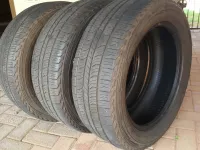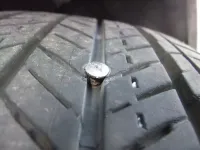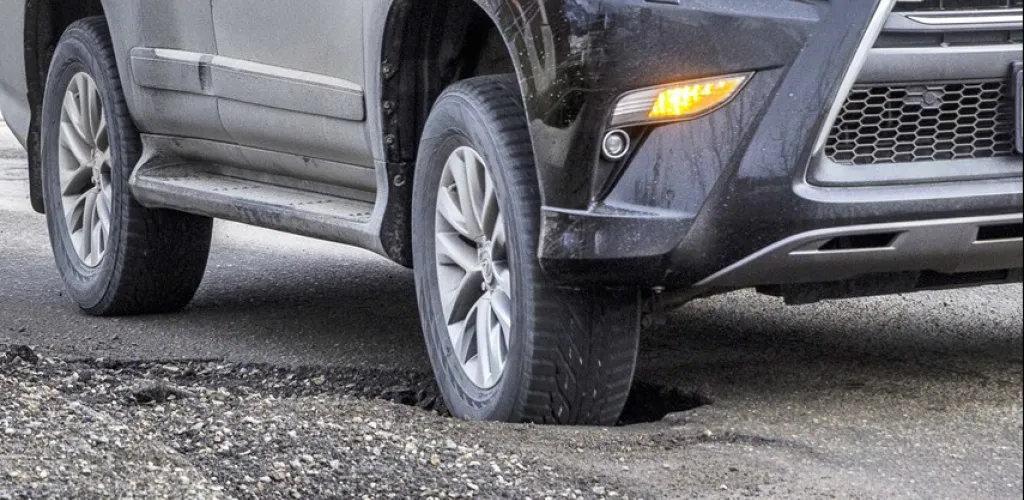
- Pothole impacts can break tire cords, causing bulges, blowouts, vibrations, and reduced grip.
- Rim deformities cause steering vibrations, uneven wear, balancing issues; professionals can straighten rims.
- Suspension damage may involve shocks or springs; signs include noises, swaying, instability, longer stops.
- Potholes alter toe angle, affecting grip, wear, and stability; check geometry after impact.
Potholes on road surfaces are a daily challenge for drivers in Romania. A violent impact with a pothole can cause costly damage to your car, from tire damage to serious suspension issues. Understanding these risks helps you drive more cautiously and avoid expensive repairs.
This guide explains what happens to tires, rims, suspension, and other critical components when you hit a pothole at speed, and how to minimize the risk.
What happens to tires on impact
Tires are the first line of defense against potholes and suffer the most from a violent impact. A modern tire has a complex structure with multiple layers of textile and steel cords that provide strength and flexibility.
On a strong impact with a pothole, these internal cords can break even if the exterior of the tire appears intact. The rupturing cords lead to the formation of bulges — areas where the inner material yields and creates a protrusion on the sidewall.
These bulges are extremely dangerous for several reasons:
- They can lead to a tire blowout during motion
- They cause strong vibrations that affect driving comfort
- They unbalance the wheel, affecting other suspension components
- They reduce grip and stability
After you enter a large pothole, always check tires for cuts, bulges, or deformations.
Effects on rims
Rims are the next vulnerable component on impact. Modern aluminum rims are designed to deform in a controlled way on impact to absorb energy and prevent cracking or complete breakage.
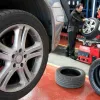
A deformed rim causes:
- Strong vibrations in the steering wheel, especially at high speeds
- Uneven tire wear
- Problems with wheel balancing
- Handling difficulties and reduced responsiveness
Fortunately, most aluminum rims can be straightened at specialized vulcanizing shops, but the process must be done by professionals to avoid weakening the structure.

Suspension system and pothole impact
Potholes can prematurely damage the suspension system, damaging the shock absorbers or even the springs. The suspension is designed to absorb normal impacts, but large potholes exceed the limits of this system.
Signs of a damaged suspension:
- Metal noises when climbing over curbs or pedestrian crossings
- The car sways excessively in corners
- Instability when changing direction
- Uneven tire wear
- Longer stopping distance
If you notice these signs, consult a specialized mechanic quickly. A faulty suspension not only affects comfort but can seriously compromise driving safety.
Wheel geometry issues
Potholes will certainly affect the toe angle of the wheels. Wheel geometry is essential for:

- Optimal grip on the road
- Uniform tire wear
- Directional stability
- Fuel consumption
You can adjust the toe angle at specialized service centers where the vehicle inspection (ITP) can also be performed. It is recommended to check the geometry after any major impact with a pothole.
Major damages: oil pan and undercarriage systems
Oil pan
An impact violent enough can crack the oil pan, causing:
- Complete oil loss from the engine
- Engine seizure due to lack of lubrication
- Very costly repairs
Hoses and components
Other vulnerable elements include:
- Fuel lines
- Exhaust system
- Electrical wiring
- Climate control system components
- Fuel tank (in extreme cases)
How to minimize risks
For protecting your car:
- Adapt your speed to road conditions
- Maintain a safe following distance from the vehicle in front to improve visibility
- Avoid large potholes by changing lanes when safe
- Check tire pressure regularly – underinflated tires absorb impacts less well
- Invest in quality tires that offer more protection
Remember that prevention is always cheaper than repair. Careful driving and adjusting speed to road conditions can save your car from costly damage and you from dangerous situations.
Photo source: autotrader.ca, motoringresearch.com