- Stay calm to avoid panic and risky decisions
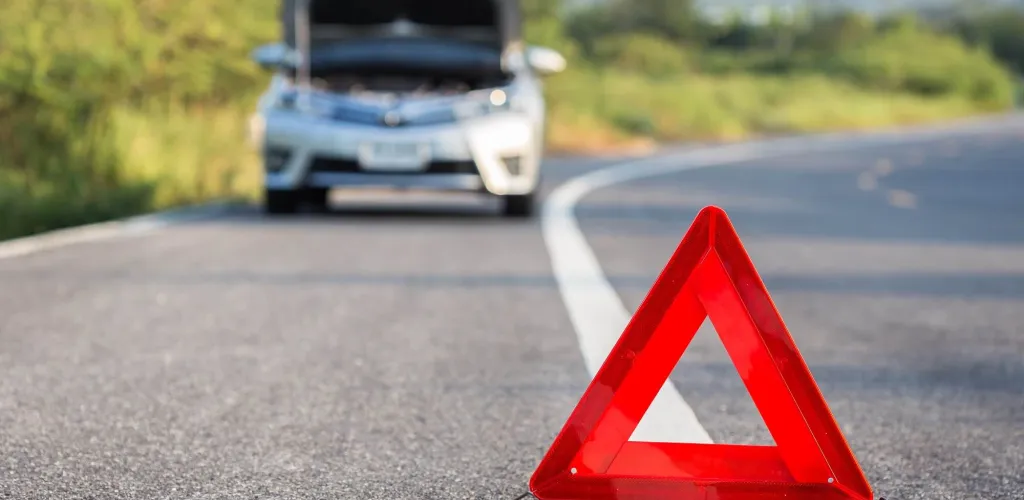
- Move the car off the roadway, use hazard lights, and place triangles 30 meters apart
- Signal your location before curves or in heavy traffic; assess safety
- Contact towing or auto service; determine if fixable on-site (battery, tire)
Being stranded with a car can be stressful, especially when you’re far from home or in remote areas. Many drivers panic in such moments, but with proper preparation and knowledge of the correct steps, any roadside breakdown can be managed efficiently and safely.
Scenarios like being somewhere desolate at night and watching all the dashboard warning indicators blink like Christmas lights, then the car suddenly stopping, may sound cinematic, but the reality is that almost all drivers go through such uncomfortable moments.
Even owners of very new cars, with only 10,000–30,000 km on the clock, can encounter unforeseen problems. Vehicle breakdowns do not respect the age of the vehicle and can occur at any time, especially under heavy use.
First Rule: Staying Calm
The most important aspect when you break down – and it could be considered the golden rule – is to stay calm and not panic. Stress will only worsen the situation, and panic can lead to wrong decisions that put your safety and that of other road users at risk.
Remember that it is not the end of the world and that there is a solution. Automotive technicians and towing services are prepared to intervene in such situations, and with the correct safety measures, you can manage any breakdown efficiently.
Immediate Safety Measures
Getting the vehicle off the roadway
The first action is to move the car off the roadway, if possible. If the engine is still running, use the remaining power or inertia to steer to the right – this helps avoid pushing the car later.
If the vehicle cannot be moved completely, pull it as far to the right as possible to avoid obstructing traffic. In extreme situations, when the car is immobilized in the middle of the road, it is crucial to immediately apply signaling measures.
Correct Signaling of a Faulty Vehicle
Turn on the hazard lights immediately to warn other road users that you have a vehicle issue. This is mandatory and can prevent secondary accidents.
Place the two reflective triangles at least 30 meters from the vehicle, both in front and behind it, on the roadway. Many drivers make the mistake of placing these devices only 5 meters from the car, which does not give other drivers enough time to react.
Pay Attention to the Exact Location
If the car stopped right after a blind curve, it is essential to signal the situation before the curve. This prevents scenarios where other vehicles approach at high speed and cannot stop or avoid in time, creating a risk of serious accidents.
In urban environments with heavy traffic, getting the car off the roadway can be more difficult, but it remains the number one priority. Assessing the situation is much safer when the vehicle does not block traffic.
Contacting Specialized Services
After securing the area, the next step is to contact an auto service for towing. Quickly evaluate whether the fault can be remedied on the spot (dead battery, blown tire) or requires a specialist.
Daytime vs. Nighttime Situations
During the day, contact your usual service or a towing company to be towed to the nearest workshop. At night, call 24/7 towing firms that can transport you to the nearest city or service, or at least to a gas station where you can leave the car safely.
If the situation occurs at night and far from home, arrange accommodation at a nearby hotel and address the issue the following day when services are open.
Preventive Preparation
Vehicle Check Before Long Trips
The most effective way to avoid breakdowns in remote locations is to thoroughly check the car before leaving for vacation or long trips where the vehicle will be stressed by sustained higher speeds.
Schedule in advance a full service check at a workshop, including:
- Cooling system: check the level and condition of the coolant
- Fuel system: fuel filter, fuel pump
- Electrical system: battery, alternator, spark plugs
- Suspension and steering: shock absorbers, joints, tires
- Braking system: pads, discs, brake fluid
Financial Preparation
Always keep a financial reserve for emergencies. Tow and repair costs can be substantial, especially in tourist areas or far from urban centers.
Managing Stress and Anxiety
The fear many drivers feel about breaking down far from home, where they cannot rely on friends or family, is understandable. The situation becomes even more uncomfortable when it happens on vacation, when you should be relaxing.
But with proper preparation and knowledge of the steps to follow, any breakdown can be transformed from a traumatic experience into a simple temporary delay. Roadside assistance services are available 24/7, and the network of auto service centers covers all areas of the country.
Conclusion
Being stranded is not a catastrophe; it is a situation that all drivers can encounter, regardless of experience or how old the car is. The key to success lies in staying calm, applying safety measures, and quickly contacting specialized services.
Investing in preventive checks and maintaining an emergency financial reserve are the best ways to minimize the impact of a breakdown on your schedule and budget.
Photo source: insurethebox.com