- Eating while driving distracts more than talking on the phone.
- Spills from hot drinks can cause panic, burns, and loss of control.
- It damages interior, odors, and reduces resale value due to stains and moisture.
- Planning meals and stopping safely prevents risks and maintains driver focus.
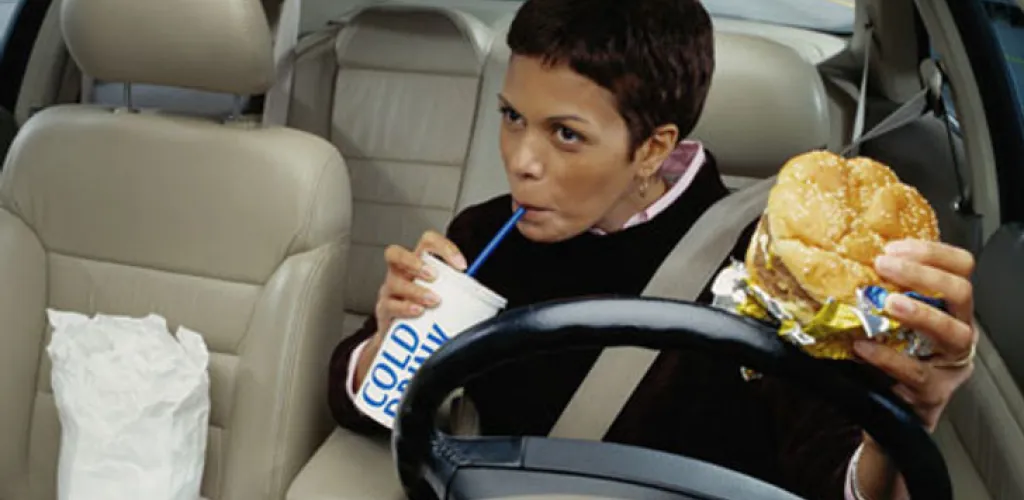
Recent studies show that eating behind the wheel is a greater distraction than talking on the phone, significantly reducing the driver’s attention to the road. Although drive-through restaurants are increasingly popular in Romanian cities, eating while driving can have serious consequences for road safety as well as the vehicle’s condition.
Whether you’re eating a cold sandwich, a cheeseburger, or a hot coffee, all of these foods can cause significant damage to the car and pose a major risk to traffic safety.
Risks to road safety
Loss of vehicle control
- Temporary loss of control: It is enough to lose control of the steering for a few seconds to cause a serious accident
- Inability to signal correctly during maneuvers
- Difficulty turning correctly in emergency situations
- Inability to react quickly to traffic hazards
Reduced visual field and reaction time
- Visual field reduction: One eye stays on the food, the other on the road
- Reaction time: Split attention automatically leads to slower reactions
- Observation ability: You won’t observe pedestrians, vehicles overtaking illegally, or other hazards in time
Dangers of hot liquid spills
Spilling a sauce or hot coffee can dramatically worsen the situation:
- Natural reflex to dodge liquid can lead to sudden steering movements
- Burns can cause panic and complete loss of control
- Stains on clothing can distract attention for several minutes
Impact on the vehicle
Interior damage
- Stains and persistent odors that reduce resale value
- Damage to upholstery from spills
- Accelerated wear of surfaces due to dirt
Hygiene and moisture issues
- Unpleasant odors hard to remove
- Increased humidity inside the cabin
- Persistent condensation on the windshield and windows
- Growth of bacteria and mold
Effect on passengers
Even if the driver does not eat, passengers eating in the car can:
- Distract the driver with continuous movements
- Cause discomfort due to odors, especially if the driver is hungry
- Reduce concentration on driving
Recommendations for drivers
Plan your meals in advance
- Eat before departure to avoid hunger during the journey
- Schedule regular meal breaks on long routes
- Identify safe stopping places on your usual route
In case of emergency
- Stop safely: A 15-minute roadside break is far safer than risking an accident
- Choose suitable locations: parking lots, gas stations, or specially designed rest areas
- Don’t make hasty decisions: Hunger never justifies risking your life and others’
Impact on personal image
The way a car looks reflects many aspects about its owner. A car is a means of transportation, not a mobile restaurant. Keeping a clean and organized interior:
- Conveys the owner’s professionalism
- Preserves the vehicle’s resale value
- Ensures a healthy environment for all occupants
Conclusion
Eating at the wheel represents a major risk to road safety and can have lasting negative effects on your vehicle. Studies show this habit can be more dangerous than talking on the phone, and the consequences can be dramatic.
No matter how hungry you are or how urgent the situation, safety must always be the top priority. A short meal break will not only potentially save your life but will also help keep your vehicle in optimal condition in the long term.