- Damaged or worn key prevents ignition activation.
- Steering wheel lock can block starts; unlock gently with key in start.
- Dirty or frozen ignition cylinder hinders starting; spray, warm key, graphite lubricant.
- Transmission must be in Park/Neutral or clutch fully depressed; battery issues common.
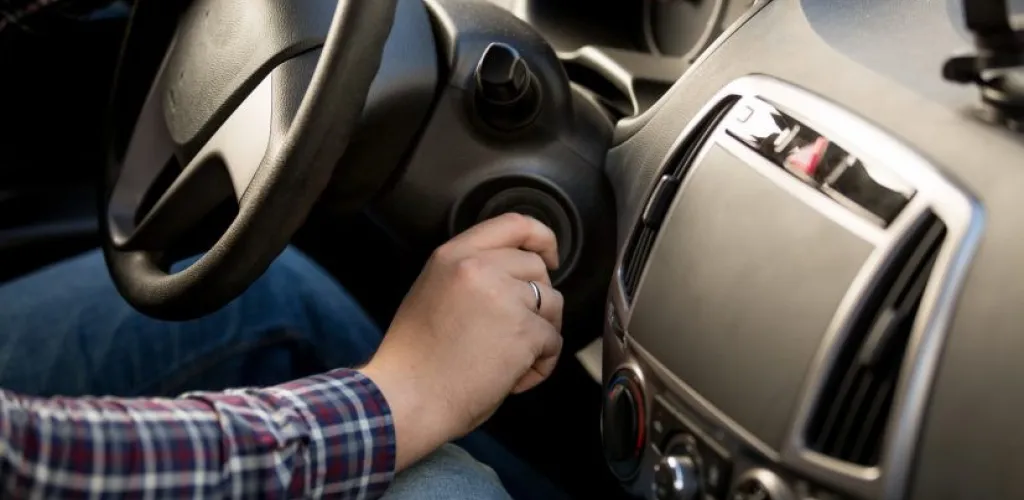
The moment you turn the key and the engine refuses to start can be extremely frustrating, especially when you’re in a hurry. This guide presents the most common causes why a car won’t start on the first key turn and practical solutions for each situation.
Behind the seemingly simple act of starting the engine lies a complex sequence of electronic and mechanical interactions. From the ignition lock to the anti-theft system, every component must work in perfect synchronization for the engine to fire.
How the car starting process works
When you insert the key into the ignition, a cascade of processes is triggered:
- Ignition lock verifies that the key is correct
- Anti-theft system reads the unique code on the key
- Ignition switch transmits the signal to the ECU (electronic control unit)
- Engine management system checks all sensors
- Starter motor receives the command to start
For this process to run smoothly, all components must be in perfect working condition.
The 8 main causes why the car won’t start
1. Damaged or worn key
This is the most common issue drivers face. A bent, worn, or damaged key cannot activate the ignition mechanism properly.
Signs to recognize:
- It turns hard in the ignition
- Requires excessive force
- Visible deformations
- Grooves or the metal surface scratched or worn
Solution: Contact the dealership to obtain a new key. Do not try to straighten a bent key, as you may further damage the internal mechanism.
2. Steering wheel locked in position
The steering lock activates automatically when you remove the key from the ignition. If the wheel is moved after removing the key, it can lock in a position that prevents starting.
Immediate solution:
- Keep the key in the start position
- Gently move the steering wheel left and right
- Do not force it — movements should be smooth
- You’ll feel it unlock as the resistance decreases
3. Ignition cylinder dirty or frozen
Small particles, dirt, or moisture can clog the internal mechanism of the ignition cylinder, especially in cold weather.
Common causes:
- Key held with coins or other metallic objects
- Freezing in winter
- Normal wear over years of use
- Attempts at tampering
Solutions:
- Electrical contact spray applied to the cylinder
- Warming the key with a lighter (for freezing conditions)
- Graphite lubricant designed for locks
4. Transmission not in the correct position
Modern cars have safety systems that prevent starting if the transmission is not in neutral or park.
For automatic transmissions:
- Gear selector must be in “P” (Park) or “N” (Neutral)
- Brake pedal must be fully pressed
- Parking brake engaged
For manual transmissions:
- Clutch pedal fully depressed
- Gear shifter in neutral
- Parking brake engaged
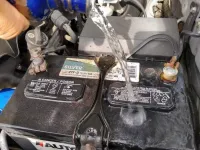
5. Battery discharged or defective
One of the most common causes, especially in cold seasons when batteries lose capacity.
Clear symptoms:
- Dim dashboard lights
- Starter motor hesitates or spins without starting
- Click sound when turning the key
- Electrical systems operate intermittently
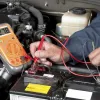
- Battery voltage below 12.4 V (measured with a multimeter)
Solutions:
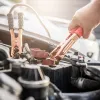
- Jump-start with jumper cables from another vehicle
- Charge the battery with a professional charger
- Replace the battery if it’s older than 4–5 years
6. Problems with the fuel supply system
Faulty fuel pump is a serious issue that manifests as:
- The engine turns but won’t start
- No pump noise when turning the key
- Low rail pressure in the fuel system
Clogged fuel filter causes:
- Difficult starting, especially cold
- Rough idle
- Loss of power during acceleration
7. Faulty ignition system
Worn spark plugs (typically every 30,000–60,000 km) can cause:
- Difficult starting, especially in the morning
- Irregular engine operation
- Higher fuel consumption
Faulty ignition coils present as:
- Misfires in cylinders
- Abnormal vibrations
- Check Engine light is on
8. Faulty or dirty sensors
Crankshaft position sensor is crucial for starting:
- Without its signal, the ECU doesn’t know piston position
- The engine turns but won’t start at all
- Requires professional diagnosis
Mass air flow (MAF) sensor affects:
- Air-fuel mixture
- Cold-start performance
- Overall engine performance
Practical solutions and tips
For key problems
- Never force a key that doesn’t turn easily
- Keep a spare key and test it monthly
- Avoid general locksmiths — only the dealership can program the key correctly
- Use specialized ignition cylinder sprays
For electrical problems
- Test the battery annually at specialized service centers
- Clean terminals with baking soda and water
- Check the alternator if the battery frequently discharges
- Keep jump cables in the trunk
For mechanical problems
- Follow the manufacturer’s maintenance schedule
- Use quality fuel and cleaning additives
- Do not let the tank run completely dry
- Replace filters per recommendations
Quick diagnosis: how to identify the cause
Sound test
- No sound: battery completely discharged
- Rapid click: weak battery or corroded terminals
- Turnover without starting: issues with fuel or ignition
- Starts then stalls: antifraud/immobilizer system problem
Lights test
- Dim lights: discharged battery
- Normal lights, engine won’t start: mechanical problem
- Lights flicker: poor battery connections
Essential preventive measures
Regular maintenance
- Change oil per the schedule
- Check batteries before the cold season
- Test the ignition system annually
- Clean the fuel injection system with specialized additives
Preventive driving
- Use the car regularly — at least 20 minutes weekly
- Avoid very short trips that don’t allow full battery charging
- Turn off all electrical consumers before removing the key
- Park in covered places during winter
When to call a specialist
Contact a mechanic if:
- The problem persists after trying simple solutions
- Unusual sounds appear at startup
- Warning lights come on the dashboard
- The car starts intermittently without a clear reason
- Fuel consumption rises suddenly
Professional diagnosis
A specialized service will perform:
- Electrical system testing with professional equipment
- Checking error codes in the ECU memory
- Testing fuel pressure in the injection system
- Sensor signal analysis via diagnostic interface
Remember that an accurate diagnosis from the start can prevent costly repairs. A minor issue left unchecked can become a major failure requiring substantial investment.