- Replace air filter every 30,000–60,000 km per vehicle manual.
- Replacement frequency rises in polluted urban areas, dusty rural roads, and industry.
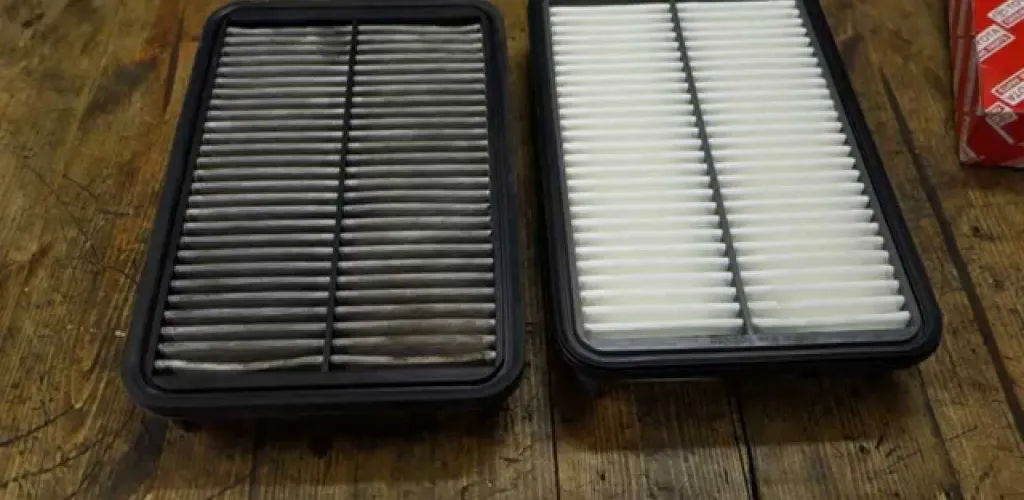
- Dirty, darkened, torn, or damaged seals require urgent replacement.
- A clogged filter causes power loss, higher fuel consumption, and increased emissions.
A well-maintained engine will always perform better than a neglected one, and the air filter is the first line of defense against contaminants that can reach the engine. This essential component ensures the engine breathes clean air, a vital element in the combustion process and for maintaining optimum performance.
The air filter removes dust, debris and other particles that could enter the combustion chamber and damage critical engine components. A filter in good condition not only protects the engine but also helps maintain normal fuel consumption and reduces emissions.
Air Filter Replacement Interval
Depending on the make and model of the vehicle, the air filter should be replaced at intervals between 30,000 and 60,000 kilometers. For precise information, the safest approach is to consult the car’s manual, where the manufacturer specifies the recommended service intervals.
Factors affecting replacement frequency
- Urban polluted environment: Fine particles and emissions can clog the filter more quickly
- Rural roads with dust: Require much more frequent changes, sometimes at 15,000-20,000 km
- Industrial zones: Pollution can accelerate filter clogging
- Season: Summer, when dust and pollen are in suspension, stresses the filter more

How to check the air filter condition
Checking the air filter is a simple task that anyone can perform. It sits inside a plastic housing (the air filter box) that opens by releasing clips and removing 2-3 screws.
Signs the filter needs urgent replacement:
- The filter is full of residues, leaves and dirt
- It is significantly darkened by dust and particles
- It has tears or damage to the filter material
- The rubber seals are damaged
If the filter only has a light dust accumulation, you can still drive for a while, but plan the replacement soon.
Effects of a defective air filter on the engine
Problems caused by a damaged filter
- Premature wear: Abrasive particles accelerate wear of moving components
- Carbon deposits: Build up on valves and in the combustion chamber
- Deterioration of piston rings: Dust can cause premature wear of piston rings
Consequences of a clogged filter
A filter that no longer allows sufficient air flow will affect engine performance in several ways:
- Power loss: The engine does not receive enough oxygen for optimal combustion
- Increased fuel consumption: A lean air mix leads to incomplete combustion
- Higher emissions: Poor combustion increases pollution
- Irregular operation: The engine may have unstable idle
Impact on the intake system
A clogged filter can force the intake system to work harder, which can lead to:
- Premature wear of the mass air flow sensor
- Issues with the throttle body
- Affecting turbocharger operation (in turbocharged engines)
Recommendations for optimal maintenance
To keep the engine in perfect condition:
- Regular checks: Inspect the filter at every scheduled service
- Preventive replacements: Do not wait until the filter is fully clogged
- Quality: Use only quality filters, per the manufacturer’s specifications
- Special conditions: Adapt the replacement interval to operating conditions
A clean air filter is a small investment that protects an engine worth thousands of euros. Neglecting this simple component can lead to costly repairs and a significant drop in vehicle performance.
Photo source: youtube.com