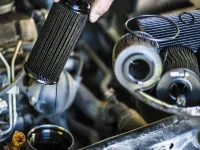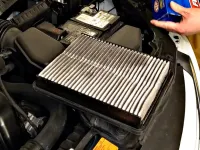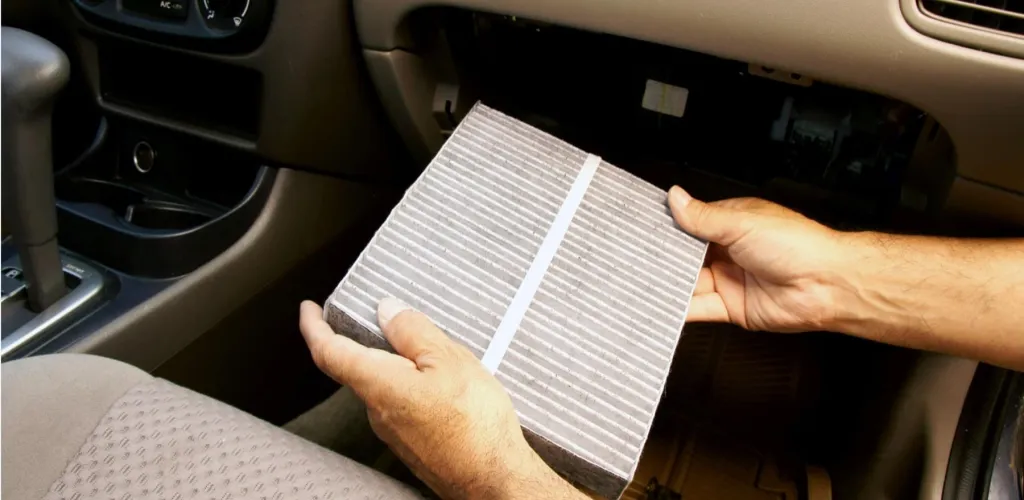
- Filters cabin air to protect occupants from pollution, allergens, and particles
- Does NOT replace engine air filter; pollen filter handles interior air
- Simple, activated carbon, and HEPA filters; HEPA catches tiny particles
- Excess fogging signals replacement; typical interval is 10,000–15,000 km or yearly
The cabin air filter, also known as the pollen filter, is one of the essential components for your comfort and health behind the wheel, yet it is often neglected in car maintenance. This element plays a crucial role in filtering all air that enters the vehicle’s cabin from outside, protecting you from pollution, allergens, and harmful particles.
It’s important to note that the pollen filter should not be confused with the engine air filter, which handles filtration of air entering the combustion chamber; the pollen filter focuses on the air you breathe inside the car.
What this filter actually filters and what types exist
Contrary to its name, the pollen filter does not only stop pollen from entering the cabin. It acts as a complex barrier against a wide range of pollutants:
- Large particles such as leaves, dust, sand, and insects
- Pollen and other allergens
- NOx and exhaust gases from other vehicles
- Fine urban pollution particles
- Mold spores and bacteria
In urban environments, this filter becomes vital for health, given the high amount of pollutants generated by heavy traffic. It works continuously to purify the air as much as possible, even in dense city conditions.
Simple cabin air filters
These are the basic variants, the most affordable and widespread on the market. They are made from synthetic fibers or special paper and provide standard mechanical filtration. While they perform the basic task of retaining larger particles, their efficiency in filtering NOx and odors is limited.
Activated carbon cabin air filters
They represent a significant upgrade over simple filters. Activated carbon absorbs unpleasant odors and neutralizes some harmful gases and volatile organic compounds. These filters are recommended especially for frequent urban driving or in industrial areas. The slightly higher price is justified by the superior protection they offer.
HEPA antibacterial cabin air filters
HEPA (High Efficiency Particulate Air) filters represent the pinnacle of cabin filtration technology. They can trap up to 99.97% of particles down to 0.3 microns, including:
- Bacteria and viruses
- Fine pollen
- Mold spores
- Ultra-fine pollution particles
They are ideal for people with severe allergies, asthma, or other respiratory issues. The higher cost is offset by the noticeably higher air quality inside the cabin.
When it’s time to replace the cabin air filter
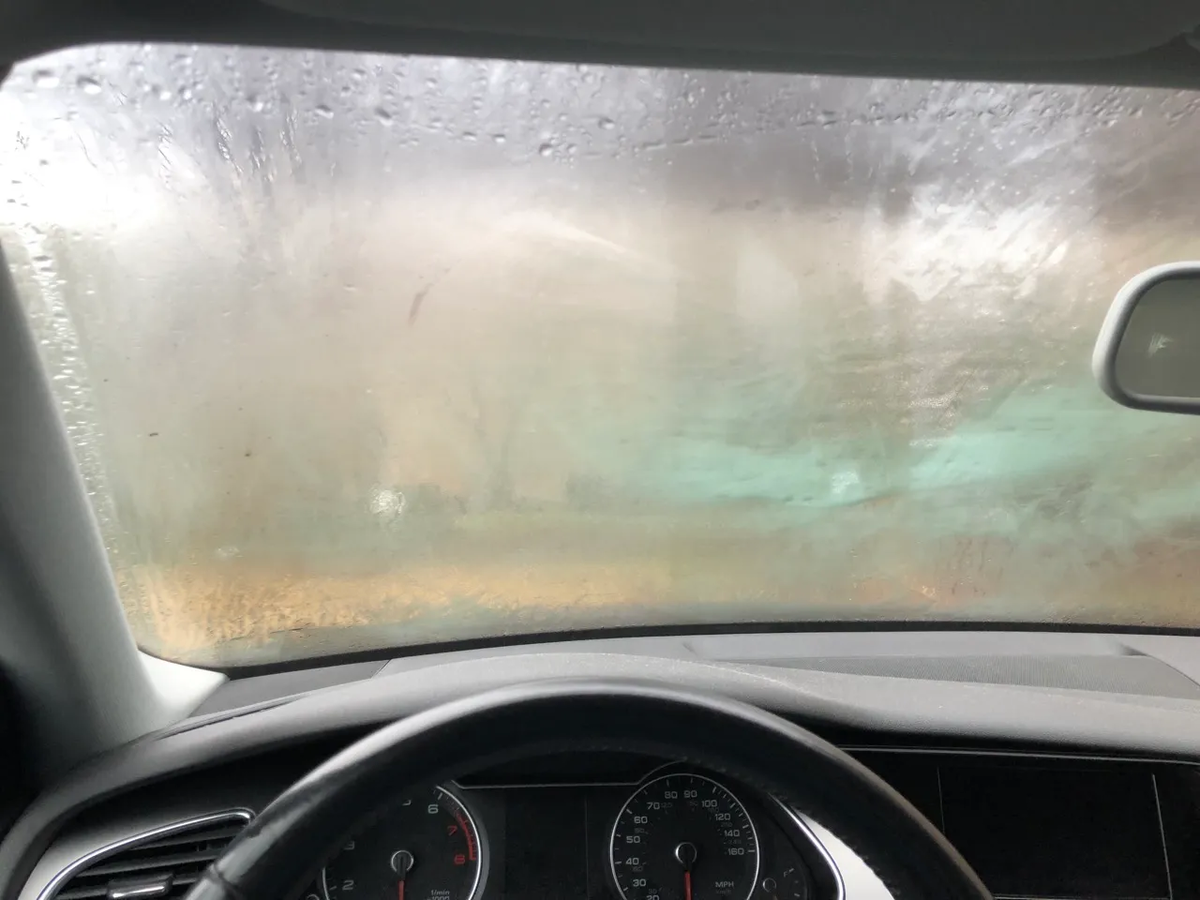
One clear signal that the cabin air filter needs replacement is excessive fogging of the windows. When the filter loses its ability to remove excess moisture, condensation forms more easily on cold surfaces.
Automakers typically recommend a replacement interval between 10,000 and 15,000 km or once a year, whichever comes first. However, the actual replacement frequency depends on usage conditions:
- Urban heavy traffic: replace the filter every 8,000–10,000 km
- Rural roads with dust: check the filter more often and replace at the first signs of clogging
- Areas with high pollution: opt for activated carbon filters and replace them more frequently
- Pollen season: consider an additional change in spring if you suffer from allergies
It is recommended that the filter be checked at every service and replaced preventively before problems arise. The relatively low cost of a new filter is negligible compared to the impact on your health and driving comfort.
Problems caused by neglecting the filter replacement
Persistent and unpleasant odors in the cabin
As the filter loses efficiency, collecting more dust, pollen, and other particles, the air that passes through it begins to smell different. Moldy or musty odors are one of the most common signs of a saturated filter.
When you turn on the blower or the air conditioning and you notice a heavy, moldy, or even rotten smell, the cabin pollen filter is the main culprit. These odors are not just unpleasant — they indicate the presence of bacteria and mold that can affect your respiratory health.
Excessive condensation on windows and reduced visibility
As noted earlier, an old and clogged filter draws much more moisture from the air. When the filter is so saturated that it no longer allows an adequate flow of fresh air, the humidity inside the cabin cannot be vented effectively.
This problem worsens in:
- Cold or rainy weather
- Winter, when the temperature difference between inside and outside is large
- Travel with more passengers (exhaled air adds extra moisture)
Condensation on the windows is not just a nuisance — it poses a real safety risk by reducing visibility. Moreover, constant humidity can lead to mold on plastic and fabric surfaces of the dashboard.
Deterioration of the blower motors
In many car models, the cabin pollen filter sits behind the dashboard, near the motors that control the direction of airflow (deflector flaps). When the filter gets soaked with water from excessive condensation, this moisture can reach the blower motor mechanisms.
Consequences include:
- Corrosion on metal components of the blower motors
- Partial or total blockage of the airflow system
- Inability to direct air toward the windshield, face, or feet as desired
- Significantly higher repair costs than the price of a simple new filter
Reduced airflow and poorer air conditioning performance
A clogged filter acts as a barrier that hinders airflow through the ventilation system. The effects are multiple:
- The blower has to work harder to push the same amount of air, consuming more energy
- Air conditioning becomes less efficient, taking longer to cool or heat the cabin
- The temperature difference at the vents is smaller
- Fuel consumption can rise slightly due to the extra strain on the system
- Vent noise at higher speeds becomes more noticeable
In extreme cases, a completely clogged filter can force the blower to operate under strain, reducing its lifespan.
Where the cabin pollen filter is located in the car
The filter location varies by manufacturer and model, but there are a few common areas where you can find it:
Under or in the glovebox (the most common location)
In most European cars, the filter is accessible through the glovebox. There is usually a rectangular plastic cover fastened with clips or screws at the bottom or side of the glovebox. This position allows relatively easy replacement without special tools.
Behind the dash
In many Japanese and Korean models (Toyota, Honda, Mazda, Hyundai, Kia), the filter sits deeper, behind the dash. To access it, you may need to remove the entire dash, which can seem intimidating but is not overly complicated — it just requires more time and care.
Under the windshield plastic protection
Some models have the filter mounted under the hood, in the area where the base of the windshield meets the engine. This position makes it very accessible — just open the hood and remove the cover that protects the base of the windshield (where the wipers are also located). This area usually has a rubber seal to prevent water ingress.
In the pedal area (rarer)
On a few models, especially commercial vehicles or larger SUVs, the filter may be located in the pedal area, on the driver’s or passenger’s side. Access is gained by removing a plastic cover.

Step-by-step guide to replacing the filter
Before you start, make sure you have purchased the correct filter for your car. Check the make, model, year of manufacture, and possibly the engine code, as there are variations even for the same car model.
Tools needed
- New cabin air filter
- Set of socket wrenches or Torx (depending on the car)
- Flashlight
- Protective gloves (optional)
- Vacuum (to clean the area)
Procedure for the filter mounted in the glovebox
- Locate the filter cover - look for a rectangular cover at the bottom or side of the glovebox
- Unclip the clips or screws - most covers are held with clips that press or with Phillips screws
- Remove the cover carefully - may shed some accumulated dust
- Note the orientation of the old filter - before removing, observe the arrow direction marked on the filter
- Extract the worn filter - may be slightly blocked, pull it firmly but carefully
- Clean the cavity - use the vacuum to remove dust and debris
- Insert the new filter - follow the arrow direction marked on it (air should flow from outside toward inside)
- Reposition the cover - ensure it is properly fixed to prevent air leaks
Procedure for the filter behind the glovebox
- Dismantle the dash - identify the fixing screws (usually 4–6) and disconnect any electrical connectors
- Carefully lower the dash - be careful not to force any remaining connected wires
- Locate the filter - it will be visible in a rectangular housing
- Replace the filter - follow the same procedure as above
- Reassemble the dash - ensure all clips fix securely and reconnect any wires
Procedure for the filter under the windshield
- Open the hood and stabilize it
- Remove the plastic cover at the base of the windshield - usually held by screws
- Remove the rubber gasket if applicable
- Locate the filter cover - it will be an obvious rectangular cover
- Remove the cover and replace the filter following the mounting orientation
- Reinstall the gasket - very important to prevent water ingress into the cabin
- Remount the plastic cover at the base of the windshield
Important cautions
Installation orientation is crucial! Each filter has an arrow marked on it indicating the direction of airflow. This arrow must always point from outside toward the interior (from the hood toward the cabin). Installing it backwards drastically reduces filter efficiency and can cause problems.
Never try to clean a used filter! Neither washing nor blowing with compressed air will restore filtration capacity. Particles and NOx are embedded in the fibrous structure and cannot be removed. A “cleaned” filter is practically useless and endangers your health.
If you don’t feel comfortable performing this operation yourself, any mechanic can do it in a few minutes at a very affordable cost (usually 30–50 RON labor).
How much does a new cabin pollen filter cost
Prices vary based on several factors but remain affordable for most budgets:
Simple filters: 50–80 RON
Basic variants, produced by well-known aftermarket brands. They offer standard mechanical filtration, suitable for use in less-polluted areas.
Activated carbon filters: 80–120 RON
Our recommendation for most drivers, especially those who drive in urban environments. Excellent price-to-performance ratio.
HEPA/antibacterial filters: 120–180 RON
Premium variants, recommended for people with allergies or respiratory issues. The higher price is justified by the advanced filtration technology.
Original filters: 100–200 RON
Automakers also offer filters with their own branding, usually at a premium price. Quality is guaranteed, but aftermarket filters from reputable manufacturers (Mann, Bosch, Mahle) often offer similar performance at a better price.
Note: For premium cars or exotic models, prices can be significantly higher. Always verify compatibility before purchase – a filter that is too small or too large will not work correctly.
Investing in a quality filter and replacing it regularly is one of the simplest and most effective ways to protect your health behind the wheel. The annual cost (even for premium filters replaced twice a year) is negligible compared to the benefits for your respiratory system and overall driving comfort.
Source photo: vikingmotors.ca, bolandford.ie, energyvanguard.com