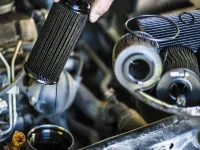
- Oil and filter changes include oil, oil filter, air filter; fuel and cabin filters optional.
- Independent garages offer 250-400 lei for oil change; complete package 450-700 lei.
- Authorized dealers charge 400-600 lei for oil change; complete 700-1200 lei; premium brands add 20-40%.
- Specialized centers often have 350-550 lei for oil change; complete 600-900; promotions 15-25%.
Regular engine maintenance is one of the most important responsibilities for any vehicle owner. Periodic oil and filter changes not only extend the engine’s life but also improve fuel efficiency and reduce emissions. In Romania’s current economic context, costs for this essential service vary significantly depending on several key factors.
In this detailed guide, we analyze current rates for oil and filter changes in 2025, explain the factors that influence prices, and offer practical tips to get the best value for money.
What a complete oil and filter change includes
A standard engine maintenance package involves replacing several vital components to ensure optimal operation of the vehicle:
- Oil change with a quality product that meets the manufacturer’s specifications
- Replacement of the oil filter to ensure lubricant purity
- Replacement of the air filter for improved combustion efficiency
- Replacement of the fuel filter (depending on engine type and service intervals)
- Replacement of the cabin filter for interior air quality (optional service)
This full intervention ensures the engine’s connected systems operate efficiently and helps prevent premature wear of mechanical components.
Price analysis for oil and filter changes in 2025
Independent local garages
- Oil change plus oil filter: 250 - 400 lei
- Complete package with all filters: 450 - 700 lei
- Pure labor (if you supply your own parts): 50 - 100 lei for oil, 100 - 200 lei for complete package
These prices reflect lower operating costs and flexibility in choosing parts and consumables.
Authorized dealers and service centers
- Oil change plus oil filter: 400 - 600 lei
- Complete maintenance package: 700 - 1,200 lei
- Premium brand surcharge: BMW, Audi, Mercedes and other luxury brands can exceed these values by 20-40%
Advantages include extended warranty on work and strict adherence to manufacturer procedures.
Specialized auto centers
- Standard packages: 350 - 550 lei for oil change and filter
- Complete services: 600 - 900 lei for all filters
- Frequent promotions: 15-25% discounts for complete packages
Indicative prices for materials and consumables
Final service cost depends significantly on material quality. Here is a detailed price analysis:

| Component | Price range (lei) | Notes |
|---|---|---|
| Synthetic engine oil (4-5L) | 130 - 280 | Top end exceeds 300 lei |
| Oil filter | 25 - 90 | Original filters are 30-50% more expensive |
| Air filter | 40 - 120 | Variation depends on filtration complexity |
| Fuel filter | 60 - 180 | Modern systems cost more |
| Cabin filter | 30 - 110 | Activated carbon filters are more expensive |
The quality of these components directly influences engine performance and longevity, making it essential not to economize unnecessarily on these items.
Types of engine oils and impact on price
Choosing the type of oil is the main factor in determining the final service cost:
Mineral oil
The most affordable lubricant, predominantly used in older vehicles with high mileage. Change intervals are shorter, partially offsetting the lower price.
Semi-synthetic oil
A balanced solution between cost and performance, suitable for most vehicles aged 5-10 years and urban use.

Fully synthetic oil
The standard for modern vehicles and turbocharged engines. Provides maximum protection and extended change intervals, justifying the higher upfront investment.
Premium brands such as Castrol, Mobil 1, Liqui Moly or Motul can cost 40-60% more than mid-range equivalents, but offer superior performance in extreme operating conditions.
Oil change frequency and economic impact
Adhering to manufacturer-recommended change intervals is crucial for maintaining warranty and optimizing long-term costs:
- Standard interval: 10,000 - 15,000 km or 12 months, whichever comes first
- Severe conditions: 7,500 - 10,000 km for heavy city use
- Extended periods: Up to 20,000 km for Long Life oils (only on compatible engines)
Delaying an oil change can incur repair costs 10-20 times higher than the initial savings.
Factors influencing final price
Vehicle characteristics
Crankcase capacity ranges from 3.5 liters on small engines to 8-10 liters on large SUVs or V8 engines, directly affecting oil quantity.
Geographical location
Prices in Bucharest and large cities exceed those in smaller towns by about 20-30% due to higher operating costs.
Engine complexity
Turbo, hybrid, or variable-geometry engines require specialized oils and more complex service procedures, increasing costs by 30-50%.
Seasonality and promotions
Peak seasons (spring and autumn) can lead to 10-15% increases, while winter promotions offer substantial discounts.
Strategies to optimize costs
Preventive planning
Scheduling services outside peak periods and taking advantage of promotions can reduce costs by 20-25%.
Comparing offers
Request quotes from at least 3 different service centers to identify the most advantageous option.
Maintenance packages
Many shops offer discounts on annual packages or long-term maintenance contracts.
Monitoring the vehicle’s technical state
Regular checks of oil level and quality can prevent premature degradation and related costs.
Risks of unjustified savings
Consequences of using lower-quality oil
Using cheap lubricants can cause:
- Accelerated wear of moving parts
- Carbon deposits and internal contamination
- Reduced energy efficiency
- Drastically shortened engine life
Ignoring service intervals
Delaying service can cause:
- Lag bearing seizure and segments
- Oil pump damage
- Filter blockage and restricted flow
- Catastrophic damage requiring engine replacement
Oil change in a private workshop - advantages and disadvantages
Doing work in your own garage can save 40-60% of labor costs, but requires:
Advantages
- Significant long-term savings
- Full control over material quality
- Flexibility in planning work
- Better understanding of vehicle condition
Disadvantages
- Need for specialized equipment (lift, special wrenches)
- Risk of damage due to incorrect procedures
- Responsibility for waste disposal
- Loss of warranty on new vehicles
For most owners, professional service remains the optimal choice from safety and efficiency perspectives.
Recommendations for choosing the right service
Evaluation criteria
- Official certifications and authorizations
- Experience with the make and model
- Transparency in cost communication
- Quality of equipment and workshop facilities
- Feedback from existing customers
Required documentation
- Vehicle technical book
- History of previous services
- Warranty documents (where applicable)
- Technical specifications of the recommended oil
Trends in the auto service industry
Technological evolution and environmental requirements influence maintenance costs and procedures:
Digitalization of services
Online platforms enable quick price comparisons and efficient scheduling, optimizing consumer costs.
Eco-friendly oils
Development of biodegradable lubricants with improved performance will influence prices in coming years.
Alternative powertrains
Expansion of electric and hybrid vehicles changes service needs, but internal combustion engines will remain dominant for many years.
Conclusion
Regular oil and filter changes represent a crucial investment in the longevity and performance of the vehicle. With costs ranging between 400 and 1,200 lei for a complete package, this preventive intervention avoids costly repairs and maintains resale value.
A balanced choice between cost and quality, sticking to recommended intervals, and working with trusted service centers guarantees optimal engine operation in the long term. Investing in preventive maintenance pays off by reducing failure risks and optimizing overall operating costs.