
- Electrified vehicles near 60% of EU new-car registrations in Q1 2025.
- HEVs lead early 2025; BEVs and PHEVs rising; diesel/gasoline share shrinking.
- Diesel uses 15-20% less fuel than gasoline; real-world consumption higher.
- Hybrids offer instant city torque; diesel strong at low revs, gasoline at high revs.
The European auto market is in full transformation. In Q1 2025, nearly 60% of new cars were electrified (hybrids or fully electric), while the combined share of diesel and gasoline fell below 40%. For example, ACEA/Reuters data show that in January-February 2025, HEV hybrids (non-plug-in) dominated with 35.5% of the market, followed by gasoline cars (28.7%) and diesel ones (9.5%). In the same period, BEVs accounted for 15.2% and plug-in hybrids 7.6%. The situation is also clearly reflected in the statistics for March 2025: electrified vehicles (BEV+HEV+PHEV) totaled 59.2% of registrations, far above 49.1% a year earlier. Graphic: Market share evolution by engine type (EU, Q1 2025 vs. Q1 2024) – hybrids and electrics significantly increase their share while diesel and gasoline decline.
Fuel consumption and usage costs
Diesel engines typically offer about 15-20% lower consumption than their gasoline equivalents, owing to superior thermal efficiency. However, official figures (WLTP) underestimate real consumption: a European Commission report shows that gasoline and diesel cars actually consume about 20% more than standard tests indicate. Practically, the diesel advantage depends on usage. Hybrid consumption in urban conditions can be significantly lower (as the electric motor takes on part of the load), but hybrid models are heavier and more expensive to purchase.
In terms of total cost (TCO), studies show there is no general rule: “it all depends on the model, annual mileage, purchase and maintenance costs, and residual value.” Thus, some diesel models only prove advantageous at very high mileages, while many gasoline and conventional hybrids might be more advantageous for urban use. Since the war in Ukraine, diesel is not always cheaper than gasoline – their prices have fluctuated, and maintaining a diesel engine (particle filter, AdBlue) is more costly. Additionally, ADAC notes that in the current conditions of moderate fuel prices and high tariffs at public charging stations, “conventional engine models generally fare better in cost calculations.”
Performance (power, torque, acceleration)
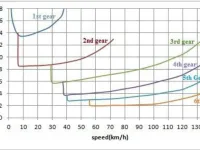
Broadly speaking, a modern mass-market diesel engine (e.g., ~2.0 l turbo) develops power similar to an equivalent gasoline engine but generates much more torque at low revs. For example, such a diesel might reach ~400 Nm below 2,000 rpm, whereas a gasoline TSI produces ~300 Nm at higher revs. Result: diesel vehicles perform better from low speeds (ideal for towing a caravan or heavy transport), and initial acceleration could be more prompt. Gasoline engines have advantages at high revs (slightly higher top speeds) and have a flatter torque curve.
Hybrid systems (HEV) combine a typically smaller gasoline engine with one or more electric motors. They offer instant torque thanks to the electric motor – accelerating well from the start – and low consumption in the city (the electric motor handles many tasks in stop-and-go traffic). Generally, however, hybrids have slightly more modest accelerations at high speed due to the CVT transmission and the additional battery weight. Alongside the conventional HEV model, there are also mild-hybrid (MHEV) variants with 48V systems, which add only a small battery and a minimally powered electric motor – modest fuel savings (around 5-10%) at modest technical costs.
Main advantages:
- Diesel: lower consumption (especially on highways), high torque at low revs, extended engine lifespan.
- Gasoline: lower initial and maintenance costs (no DPF/AdBlue), rapid acceleration response, less noise and vibration.
- HEV Hybrid: superior economy in urban traffic, zero local emissions at low speeds (engine off at standstill), instant additional electric torque. Mild-hybrid: similar to diesel due to minimal additional costs and modest consumption improvement in mixed driving.
Maintenance and reliability
Modern conventional engines (gasoline or diesel) are generally robust. Diesels have additional components like the particle filter (DPF) and catalytic reduction system (SCR with AdBlue), which may require cleaning at long intervals and are costly to service. Gasoline engines have more ignition components (spark plugs, coils) to maintain but no DPF. Additionally, gasoline engines are lighter and have a faster thermal response in cold conditions.

Hybrids feature two propulsion systems and a high-voltage accumulator: increased complexity potentially raises maintenance costs. However, the reality is that many hybrids (especially Toyota/Lexus) are recognized for the reliability of their hybrid systems (NiMH batteries come with extended warranties and rarely fail early). In contrast, fully electric vehicles generally have fewer moving parts (no internal combustion engine, conventional gearbox, alternator, etc.), implying a simpler structure. The British government notes that drivers adopt electric and plug-in vehicles also because these “are cheaper to operate, excellent to drive, and much simpler to maintain.”
Depreciation and residual value
Diesel cars are now depreciating faster than gasoline ones, amid decreasing demand and growing restrictions in urban centers. Investors and buyers anticipating future regulations (Low Emission Zones, bans) are already paying lower prices for second-hand diesels. Meanwhile, new hybrids and EVs have been supported by subsidies and buyer interest, so in recent years, some popular hybrid models retain their value better.
Diesel regulations and bans
Several major European cities have adopted harsh measures against diesel. For example, in 2016 Paris, Madrid, and Athens – together with Mexico City – decided to ban diesel cars by 2025 while promoting less polluting vehicles and alternative mobility. In Germany, Hamburg became the first city to ban older-generation diesels on major boulevards. In Italy, Milan has expanded severe restriction zones (Limited Access Zones) that exclude most Euro 6 diesel engines. At the national level, Germany and France have announced that by 2030 all commercial and passenger vehicles must have zero emissions (effectively banning diesel and practical options for trucks by 2030).
The European Union is already shaping a “zero emissions” policy for all new automobiles. Through the “Fit for 55” package, EU leaders have reached an agreement that starting in 2035, all new cars and commercial vehicles sold in the EU must have zero CO₂ emissions (essentially electric or carbon-neutral fuels). The intermediate rule is that by 2030 new cars should reduce average emissions by 55% compared to 2021. Many member states are even going further: for example, the United Kingdom has announced it will ban the sale of new gasoline/diesel cars by 2030 and will only allow fully electric vehicles by 2035. At the same time, local authorities are expanding zones only allowing vehicles with reduced emissions (e.g., Ultra Low Emission Zone in London, ZTL in Rome, dedicated EV parking in Amsterdam, etc.).

Dominant alternatives in the coming years
The classic diesel era is coming to an end – market evolution and energy policy clearly indicate that the future is electric and hybrid. Fully electric vehicles (BEV) and plug-in hybrids are increasingly replacing conventional engines. The rising demand for BEVs (supported by more affordable models) and hybrids resulted in double-digit sales growth in 2024-2025. Under current conditions, these factors consistently push diesel engines into retreat.
Reformulating conclusions: in the short term, if you travel many miles annually and mostly on long highway trips, a modern diesel might still be economical; however, its advantages are diminished by imminent bans and high maintenance costs. Conversely, for urban and mixed use, hybrids (mild or full) save a lot of fuel without requiring charging infrastructure and can act as a good transition to “green” mobility. In the near future, more and more buyers will opt for BEVs – these promise lower operating costs and are encouraged by regulations – and regardless of type, plug-in hybrids and fully electric models will gradually dominate manufacturers’ portfolios. Already, officials note that the public considers electric vehicles “cheaper to maintain, pleasurable to drive, and simpler mechanically.”