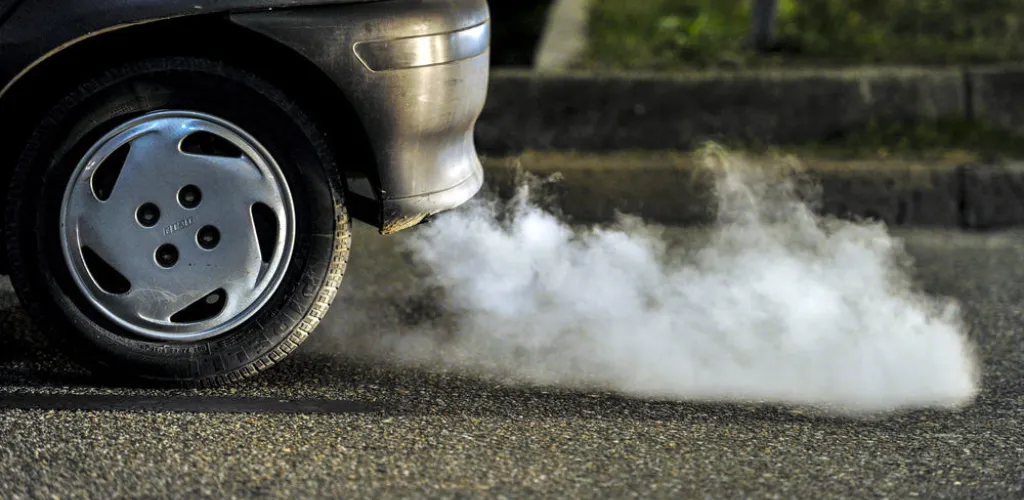
- White smoke from exhaust means coolant in the combustion chamber, risking engine seizure.
- Black smoke indicates incomplete combustion from fuel, timing, or sensor problems.
- Blue smoke means oil burning in the chamber from worn seals or rings.
- Engine misfire signals serious internal issues like ignition, fuel, compression, or timing problems.
Modern cars communicate with drivers through a range of symptoms and signals that can indicate imminent technical issues. Recognizing these early signals can make the difference between a minor repair and a costly or even dangerous failure. While some problems, such as a flat tire, can be postponed, others—like a failing auxiliary belt or serious engine faults—require immediate attention.
Ignoring these warning signs can lead not only to higher repair costs but also to dangerous situations on the road. Here are the five major problems every driver should recognize and address with the priority they deserve.
Exhaust smoke – sign of serious engine problems
The exhaust system eliminates the gases produced by the combustion process. Smoke coming out of the exhaust pipe comes directly from the engine and can indicate serious issues that require urgent intervention.
White smoke – coolant in the combustion chamber
When the car emits white smoke from the exhaust, it usually indicates that coolant or cooling liquid is entering the combustion chamber. This situation can be caused by:
- Burnt or damaged head gasket
- Cracks in the engine block
- Cracked head
- Cracks in the cylinders
Coolant entering the engine can cause irreversible damage, including complete engine seizure. It is essential to consult a mechanic immediately when this problem is observed.
Black smoke – incomplete combustion
Black smoke at the exhaust indicates incomplete burning of fuel, caused by:
- Defective or clogged injectors
- Timing problems
- Faulty oxygen sensor
- Valves that do not close properly
- Clogged air filter
- Problems with the fuel pump
Although less severe than white smoke, this issue can lead to higher fuel consumption and damage to the catalytic converter.
Blue smoke – oil in the combustion chamber
If the car emits blue smoke, it means that oil is reaching the combustion chamber. Main causes include:
- Worn piston rings
- Worn valve guides
- Damaged valve seals
- Defective turbocharger (on turbocharged engines)
Piston rings have specific roles: the top ring seals combustion, the second ring controls compression, and the oil control ring prevents oil from entering the combustion chamber. When this system fails, repair cannot be postponed.
Engine misfire – sign of serious internal problems
An engine that misfires shows intermittent power loss, unusual vibrations, and irregular operation. While this used to be common due to poor fuel quality, today the causes are more complex:
Main causes of engine misfires
- Ignition system fault: worn spark plugs, faulty ignition coils
- Fuel injection system: clogged or defective injectors
- Low compression: due to worn piston rings, valves not sealing completely, or deteriorated head gasket
- Timing problems: stretched or jumping timing belt/chain
- Faulty sensors: crankshaft position sensor, PMH sensor
Reduced compression in one or more cylinders can indicate serious problems requiring costly repairs, including an engine rebuild.
Steering system issues – major safety risk
The steering system is crucial for road safety. Any fault can endanger the driver and other road users.
Alarm signs for the steering system
- Steering wheel not staying straight in a straight line
- Strong vibrations transmitted through the steering wheel
- Excessive stiffness when turning
- Excessive play in the steering wheel
- Noises when turning
- Pulling to one side of the car
Components that may fail
- Steering tie rods
- Steering knuckles ends
- Steering rack
- Hydraulic or electric power steering
- Wheel hub bearings
- Suspension arms
Checking the steering system at every technical inspection can prevent serious accidents.
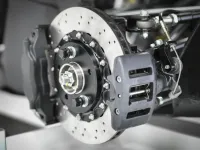
Braking system – vital for safety
The modern braking system is equipped with multiple safety features, including two separate circuits and a brake booster to ensure operation even in case of partial failure.
How the modern braking system works
The brake booster amplifies the driver’s pressing force, reducing the effort required for effective braking. The two-circuit system ensures that, even if one circuit fails, the other can stop the vehicle.
Signs of a problem with the braking system
- Soft pedal or pedal sinking to the floor
- Increased stopping distance
- Vibrations in the pedal during braking
- Metallic noises (squealing, grinding)
- Lateral pull during braking
- Burning smell after heavy braking
- Low brake fluid or leaks
Any of these symptoms requires immediate inspection at a specialized service.
Dashboard warning lights – warning systems
Modern dashboards are equipped with multiple warning lights that monitor the operation of various vehicle systems.
Critical warnings that require an immediate stop
- Oil pressure warning light: lack of oil pressure can destroy the engine in minutes
- Temperature warning light: overheating can cause severe engine damage
- Check Engine warning light: indicates issues with the engine management system
- Brake system warning light: may indicate serious problems with the braking system
Important warnings for safety
- ABS warning light: anti-lock braking system no longer functions
- ESP warning light: stability control is deactivated
- Steering system warning light: issues with power steering
- Airbag warning light: passive safety systems do not function
Ignoring these warning lights can turn a minor problem into a major breakdown or compromise road safety. Refer to the owner’s manual and seek prompt service to keep the vehicle in a safe operating condition.