- BMW IIIa: aircraft inline-six (1917) with high-altitude power retention; 9,760 m record with Motor IV.
- BMW R 5: 1936 boxer two-cylinder, 0.5 L, 24 hp; first foot-operated shift.
- BMW 328: 1936 inline-six, 2.0 L; 80 hp, 5,000 rpm; lightweight chassis.
Bayerische Motoren Werke—the full name of BMW says it all about the DNA of this German manufacturer. The word “Motoren” in the company name is no accident: for more than a century, BMW has specialized in developing innovative engines that have shaped the history of both automotive engineering and aviation.
From the first aircraft engine in 1917 to modern electric units, BMW has consistently stood at the forefront of internal combustion engine technology. The Munich-based company, founded in 1916, managed to blend performance with reliability, creating engines that became benchmarks in the industry. In this article we analyze 12 of the most important BMW engines that revolutionized the automotive field and solidified the Bavarian brand’s reputation.
Era of Pioneering: BMW Aviation Engines (1917–1919)
BMW IIIa — the company’s first engine (1917)
BMW IIIa was not intended for a car but for an aircraft. The BMW IIIa marked the beginning of a century-long success story. Developed in 1917, this inline-six engine stood out for its advanced technical design that prevented power loss at high altitudes — a common problem of aircraft engines of that era.
With the improved version Motor IV, BMW set an unofficial altitude record of 9,760 meters in 1919. This technical performance and the reliability of the package allowed the young company BMW to quickly earn respect in the industry.
Technical specifications:
- Configuration: inline six-cylinder engine
- Cooling system: water-cooled
- Displacement: 19.1 liters
- Max power: 185 hp
Transition to Land Vehicles: The 1930s
BMW R 5 — the boxer engine that defined BMW motorcycles (1936)
The heart of this machine is the two-cylinder, 0.5-liter boxer engine delivering 24 hp — a remarkable output for the era.
A notable technical feature of the R 5 engine is its valve control via two camshafts, an advanced solution for the time. Shifting was done with the foot — a revolutionary feature at the time. The boxer engine on the R 5 continues to inspire modern BMW motorcycles, such as the current R 18.

Technical specifications:
- Configuration: two-cylinder boxer engine
- Displacement: 0.5 liters
- Max power: 24 hp
- Innovation: first foot-operated gear shift system
BMW 328 — the birth of the sports legend (1936)

The inline-six engine on the BMW 328 laid the groundwork for BMW’s reputation in sports cars. Initially developed for the BMW 326, this engine received an aluminum cylinder head that allowed it to develop 80 hp and reach 5,000 rpm — remarkable performance for the 1930s.
The combination of rear-wheel drive and a weight of about 800 kg made the BMW 328 a true legend. This engine demonstrated that BMW could produce not only reliable engines but also high performance, laying the groundwork for BMW’s future M division.
Technical specifications:
- Configuration: inline-six
- Displacement: 2.0 liters
- Max power: 80 hp
- Max rpm: 5,000 rpm
- Cylinder head material: aluminum
Post-War Revolution: Aluminum V8 Engine (1954)
BMW 502 — the first mass-produced aluminum V8

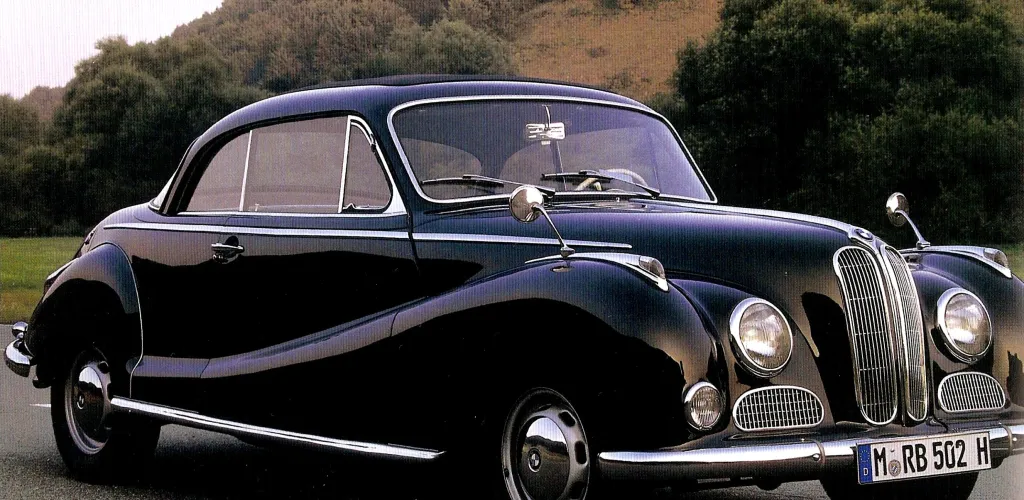
The 1954 BMW 502 marked a world premiere: the first aluminum alloy V8 mass-produced. This technological innovation placed BMW at the forefront of engine development, proving the company’s ability to create revolutionary solutions.
The 2.6-liter V8 delivered 100 hp and stood out for its exceptional reliability. Authorities were so impressed that police and firefighters adopted the BMW 502 as official emergency vehicles. This official choice confirmed the quality and durability of the Bavarian engine.
Technical specifications:
- Configuration: V8 with carburetor
- Displacement: 2.6 liters
- Max power: 100 hp
- Material: first mass-produced aluminum V8
- Usage: official emergency vehicle
Turbo Era: BMW Pioneers in Europe (1973)
BMW 2002 Turbo — the first European production turbo
In 1973, when turbocharging was still experimental, BMW launched the 2002 Turbo — the first European production car equipped with turbocharger. This 2.0-liter four-cylinder engine developed 170 hp, a staggering figure for the era.
Performance was impressive: a top speed of 211 km/h placed the 2002 Turbo firmly in the true sports-car category. The turbocharger technology, once exotic, has become standard in today’s auto industry to boost power and efficiency.
Technical specifications:
- Configuration: 4-cylinder turbo
- Displacement: 2.0 liters
- Max power: 170 hp
- Top speed: 211 km/h
- Premiere: first European production turbo
Evolution of Multi-Valve Technology (1974)
BMW 3.0 CSL E9 — the power of multiple valves
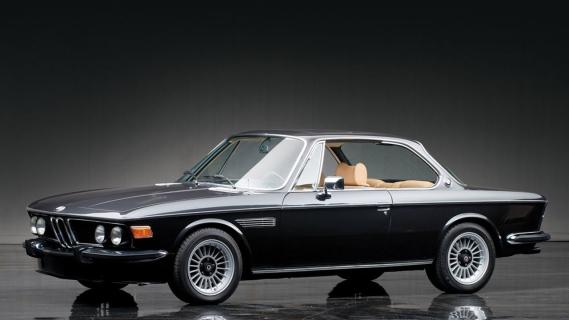
The legendary BMW 3.0 CSL from 1974 introduced four-valve-per-cylinder technology, derived from rallying. This innovation allowed a significant power increase for the six-cylinder engine.
While the production two-valve version produced 206 hp, the competition four-valve variant with a 3.5-liter displacement reached 440 hp. This dramatic performance gap demonstrated the potential of multi-valve technology, which would become standard in the following years.
Technical specifications:
- Configuration: inline-six with 4 valves per cylinder
- Displacement: 3.5 liters (competition version)
- Max power: 440 hp (racing version)
- Innovation: four-valve technology adapted from motorsport
Extreme Power in Formula 1 (1983)
F1 turbo engine — 1,200 hp from a 1.5L
BMW’s Formula 1 engine from the 1980s remains one of the most powerful internal-combustion engines ever built. With a displacement of only 1.5 liters, this 4-cylinder turbo developed over 1,000 hp officially, and in testing sessions it was rumored to reach 1,200 hp.
This surge of power from such a small engine was an extraordinary technical challenge and a test for any F1 driver, especially in the era before electronic driver aids. The technology developed for this engine became a precursor to the modern downsizing concept.
Technical specifications:
- Configuration: 4-cylinder turbo
- Displacement: 1.5 liters
- Max power: over 1,200 hp (in testing)
- Application: Formula 1
- Legacy: precursor to downsizing technology
First Foray into Diesel: (1983)
BMW 524td E28 — BMW’s first diesel
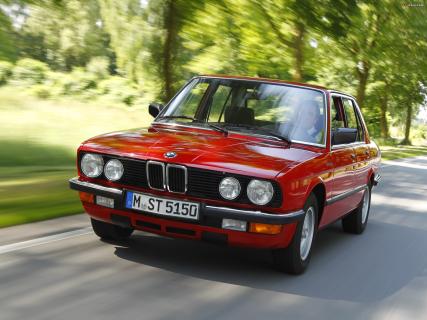
After 67 years of activity, BMW finally launched its first diesel engine. BMW 524td from 1983 was not only a milestone for the Bavarian label but also an engine that changed the perception of diesel engines in the premium segment.
With 115 hp and a torque of 210 Nm, this six-cylinder turbo-diesel delivered remarkable performance for its era. It proved that a diesel engine can be economical and reliable, yet enjoyable to drive. The BMW 524td opened the path for the development of powerful, comfortable, and clean diesel engines that dominate today’s European market.
Technical specifications:
- Configuration: six-cylinder turbo-diesel
- Displacement: 2.4 liters
- Max power: 115 hp
- Max torque: 210 Nm
- Significance: BMW’s first diesel engine in history
Absolute Luxury: The V12 Engine (1987)
BMW 750i E32 — Germany’s first post-war V12
BMW 750i from 1987 marked the return of the V12 in Germany after World War II. This 12-cylinder engine remains the pinnacle of BMW’s technical refinement in terms of quiet operation and abundant power.
The 5.0-liter V12 produced 300 hp and ensured exceptional smoothness of operation. To demonstrate the engine’s remarkable quietness, BMW even placed a coin on the valve cover — it would not fall while the engine was running. This technical feat illustrates BMW’s engineering perfection in luxury propulsion.
Technical specifications:
- Configuration: 12-cylinder V
- Displacement: 5.0 liters
- Max power: 300 hp
- Feature: exceptionally quiet operation
- Premiere: first post-war German V12
The Sports Masterpiece: M5’s V10 (2004)
BMW M5 E60 — the only V10 in BMW history
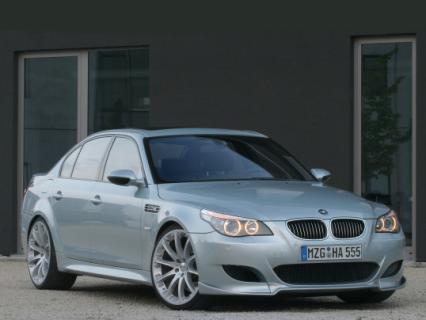
The S85 V10 engine of the BMW M5 E60 remains one of the most spectacular creations in BMW M history. This 10-cylinder, 5.0-liter unit develops 507 hp at 7,750 rpm — numbers that sound like a race engine because they basically are.
Inspired by the V10 engines from Formula 1 of that era, the S85 is the only V10 engine in BMW history. Its distinctive sound and extraordinary performance (0–100 km/h in 4.2 seconds for the M5) made it a legend among enthusiasts. Used in both the M5 E60 and the M6 E63/E64, the S85 represents the peak of BMW engineering in the pre-turbo era.
Technical specifications:
- Configuration: 10 cylinders in V (V10)
- Displacement: 5.0 liters
- Max power: 507 hp at 7,750 rpm
- Internal code: S85
- Uniqueness: only V10 in BMW history
Era of Electrification: The Propulsion Future (2013–2014)
BMW i3 — Bavarian electric pioneer (2013)
With the BMW i3, the Bavarian manufacturer showed that it could be a pioneer in the electrification era. The first mass-produced electric car from BMW radically changed the driving experience, offering instant acceleration that brings a smile to any driver.
The electric motor of 170 hp provides a completely different driving experience compared to internal-combustion engines. With maximum torque available from 0 rpm, it guarantees quick city driving and highly efficient urban use. The BMW i3 demonstrated that fuel economy and driving pleasure are not mutually exclusive.
Technical specifications:
- Type: electric motor
- Max power: 170 hp
- Battery capacity: 37.9 kWh
- Advantage: maximum torque from 0 rpm
- Significance: first mass-produced BMW electric vehicle
BMW i8 — the revolutionary sports hybrid (2014)

The BMW i8 proved that electrified propulsion and sporty driving are perfectly compatible. This revolutionary hybrid combines a turbocharged 1.5-liter three-cylinder petrol engine with an electric motor, delivering a total propulsion power of 362 hp.
The technical setup is as intriguing as the performance: the petrol engine of 231 hp drives the rear wheels, while the electric motor of 131 hp handles the front, creating an intelligent all-wheel-drive system. 0–100 km/h in under 5 seconds confirms the car’s sporty nature.
Industry recognition followed quickly: the i8 won the prestigious “Engine of the Year” award for five consecutive years (2015–2019), a unique achievement in the history of this competition.
Technical specifications:
- Internal combustion engine: 3-cylinder turbo, 1.5 liters, 231 hp
- Electric motor: 131 hp
- Total power: 362 hp
- Battery capacity: 11.6 kWh
- Performance: 0–100 km/h in under 5 seconds
- Distinction: winner of the Engine of the Year award for five consecutive years
The Legacy of a Century-Long History
These 12 BMW engines illustrate the technological evolution of one of the most respected engine makers in the world. From the first aircraft engine in 1917 to modern hybrid systems, BMW has consistently shown that innovation and performance can go hand in hand with reliability and refinement.
Each engine on this list marked an important moment in automotive history, either by introducing revolutionary technologies or by setting new performance standards. The legacy of these engines continues to inspire the development of BMW’s modern propulsion systems, keeping alive the Bavarian brand’s tradition of technical excellence.
Which of these legendary BMW engines do you think had the greatest impact on the auto industry? Or perhaps you drive a BMW with an engine that deserves a place on this list of honor?