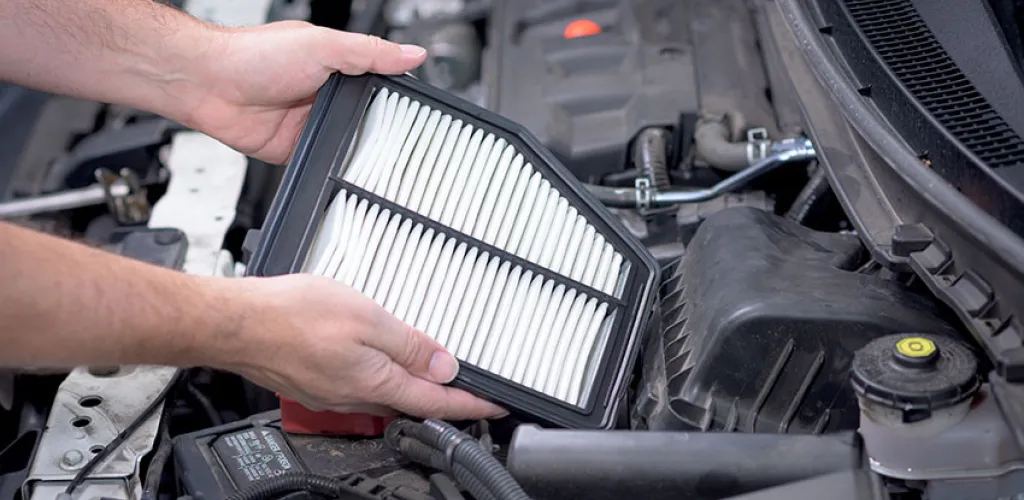
- Regularly inspect air filter; a dirty filter harms performance, fuel economy, and longevity.
- Off-road or dusty conditions accelerate soiling; replace more often in harsh environments.
- Park in sheltered garages to reduce contaminants entering the intake.
- Common signs: reduced performance, higher fuel use, louder intake, black exhaust.
The air filter is a vital engine component responsible for purifying the air that enters the combustion chamber. Although it may seem minor, its condition directly affects engine performance, fuel consumption, and longevity. Proper maintenance of the air filter can make the difference between an engine running at its best and one that starts to experience issues.
By paying attention to parking choices and monitoring operating conditions, you can significantly extend the filter’s life and keep the engine in optimal condition.
Factors that influence air filter soiling
It’s not hard to realize that the air filter of an off-road vehicle used exclusively for off-roading will need to be replaced much more often than that of a car used only in the city. The air filter attracts dust, leaves and all kinds of residues over time.
Air enters the filter through a duct that, at the front, has a few openings that draw in ambient air. In dusty conditions or extreme conditions such as gusts or storms, many residues will find their way through those openings.
Types of contaminants that affect the filter
- Fine dust - the most common contaminant, especially in dry areas
- Pollen particles - problematic during flowering seasons
- Leaves and vegetal debris - common in autumn and in areas with abundant vegetation
- Industrial residues - in areas with intense industrial activity
- Road salt - in winter, can corrode metal elements
Smart parking protection strategies
Try to park the car in a sheltered place or in a garage to avoid contaminants entering the air intake openings. Parking in front of a construction site can allow pieces of polystyrene, excessive dust, papers, or even small packaging to reach the filter when you start the engine. That is why it is very important to park the car in a protected location.
Places to avoid when parking
- Construction sites - major sources of dust and fine particles
- High-traffic areas - where exhaust gases concentrate
- Under trees - especially during leaf fall
- Near factories or plants - which emit industrial particulates
- Dusty roads - unpaved or recently repaired
Recommended parking locations
- Enclosed garages - optimal protection against all contaminants
- Underground parking - offers similar protection to a garage
- Quiet residential areas - low traffic and cleaner air
- Well-maintained green spaces - parks or areas with controlled vegetation
Inspection and maintenance schedule
Even if you do your best to keep your car’s air filter as clean as possible, you cannot influence the environment or traffic conditions. Therefore it is important to check the air filter’s condition during service.
Signs of a dirty air filter
- Decreased engine performance - acceleration becomes slower
- Increased fuel consumption - the engine works harder
- Changed engine sound - louder on acceleration
- Black exhaust smoke - sign of incomplete combustion
- Rough idling - engine runs unevenly
Optimal replacement interval
Ideally, you should replace the air filter at 20,000–30,000 km. However, this interval can vary depending on operating conditions:
Factors that shorten the replacement interval
- Driving in dusty areas - reduces interval to 15,000 km
- Frequent urban driving - 18,000–20,000 km
- Dry season - more frequent checks during hot months
- Industrial zones - accelerated contamination
Benefits of regular replacement
- Maintaining engine power - optimal performance
- Reducing fuel consumption - fuel savings
- Protecting components - reduced wear of pistons and cylinders
- Lower emissions - more complete combustion
- Increased durability - longer engine life
Conclusion
Proper air filter maintenance goes beyond simply replacing it at fixed intervals. By carefully choosing parking locations and monitoring operating conditions, you can significantly extend the filter’s life and keep the engine in peak condition. Investing in the care of this seemingly minor component will reflect in better performance, lower fuel consumption, and reduced maintenance costs over the long term.