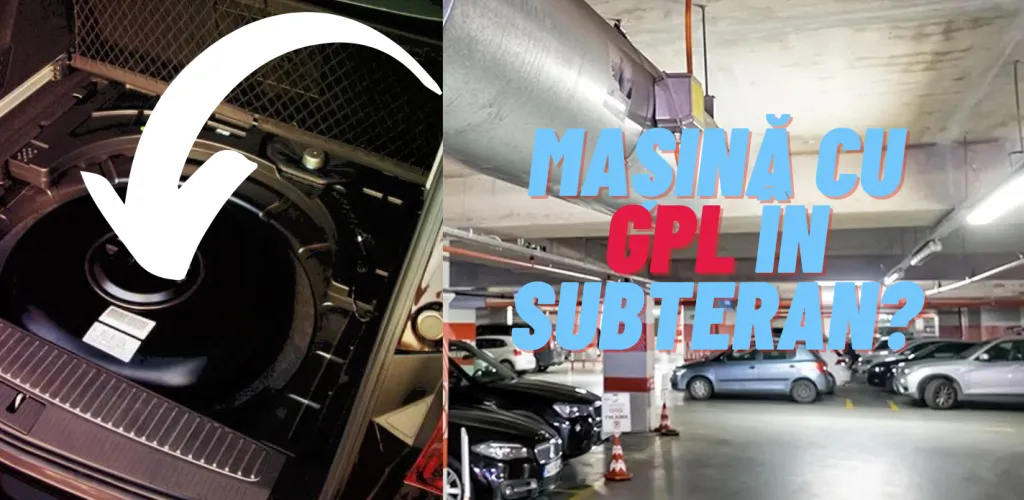
- LPG cars are growing in Romania, cost savings yield 2-3 year payback.
- EU regs say LPG vehicles are safe if standards are met.
- In Romania, underground parking access is allowed in theory, but bans occur.
- Bans arise from outdated laws, unupdated rules, or precautionary thinking.
In Romania, the number of vehicles powered by LPG has grown significantly in recent years. This trend is driven mainly by the lower fuel costs — LPG being about 50% cheaper than gasoline. The majority of LPG-powered vehicles are taxis, but other drivers with high annual mileage also represent a sizable share.
Investing in an LPG system pays off on average in about 2-3 years, depending on mileage. With rising fuel prices, this payback period could shorten even further. However, as this technology becomes more widespread, questions arise about usage restrictions, especially in underground parking facilities.
Legal framework for LPG vehicles in Romania
The use of LPG as a motor fuel is relatively new on a wide scale in Romania, with its popularity exploding in the last 3-5 years. For this reason, the specific legislation governing the use of LPG vehicles is not yet fully developed or clarified.
European regulations and national implementation
At the European level, regulations clearly specify that LPG vehicles are as safe as conventional ones, provided the system meets certain technical standards. Theoretically, in Romania, LPG vehicles should have free access to underground parking.
However, reality often differs from theory. Many malls, shopping centers, and private parking facilities still display signs that prohibit LPG vehicles from accessing underground garages.
Restrictions in underground parking: myth vs. reality
Establishments that maintain the ban on LPG vehicles do so for the following reasons:
- They are following outdated legislation that has not been updated
- They have not updated their internal regulations to align with European standards
- The overly precautionary measures due to lack of accurate information
Control and identification of LPG vehicles
An important aspect to mention is that, in practice, identifying a car equipped with an LPG system is very difficult for parking staff. There are no systematic checks, and visible signs of an LPG system are not always obvious to an untrained observer.

Modern LPG systems are much safer than those of the past and are subject to rigorous checks under the periodic technical inspection (ITP). A car that has passed the periodic technical inspection with an approved LPG system should not pose additional risks in underground parking.
Theoretical risks of LPG in enclosed spaces
Differences from gasoline
There is a technical justification behind the precautions related to LPG in underground spaces:
- Gasoline leaks and forms visible stains on the ground
- LPG, being lighter than air, rises and disperses invisibly
- The differing density of LPG causes it to accumulate in the upper part of the space
Fire risk:
- An LPG leak can form a flammable mixture in the air
- The smallest spark can trigger rapid combustion
- The risk of explosion in enclosed spaces is theoretically higher
Safety of modern systems
Modern LPG systems are equipped with:
- Automatic safety valves
- Pressure sensors
- Impact-triggered shut-off systems
- Materials and components certified to European standards
The risk of a significant leak in a modern, correctly installed and maintained LPG system is minimal.

The status of alternative fuels: CNG and hydrogen
Distinct regulations
For vehicles powered by compressed natural gas (CNG) and hydrogen, different rules apply:
Hydrogen-powered vehicles:
- Hydrogen is lighter than air
- In case of a leak, it disperses rapidly into the atmosphere
- Does not pose the same accumulation risk as LPG
- Access to underground parking is permitted
CNG-powered vehicles:
- Extremely high combustion temperature
- In case of a leak, the gas disperses rapidly
- The fire risk is considered minimal
- Access to underground parking is permitted
Practical recommendations for LPG vehicle owners
Checking local restrictions
- Check the specific regulations of the parking facility before use
- Contact the administrator for clarifications in case of ambiguous signs
- Verify that restrictions are updated in line with current law
LPG system maintenance
- Carry out periodic checks at authorized service centers
- Follow the technical inspection schedule
- Immediately report any anomaly in system operation
Legal aspects to note
- A vehicle with an approved LPG system and verified by the ITP should not have legal restrictions
- Many current bans are based on outdated regulations
- The tendency is toward relaxing restrictions as technology improves
In conclusion, although there are still some private-level restrictions on LPG vehicles in underground parking, they are not always technically justified. Modern LPG systems are safe and comply with European safety standards, and legislation is evolving toward removing these anachronistic restrictions.