- First front-wheel-drive Mercedes; W168 sold over 1.1 million (1997–2004).
- Early stability controversy addressed with ESP and suspension updates.
- Diesel DPF struggles in urban use cause clogging and high repair costs.
- CVT problems after ~100k km; suspension wear also common.
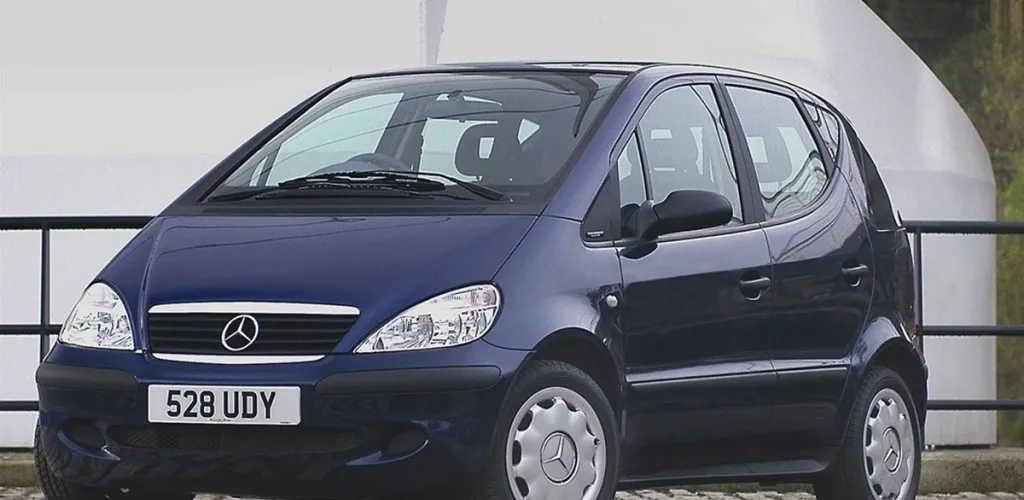
The Mercedes-Benz A-Class W168 marked the brand’s entry into the compact segment, being the first front-wheel-drive model in the company’s history. Launched in 1997, this generation remained in production until 2004, selling over 1.1 million units worldwide.
Although it debuted with controversy over stability in abrupt maneuvers, the issue was addressed by implementing ESP electronic stability control and suspension changes, and the W168 became a popular choice for those seeking an affordable and practical Mercedes for urban use.
History and Context of the Mercedes A-Class W168
In 1994, Mercedes-Benz confirmed plans to launch a compact car to democratize access to the German premium brand. The A-Class would be the company’s first entry-level model, intended to rival directly with the Audi A3 and Volkswagen Golf.
Official launch took place at the Frankfurt Auto Show in the autumn of 1997, after the car had been shown to the press at the end of 1996. The W168 stood out with its unconventional design, tall height and compact proportions optimized for interior space.
The controversy of 1997 marked deeply the model’s history. The Swedish publication Teknikens Värld discovered that the A-Class overturned in the traditional obstacle-avoidance test. Initially, Mercedes denied the problem, but later suspended sales for three months to implement electronic stability control (ESP) and to modify the suspension. The cost of these modifications was 300 million German marks, added to the initial investment of 2.5 billion.
Owner Experience: Why They Chose the A-Class W168
DailyDriven collected direct testimonies from owners of this model to offer a realistic perspective on ownership.
Ularu Ion Daniel explains his choice: “Low budget. Practical, reliable, opportunistic. Good on fuel and for comfort.” This testimony perfectly illustrates the W168’s positioning as an affordable alternative to traditional Mercedes.

Codau Silviu adds: “It was my first car. I wanted something small for the city, and I think I made a good choice.” This reflects the typical profile of an A-Class buyer—young or with limited experience—seeking Mercedes quality in a compact package.
Common Issues of the Mercedes A-Class W168
Long-term experience highlights a few recurring weak points for this model:
Diesel Particulate Filter (DPF) Problems
Diesel engines frequently develop issues with the Diesel Particulate Filter (DPF), especially with predominantly urban use. Incomplete regeneration leads to filter clogging, with substantial repair costs.
Transmission Faults
The CVT (Continuously Variable Transmission) proves the most vulnerable point of the driveline. The CVT can develop problems after around 100,000 km, manifesting as vibrations, noises, or stalling.
Suspension Issues
Suspension is responsible for almost half of all reported problems. The components most affected are the front lower control arms, stabilizer links, and shock absorbers. Repair costs can be high due to Mercedes-specific parts.
Ignition Coil Failures
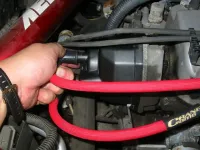
Gasoline engines may experience ignition coil issues, manifested as misfires, increased fuel consumption, and uneven running.
Range of Available Engines
The W168 benefited from a diverse range of powertrains, from economical to performance-oriented:
Gasoline Engines
- A140 (M 166 E 14): 80 hp, 130 Nm – the base engine, economical but lacking in performance
- A160 (M 166 E 16): 101 hp, 150 Nm – the ideal compromise between economy and performance
- A190 (M 166 E 19): 123 hp, 180 Nm – the sportier option for most customers
- A32K AMG (M 112 E 32 ML): 349 hp, 450 Nm – extreme performance version, extremely rare
Diesel Engines
- A160 CDI (OM668 DE 17 A red): 59 hp, 160 Nm – the base diesel engine, very economical
- A170 CDI (OM 668 DE 17 LA): 89 hp, 180 Nm – the most balanced diesel in the lineup
Driving Experience and Real-World Fuel Consumption
The A-Class concept, with the engine mounted under the floor, offers a unique driving experience. The tall driving position and excellent visibility are strong points of the model.
Interior Space and Versatility
Thanks to its innovative design, the A-Class provides surprising interior space for its exterior dimensions. The modular seating system offers 72 different configurations, with cargo volumes from 390 to 1,740 liters (with the front passenger seat folded forward).
The body structure integrated advanced safety elements for its era, with replaceable aluminum front modules and plastic fenders that rebound after minor impacts.
On-Road Handling – Direct Testimonials
Ularu Ion Daniel describes the experience: “In the city it drives well, while on highways it is excellent as long as you don’t exceed 120 km/h.” This speed limitation reflects the high center of gravity and suspension characteristics in rapid cornering.
Codau Silviu adds: “In the city it’s perfect as long as you don’t hit potholes. Outside the city it’s just as good.” The pothole remark highlights the relatively stiff suspension needed for stability.
Real-World Fuel Consumption
Owners report reasonable consumption for the segment:
- Mixed use: 5-6 l/100km (Codau Silviu)
- Detailed: 5-6 l/100km on open roads, 10-12 l/100km in city driving (Ularu Ion Daniel)
These figures fall within the normal range for small gasoline engines of the period.

Long-Term Reliability
Market statistics place the A-Class W168 below the premium segment reliability average, notably less reliable than its contemporaries like the Audi A3 or VW Golf.
Analysis of Problem Areas
The main issue remains the suspension, responsible for nearly 50% of reported faults. The low mounting position of the alternator is another vulnerability, especially in the absence of lower protection.
Owners’ Reliability Experiences
Ularu Ion Daniel reports: “The alternator, being mounted very low, gets wet often and causes problems without a skid plate.” This issue can be prevented by installing the original metal shield.
Codau Silviu confirms the statistical trends: “I had minor problems with the lower control arm and tie rods. Otherwise, everything is fine.” This testimony supports the suspension-related issues but also suggests that most faults are minor.
Used Market Prices
Romanian market analysis shows affordable prices for the W168, reflecting significant depreciation:
- Mercedes A-Class A170 1.7 diesel (1999, 250,000 km): 1,000 euro
- Mercedes A-Class 170 CDI (2004, 150,000 km): 1,790 euro
These prices position the W168 as an affordable option for those seeking a Mercedes on a tight budget.
Recommendations for Purchase
Essential Checklists
- Suspension: Inspect arms, tie rods, and shocks for wear
- Transmission: Test CVT operation on varied routes
- Fuel System: Check the DPF on diesels
- Alternator: Check operation and the presence of lower protection
- Service History: Complete documentation indicating proper care
Advice from an Experienced Owner
“If they want an inexpensive car that can handle city duties, it’s perfect. They should pay attention to the engine and how the car looks under the skid plate” — a DailyDriven owner’s recommendation highlights the W168’s ideal positioning as an affordable urban vehicle.
Conclusion
The Mercedes A-Class W168 remains a viable option for those seeking an affordable Mercedes, provided careful selection and realistic expectations. While reliability does not reach traditional premium standards, the price‑quality ratio can be attractive for predominantly urban use.