- P0505 indicates idle control issues as the PCM detects abnormal idle RPM.
- Idle speed is typically 600-900 RPM, managed by the IAC valve.
- Symptoms: unstable idle, high or low idle, engine stalls, hard starting, and MIL.
- Common causes include carbon buildup on throttle body, faulty IAC valve, and vacuum leaks.
Introductory overview The OBD-II trouble code P0505 points to idle control problems that can affect engine stability, fuel economy, and driving comfort. Understanding its causes and symptoms helps owners and technicians diagnose and fix issues efficiently. This guide covers what the P0505 code means, common causes, symptoms, diagnostic steps, and practical remedies to restore idle performance.
What the P0505 code means
The PCM (Powertrain Control Module) constantly monitors the engine idle speed and expects it to stay within a specific RPM range. When the system detects an inconsistency in idle RPM — whether it oscillates excessively, is too high, or too low — the P0505 code is triggered. Idle speed control works through the IAC (Idle Air Control) valve, which regulates the amount of air entering the engine to maintain the desired idle. If the PCM cannot effectively control this RPM despite commands to the IAC valve, the alert triggers and the check engine light comes on.
Code parameter settings
The PCM is programmed to maintain the engine at a specific idle speed, usually between 600-900 RPM, depending on the make and model of the vehicle. This RPM is critical for:
- Proper operation of auxiliary systems (alternator, power steering pump, A/C compressor)
- Maintaining stable combustion
- Reducing pollutant emissions
- Ensuring driving comfort
When the RPM is out of the normal range, the PCM initially tries to correct the problem automatically by adjusting the opening of the IAC valve. If these corrections are not enough to bring idle back within normal parameters, the P0505 code is stored and the check engine light turns on.
Symptoms of the P0505 error code
Recognizing the symptoms of this code can help quickly pinpoint the issue:
Main symptoms:
- Unstable idle — the engine “dances” at idle speed
- Idle too high — the engine revs above 1000-1200 RPM when starting warm
- Idle too low — the engine threatens to stall or runs below 500 RPM
- Engine stalls — especially when you release the accelerator pedal or at shutdown
- Hard starting — the engine requires several attempts to start
- Malfunction Indicator Lamp (MIL) illuminated — the Check Engine light comes on
Secondary symptoms:
- Increased fuel consumption
- Rough engine operation at low speed
- Excessive vibrations at idle
- Engine stalling at stops or when parked
Common causes of the P0505 code
1. Carbon buildup on the throttle body
This is by far the most common cause. Carbon deposits on the throttle plate and in the intake passages interfere with the proper air flow, affecting the system’s ability to precisely control idle speed.
2. Faulty IAC valve
The idle air control valve can suffer various failures:
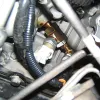
- Mechanical wear of moving parts
- Blocking due to carbon deposits
- Failure of the actuator motor
- Sensor position issues
3. Vacuum leaks
Leaks in the intake system allow unmetered air to enter, confusing the PCM calculations:
- Cracks in the intake piping
- Damaged gaskets
- Broken or disconnected vacuum hoses
- Issues at the intake manifold
4. Electrical circuit problems
Electrical faults can hinder proper communication between the PCM and the IAC:
- Open circuits in IAC wiring
- Short to ground or to the positive supply
- Corroded or oxidized connectors
- Blown fuses
5. PCM faults
Although rare, failures in the engine control module can generate this code:
- Software issues in control algorithms
- Hardware faults in the processor
- Calibration data corruption
Common diagnostic mistakes
Experienced technicians caution against common pitfalls in diagnosing the P0505 code:

- Prematurely replacing the IAC valve without cleaning the throttle body first
- Ignoring vacuum leaks and focusing only on electronic components
- Skipping electrical wiring checks before replacing components
- Using low-quality parts that do not provide a definitive fix
Step-by-step diagnostic process
Equipment needed:
- OBD2 scanner or code reader
- Digital multimeter
- Vacuum leak detection aerosol
- Automotive cleaning products
Step 1: Initial visual inspection
Start with a careful check of:
- The condition of all wiring and connectors for the IAC system
- The integrity of vacuum hoses
- Any visible deposits on the throttle body
- The condition of the air filter
Step 2: Reading error codes
Use the OBD2 scanner to:
- Read all codes stored in memory
- Note the conditions under which the fault occurred
- Check real-time system parameters
Step 3: Testing the IAC valve
To determine if the issue lies with the IAC:
- Disconnect the electrical connector from the IAC motor
- Start the engine and observe behavior
- If the code does not reappear, the IAC valve likely has an internal short and needs replacement
Step 4: Checking electrical circuits
If the IAC valve seems functional:
- Command the IAC opening via the scanner
- Measure the voltage and ground at the IAC motor connector
- Check circuit continuity with a multimeter
Step 5: Cleaning the system
If all electrical checks are fine:
- Thoroughly clean the throttle body
- Inspect and clean the IAC valve
- Check all vacuum connections
Methods of remediation
Throttle body cleaning
This is often sufficient to resolve the issue:
- Disconnect the battery for safety
- Remove the throttle body
- Clean all surfaces with a specialized product
- Ensure the throttle plate moves freely
- Reassemble and reprogram the system if necessary
Replacing the IAC valve
When cleaning is not enough:
- Choose a quality OEM or equivalent part
- Install according to the manufacturer’s specifications
- Perform the idle learn procedure
Repairing vacuum leaks
For sealing issues:
- Replace all damaged gaskets
- Repair or replace affected vacuum hoses
- Check the integrity of the intake manifold connections
Preventing future problems
To prevent a recurrence of the P0505 code:
- Perform regular air filter maintenance
- Periodically clean the throttle body (every 30,000–50,000 km)
- Use quality fuels to reduce deposits
- Regularly check vacuum hoses
- Adhere to the recommended service intervals
Conclusion
The P0505 error code may seem complex, but with a methodical approach and an understanding of the idle control system, it can be diagnosed and remedied efficiently. In most cases, the issue is resolved by cleaning the throttle body or replacing the IAC valve. However, it is important not to neglect a full system check to avoid misdiagnosis and unnecessary repairs.