- Rebuilding is cheaper than replacement and supports component recycling.
- It involves teardown, inspection, and replacement with OEM parts for ECU compatibility.
- Bearing wear and worn piston rings are common rebuild triggers.
- Warning signs include excessive oil use, white smoke, or metal particles.
When your car’s engine starts showing signs of fatigue—unusual noises, excessive oil consumption, or blue/white smoke from the exhaust—an engine rebuild may be the ideal solution. This complex process involves a complete teardown of the engine, meticulous inspection of every component, and repair or replacement of defective parts.
An engine rebuild is often a more economical alternative to a full replacement, allowing you to save hundreds or even thousands of euros. A professionally rebuilt engine can run reliably for many years, extending your vehicle’s life.
Advantages of engine rebuilding over engine replacement
An engine rebuilt offers more benefits than may be obvious at first. First, costs are significantly lower compared to purchasing a new or used engine. A rebuilt engine will not require major repairs for a long period, depending on the number of components replaced.
From an ecological perspective, rebuilding enables recycling and reuse of a large portion of the engine’s components, having a positive impact on the environment. This sustainable approach is becoming increasingly important in the auto industry.
The biggest advantage of rebuilding is however perfect compatibility with the onboard computer (ECU) and the existing electrical system. The ECU is programmed to communicate with the original engine installed on the car. When a different engine is installed, ECU can have connection and communication problems, requiring reprogramming or even replacement.
If you can choose between repair and replacement, experts recommend rebuilding the existing engine with OEM-standard parts to eliminate the risk of incompatibility.
When do you need an engine rebuild?
Bearing problems
The main reason for rebuilding is wear on the bearings. The moving parts of the engine are mounted on bearings, which allow them to move freely under oil lubrication. Bearings are designed to last above 150,000 kilometers, but wear can be accelerated by:

- Poor maintenance
- Operating with low oil level
- Using lower-quality oil
- Very long oil-change intervals

Worn bearings start to produce loud metallic noises, and eventually the engine may fail completely, requiring urgent repairs.
Worn piston rings
Another common cause is the wear of piston rings. These seal the combustion chambers created when fuel ignites in the engine cylinders. As they wear, they can no longer seal the cylinders properly.
When this happens, oil from the crankcase leaks around the worn seals and is burned together with the fuel-air mixture in the cylinder. For this reason, engines with worn rings exhibit high-intensity blueish smoke from the exhaust.
Warning signs for engine rebuilding
You should consider rebuilding when you notice:
- Excessive oil consumption (more than 1 liter per 1000 km)
- persistent white smoke from the exhaust
- Metal particles in engine oil
- Unusual engine noises (knocks, tapping)
- Loss of engine power and performance
- Frequent overheating
The engine rebuilding process
Disassembly and inspection
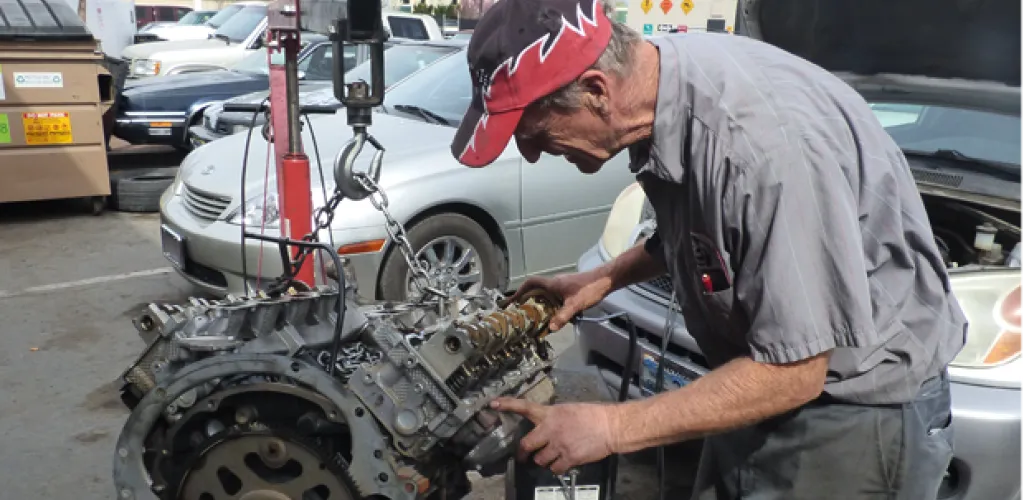
When an engine is rebuilt, the first step involves removing the engine from the car and disassembling it down to the last part. This operation requires experience and specialized equipment to avoid damaging recoverable components.
After thorough cleaning, each component is carefully inspected to identify wear and defects. The technician checks:
- The engine block for cracks or distortions
- The crankshaft for bearing wear
- The pistons and rings for wear
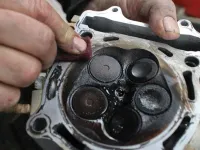
- The cylinder head for sealing
- The valves and guides

Replacing components
All defective components are replaced with new or refurbished parts that meet OEM standards. The most frequently replaced parts include:
- Gaskets and seals – for a perfect seal
- Bearings – for smooth operation of moving parts
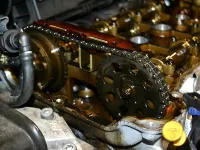
- Timing belt or chain – for perfect synchronization
- Oil pump – for proper lubrication
- Valve springs – for correct valve closure
In more severe cases, major replacements may be required:
- Crankshaft
- Camshaft
- Pistons and connecting rods
- Head gasket
Machining operations
When the engine is severely damaged, the engine block must be machined to realign the crankshaft bearing bores. Cylinders can also be honed to install pistons with the correct diameter. These operations require:
- Precision machining equipment
- Exact measurements
- Adherence to manufacturing tolerances
Situations when engine rebuilding is not recommended
There are two main situations where rebuilding is not feasible:
- The engine block has internal faults caused by a broken crankshaft or a connecting rod
- The exterior of the engine block is cracked – when an internal part perforates the block
In these cases, engine replacement becomes the only viable option.
Costs of engine rebuilding in Romania
Labor and services
Rebuilding an engine entails costs for:
- Engine removal: 800-1,500 RON
- Bench work / machining: 800-1,500 RON
- Special machining (boring, grinding): 300-800 RON
- Reassembly and adjustments: 400-800 RON
Replacement parts
Parts costs vary depending on the make and model:
- Piston rings: 150-400 RON
- Gaskets and seals: 80-250 RON
- Bearings kit: 200-600 RON
- Oil pump: 150-400 RON
- Timing kit: 200-800 RON
- Valves and guides: 300-700 RON
Factors that influence costs
Prices can vary significantly depending on:
- Vehicle make and model – premium cars require more expensive parts
- Engine type – diesel or turbo engines are more complex
- Extent of damage – how many components must be replaced
- Region – labor costs vary between cities
- Part quality – OEM vs aftermarket
Estimated total cost
In general, a full engine rebuild can cost:
- Gasoline engine 1.0-1.6L: 2,500-4,500 RON
- Gasoline engine 1.6-2.0L: 3,500-6,000 RON
- Diesel engine: 4,000-7,500 RON
- Premium/performance engines: 6,000-12,000 RON
These costs remain 30-50% lower than replacing the engine entirely and come with the guarantee of a motor that runs like new.
Engine rebuilding is a smart investment when performed professionally, delivering excellent performance and long-term reliability while maintaining perfect compatibility with the vehicle’s existing systems.
Photo sources: driving-tests.org, highrangegarage.com, welgeauto.com