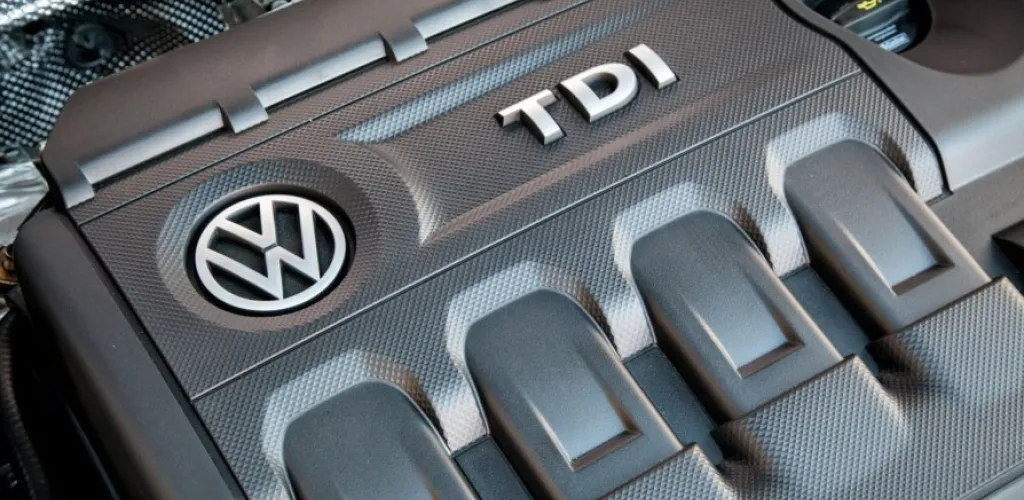
- TDI stands for Turbocharged Direct Injection, used mainly by VW Group brands.
- First gen (1989) 2.5L inline-5, 120 hp, 265 Nm, Bosch ECU.
- Second gen (1998) introduced common-rail with per-cylinder pressure control; 1.9L, 115hp.
- From 2004, common-rail TDI boosted efficiency and power, but increased reliability concerns and repair costs.
TDI engines have become synonymous with efficiency and fuel economy in the world of diesel cars. Although most drivers have heard this designation, few truly know what lies behind the acronym and how this technology has evolved over time. From the first engine launched in 1989 to today’s modern versions, TDI engines have revolutionized the diesel market through remarkable technical innovations.
The acronym TDI stands for “Turbocharged Direct Injection” and represents a technology developed and used primarily by the Volkswagen Group (Volkswagen AG). This designation characterizes diesel engines equipped with a turbocharger and direct fuel injection, technologies that have decisively contributed to the success of these powerplants.
What TDI means and who uses this technology
TDI is used largely by the entire VAG Group (Volkswagen Auto Group), appearing on vehicles produced by Volkswagen, Audi, Seat, Skoda and even Porsche. Over time, these engines have built a solid reputation in the automotive market for their fuel economy and relatively high efficiency.
TDI technology combines two essential elements: the turbocharger, which forces air into the cylinders for more efficient combustion, and direct injection, which enables precise dosing of fuel directly into the combustion chamber.
Historical evolution of TDI engines
First generation (1989)
- Inline 5-cylinder
- Displacement of 2.5 liters
- Power: 120 hp
- Torque: 265 Nm
- Injection pump with electronic control by Bosch
Second generation (1998)
Only in 1998 was the second generation of TDI engines launched, notable for the improved injection system design. These engines used a common-rail injector, replacing the classic pump-and-injector combination.
In this second-generation system, the injection pressure was regulated separately for each cylinder, as opposed to the old common-rail direct injection. The first modernized TDI engine was installed on the VW Passat B5 generation and had:
- Displacement: 1.9 liters
- Power: 115 hp
Third generation (2004) - the Common Rail era
For marketing and environmental reasons, in 2004 the third generation of TDI engines using the common-rail injection system was introduced. These engines stood out for:
- Much higher efficiency
- Improved power
- Reduced emissions
- Superior fuel economy
Technical issues of modern generations
As time has passed and for marketing reasons, TDI engines began to be less reliable than earlier generations. Engineers at VW opted for a more complex common-rail injection system that includes:
- High-pressure injectors
- Injection pump
- High-pressure pump
Common system faults
Because the entire system operates at very high pressure, it can fail severely over time, and repair costs are substantial. The main technical problems include:
- Oil pump problems: The most serious fault, which may show no signs of wear and can seize the engine
- Camshaft issues: Problems with the camshaft
- Turbo damage: Caused by lack of oil pressure
If the oil pump fails and you do not stop the engine in time, you risk damaging the turbo and seizing the engine - a small engineering error that can be costly.
TDI color code – power identification system

You may have noticed that on some cars the letters in TDI are red - one letter, two, or in some cases all three. This is a power code, depending on how many letters are red:

- White TDI: 105 hp
- “I” red: 115 hp
- “DI” red: 130 hp (or 140 hp on newer engines)
- “TDI” fully red: 170 hp (sport version)
If you want a powerful car with sporty potential, look for the three red letters - these engines deliver higher power, the consumption is similar, but you gain much more torque for climbs or overtaking.
Advantages of TDI engines
Superior performance
- High torque: TDI engines offer impressive torque, some up to 400 Nm
- Low fuel consumption: Very low consumption compared to petrol engines of the same capacity
- Acceleration: They accelerate fairly quickly thanks to the turbo
- Long-distance efficiency: They ride much more easily at steady speed and rpm
Economy and practicality
The TDI engine aims to mimic a petrol engine, thanks to the turbo delivering notable power and torque compared with the torque of an equivalent petrol engine.
Disadvantages and limitations of TDI
Costs and complexity
- Purchase price: 5–10% higher than a petrol engine equivalent
- Maintenance costs: The complex systems require specialized maintenance
- Additional components: EGR (exhaust gas recirculation) and diesel particulate filters (DPF)
Performance and comfort
- Noise and vibrations: Higher than petrol engines (though significantly improved)
- Limited redline: 4500–5000 rpm
- Cold-start difficulties: More challenging at low temperatures
TDI versus TSI/TFSI – detailed comparison
Each engine type has its own advantages and drawbacks:
Advantages of gasoline:
- Easier starting, especially at low temperatures
- Wider power band
- Quicker throttle response
- Lower maintenance costs
Advantages of diesel (TDI):
- Much higher torque (useful for heavy vehicles)
- Lower consumption by around 2 L/100 km
- Superior efficiency on long trips
- Greater engine durability
When does a TDI engine pay off?
A diesel makes financial sense far more if:
- You cover many kilometers per year
- You use the car for long commutes
- You frequently take long trips or tours
- You need towing power (towing, heavy loads)
For heavy urban use or short trips, gasoline engines remain a more practical and economical option in the short term.
TDI engines remain a remarkable technology that has defined the standard for modern diesel propulsion. Although newer generations brought additional complexities, the benefits in terms of efficiency and performance keep them relevant for many users, especially those who drive long distances regularly.