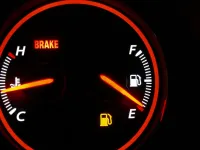
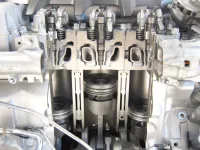
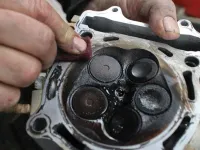
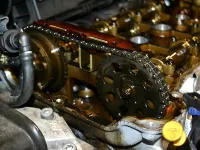
- Extended idling increases fuel consumption by 15-20% and raises emissions.
- It dilutes engine oil with fuel, causing deposits and premature wear.
- Battery discharge and voltage fluctuations risk ECU errors and reduced battery life.
- Carbon monoxide poisoning risk when idling in enclosed spaces.
Extended idling is a daily situation many drivers in Romania face. Whether you are waiting in heavy traffic in Bucharest, stuck in a jam after an accident on the highway, or warming up your car in the morning before departure, the engine runs at idle for longer than it should. While it may seem harmless, this habit can have serious consequences for the engine’s health and your budget.
Impact on fuel consumption and emissions
When the engine runs at idle, combustion does not occur under optimal conditions. At idle speed (approximately 700–900 RPM), the cylinder temperature is lower than in normal operating conditions, which leads to incomplete combustion of the air-fuel mixture.
Direct consequences are:
- Fuel consumption increases by 15-20% compared with normal in-traffic driving
- Increased emissions of CO, HC and particulates
- A car idling for two minutes uses fuel equivalent to covering one kilometer
These figures become worrying when you consider that a driver in Bucharest can sit in traffic for 30-60 minutes daily.
Mechanical problems caused by prolonged idling
Oil burning and contamination of the engine oil
At idle, the engine does not reach its optimal operating temperature, and cylinder pressure is lower. This allows larger amounts of fuel vapors to enter the oil sump, diluting and contaminating the engine oil.
Effects on the lubrication system:
- Dilution of the oil with fuel, reducing lubricating properties
- Formation of carbon deposits on intake valves
- Premature wear of piston rings and cylinders
- Clogging of the particulate filter (DPF) in diesel engines
Problems with the fuel system
Modern direct-injection engines are particularly sensitive to prolonged idling. At low speeds, the fuel pressure in the injection rail can fluctuate, affecting the precision of the spray.
Wear of engine components
At idle, oil circulation is reduced, and some engine components are not lubricated optimally:
- Camshaft and tappets: receive less oil under pressure
- Turbocharger: is not cooled and lubricated properly
- Piston rings: do not seat perfectly in the grooves of the piston
Impact on the electrical system
Battery discharge
At idle, the alternator operates at reduced RPM and cannot provide enough current to fully charge the battery, especially when electrical consumers are on (headlights, climate control, multimedia systems).
Common issues:
- Incomplete battery charging
- Up to 30% reduction in battery life
- Risk of complete discharge on cold days
Effects on electronic systems
Modern cars have dozens of ECUs that require a stable voltage. Voltage fluctuations caused by idling can trigger errors in electronic systems.

Health and safety risks
Carbon monoxide poisoning
The most serious problem arises when you leave the engine idling in enclosed or semi-enclosed spaces. Carbon monoxide (CO) is a colorless, odorless gas and extremely toxic.
Dangerous situations:
- Heating the car in a garage
- Waiting in underground parking
- Camping with the engine running to heat the cabin
Even 10 minutes of operation in a garage can create dangerous CO concentrations.
Differences between engine types
Gasoline engines
- Are more sensitive to fuel dilution in oil
- Spark plugs can foul due to low temperatures
- The catalytic converter may not reach its operating temperature
Diesel engines
- Particulate filter does not regenerate at idle
- Higher risk of clogging the EGR system
- Injectors can clog from deposits
Solutions and practical recommendations
Modern technologies
Start-Stop systems automatically shut off the engine when the car is stationary and restart it when you lift your foot off the brake pedal. This system can reduce consumption by 8-15% in urban traffic.
Hybrid cars use electric motors at low speeds, eliminating the need to idle altogether.
Daily usage tips
- Avoid prolonged warming up: modern engines require a maximum of about 30 seconds of idling before moving.
- Switch off the engine: if you know you will wait more than 2 minutes
- Use the AC moderately: at idle, the air conditioning compressor overworks the engine
- Regularly check the oil: change it according to recommended intervals or even more often if you drive a lot in traffic
Preventive maintenance
For cars that spend a lot of time idling, we recommend:
- More frequent oil changes (every 10,000–12,000 km instead of 15,000 km)
- Checking and cleaning the intake system
- Regular battery and alternator checks
- Forced regeneration of the diesel particulate filter (DPF) on diesel engines
Conclusion
Prolonged idling is not only a matter of fuel consumption or pollution — it is a real source of premature wear for engine components. Over time, these practices can significantly reduce the engine’s lifespan and lead to substantial repair costs.
The best approach is to limit idle time and invest in modern technologies that reduce the impact of this inevitable situation in urban traffic in Romania.