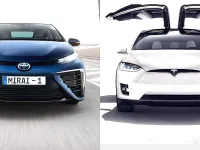
- Electric cars predate modern EVs, competing with gasoline and steam in the 19th century.
- Steam engines faced long heating times and limited range, hindering early cars.
- Electric cars powered by traction batteries, charged from external sources or home outlets.
- Key EV components include auxiliary 12/24V battery, charging ports, and DC-DC converter.
Electric vehicles have a history far longer than most people realize, with roots that stretch back to the 19th century. To understand how we arrived at the Tesla Model S and today’s Toyota hybrids, we must look back to the era when gasoline, steam, and electric energy competed to dominate the nascent automotive market.
At the turn of the 20th century, the horse was the main mode of transport, but as incomes rose and available technologies advanced, some people began to experiment with new means of transport. At that time, gasoline, steam, and electric energy were all available, each vying to dominate the market of that era.
Early experiments with self-propelled vehicles
Steam technology was well developed at that period and was generally trusted by the public. After all, it had proven its worth powering factories, mines, trains, and ships. It seemed a natural progression to build smaller forms of transport that used steam engines.
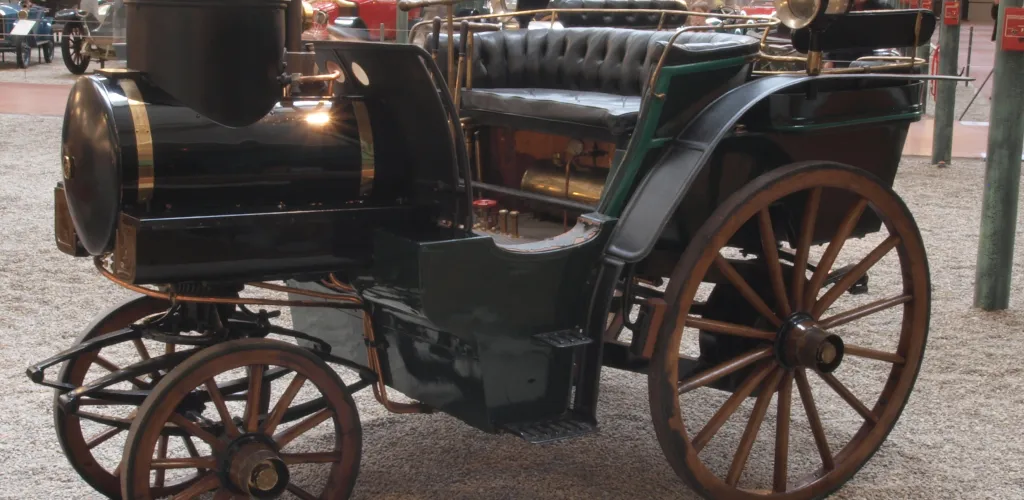
Some self-propelled vehicles existed as far back as the late 1700s (Nicolas Cugnot’s steam tricycle), but this technology was not truly developed until the late 1800s. Cugnot’s steam-powered Dampfwagen is recognized as the world’s first automobile.
But there was a major problem: steam engines required a long heating time (about an hour) and had limited range, not to mention they needed a constant supply of water. These technical limitations opened the door for other propulsion solutions.
How a modern electric car works
Electric vehicles operate by using an electric motor instead of an internal combustion engine as in gasoline-powered cars. In most cases, electric cars rely on a large traction battery to power the motor.
This battery is charged by connecting to an external power source or to a home charging outlet designed for electric car owners.

Because electric vehicles run on electricity, they have no exhaust and contain no parts such as a fuel pump, fuel line, carburetor, fuel tank, or any other components essential to a fuel-powered vehicle.

Main components of an electric vehicle
In general, electric vehicles consist of a series of basic components, each with its own specific role:
1. Auxiliary battery
In most electric vehicles, the auxiliary battery provides electrical energy to start the motor and power vehicle accessories, such as the instrument cluster. This battery is not to be confused with the main battery — it has a much lower voltage (12V or 24V) and powers conventional on-board systems.
2. Charging port
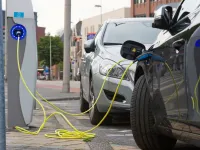
The energy stored in a battery cannot last forever and must be charged from time to time. This is where the charging port comes in, allowing the electric vehicle to connect to an external power source. There are several types of ports — from domestic slow charging to DC fast charging.
3. DC-DC converter
Usually the main battery operates at a higher voltage than the other vehicle components. This device converts the higher-voltage DC into a lower, safe voltage for use — for example from 400V to 12V for auxiliary systems.
4. Traction electric motor
Since the vehicle must move, a component is needed to convert electricity into rotational force to move the wheels. This is where the traction motor comes in — typically a permanent-magnet synchronous motor or an induction motor.
Some vehicles also feature energy regeneration at the wheels to recover part of the energy lost during braking (regenerative braking).
5. Onboard charger
Since energy from external sources is usually alternating current, this device converts it to direct current to be used for charging the battery. It is also used to monitor battery characteristics such as voltage, current, temperature, and state of charge during charging.
6. Power electronic controller
This device manages the flow of electric energy delivered to the traction motor and controls the speed of the electric drive motor. It is the electronic equivalent of an ECU in a conventional car.
7. Cooling system
This system maintains an appropriate operating temperature for the motor and other components. Unlike internal combustion engines, electric motors generate much less heat, but the battery requires active cooling for optimal performance.

8. Traction battery pack
This is the car’s “fuel tank” and the source of electrical energy used to run most of the vehicle’s other components. Modern technologies predominantly use high-energy-density lithium-ion batteries.
9. Electric transmission
This device transfers mechanical power from the traction motor to the wheels of an electric vehicle. Unlike multi‑speed transmissions in conventional cars, electric drivetrains usually have a single reduction gear.
Development of internal combustion engines: Otto, Diesel, Benz, and Ford
The four-stroke engine that is popular today was designed in 1862 by Nikolaus Otto, while the diesel engine was invented by Rudolf Diesel in 1893. A little later, Karl Benz designed his first vehicle in 1886, and the Ford Model T became the first mass-produced car early in the 1900s.
Despite the power and usefulness of internal combustion engines, especially compared to steam engines, they had issues. They were not easy to drive, requiring considerable effort to shift gears and start the engine. They were strong machines, and exhaust smoke was persistent and not popular with everyone.
Against these problems there was one alternative: the electric car. It had no such issues, was quiet, easy to handle, and produced no harmful emissions. Thus electric cars were a top invention as an alternative to internal combustion and steam vehicles.
The first practical electric cars
One of the first practical cars was created by British inventor Thomas Parker around 1884, and in 1888 it was produced in Germany—the Flocken Elektrowagen.

Unfortunately, rural roads were very poor at the time, making it difficult for cars to venture far beyond the city.
Back then, vehicle manufacturers saw potential in electric cars and began to experiment with them. A notable example was Ferdinand Porsche, founder of Porsche, who developed his famous P1 in 1898.
Thomas Edison left a serious mark on the development of electric cars, believing in their superiority over other vehicles and working to develop higher-performance batteries. Henry Ford, a friend of Edison, collaborated with him around 1914 to explore electric car options and to reduce their cost.
Decline of electric cars
Ironically or perhaps intentionally, Ford’s Model T was mass-produced and nearly three times cheaper than other electric vehicles on the market at the time. In 1912, Ford’s Model T cost about $650, while other vehicles were around $1,750.
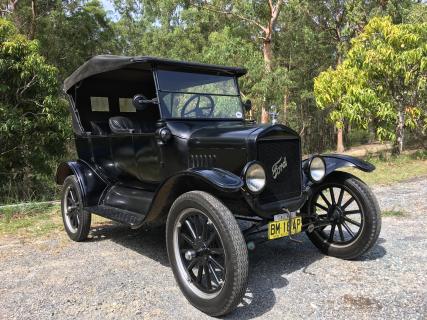
Electric vehicles suffered a decisive blow when road systems improved and large oil reserves were discovered.
These factors, and more, led to a decline in electric vehicle sales and they almost disappeared around 1935. The battle seemed won decisively by fuel-powered vehicles, at least for the next 30 years, until the oil crisis of the 1970s.
Who built the first electric car in history
As with internal-combustion vehicles, there was no single inventor of electric cars. Their appearance and development should be considered a sequence of discoveries and inventions that eventually came together to form the electric car we know today.
The discovery of electric energy and, on the other hand, a reliable rechargeable battery formed the basis for building an electric car.
Anyos Jedlik, a Hungarian inventor, developed an electric motor in 1828. Using this new invention, he also developed a proof of concept for using electric energy as a means of transport by building a vehicle.
A little later, in 1834, Vermont blacksmith Thomas Davenport built another model of an electric vehicle that could run on an electric track.

Although impressive, these early machines lacked a rechargeable energy source and therefore had limited transport utility. The world had to wait until 1859, when French physicist Gaston Planté invented the lead-acid battery.
The technology was further improved by another Frenchman, Camille Alphonse Faure, who in 1881 significantly increased battery capacity, enabling industrial-scale battery production.
The timeline of inventing electric cars
As we have seen, the creation of the electric car was more a series of events than a single milestone. Therefore there are several claimants for the first electric cars, depending on how you define a fully formed electric vehicle.
First prototypes (1834-1867)
An interesting development in electric cars was achieved in 1834 by Professor Sibrandus Stratingh of Groningen, the Netherlands. He and his assistant built a small electric vehicle powered by primary non-rechargeable cells. Unfortunately Stratingh could not advance the design, as he died shortly after the invention, in 1841.
A little later, in 1867, Austrian inventor Franz Kravogl presented his prototype two-wheeled vehicle at the Paris World Fair. It was a two-wheeled vehicle with an electric motor but not very reliable for practical use.
First practical electric car (1881-1884)
In 1881, Gustave Trouvé tested a three-wheeled vehicle along the streets of Paris. This was the first external electric motor as the propulsion mechanism for his Coventry Rotary-pedal tricycle. Although this was not a key invention toward a complete electric car.

It wasn’t until 1884 that British inventor Thomas Parker (who also built an underground electrical network in London) constructed the first production electric car. Parker powered his car with his own high-capacity rechargeable batteries specially designed for this purpose.
Commercial success (1894-1895)
The first successful electric vehicle, The Electrobat, was developed by mechanical engineer Henry G. Morris and chemist Pedro G. Salom in 1894, in Pennsylvania. It was a slow and cumbersome device with steel wheels to support its weight and a large lead-acid battery.
Also in the USA, William Morrison of Des Moines, Iowa, developed an electric car capable of seating six passengers and reaching 23 km/h.
In 1895, consumers began to notice this new technology following A. L. Ryker’s introduction of electric tricycles in the USA.
The Golden Age of Electric Cars (1895-1910)
Several other inventors and engineers developed a range of other models during this period, culminating in an electric car that set a world speed record on 18 December 1898.
After these developments, electric car technology flourished, marking the golden age of the era. Interest in electric cars rose throughout the 1890s and the early 1900s.
taxis began to be available in 1897 thanks to Walter C. Bersey, who ran a taxi company in London.
Despite the advantages over gasoline cars of the time, a lack of electrical infrastructure prevented mass adoption by consumers. This, among other factors, led to the decline of electric cars as they were eclipsed by internal combustion engine vehicles, especially after large oil reserves were discovered.
By 1910, most electric car manufacturers had left the business or halted production altogether. The technology persisted for specialized uses, such as forklifts or golf carts, but passenger electric vehicles largely faded into the background until their revival later in the 20th century.
General Motors and the first modern electric car
Although General Motors had experimented with electric vehicles as early as the mid-1960s with their Electrovair concept car, this vehicle never reached series production. Electrovair was based on the Corvair (1966 model) and was powered by a silver-zinc battery pack delivering 532 volts.

After a few decades, GM decided to try again. Their first modern-era electric car, the General Motors EV1, was developed in the mid-1990s. The EV1 was the first electric car manufactured in series by a major automaker.
- It was General Motors’ first vehicle designed from scratch as an EV
- The EV1 was the first and only passenger car marketed under the General Motors brand and not under one of its divisions
GM’s decision to design and build the EV1 was largely inspired by the California Air Resources Board (CARB), which adopted a mandate requiring major American manufacturers to develop zero-emission vehicles if they wanted to continue marketing their goods in the state.
Tesla and the revolution of modern electric cars
Tesla Motors produced the first electric car, the Roadster, in 2008. This vehicle marked a revolution in the modern era of electric vehicles and offered state‑of‑the‑art battery technology and an electric propulsion system.
The Roadster was a battery electric vehicle (BEV) and was the first legally produced, mass‑market, fully electric passenger car to use a lithium‑ion battery as its energy source. It was also the first production car ever to travel more than 320 km on a single charge and could reach an impressive top speed of 200 km/h.

Between 2008 and 2012, over 2,450 Roadsters were sold in more than 30 countries worldwide.
The first hybrid cars in history
A common answer would be Toyota Prius. Right? Unfortunately, that is not the correct answer. According to records, the first hybrid vehicle was developed much earlier.
In 1889, a gasoline-electric hybrid truck was designed by William H. Patton. While not a car by our definition, it remains a very interesting concept.
A little later, in 1901, while working at the Lohner coach factory, Ferdinand Porsche developed the Mixte. This was a full‑time all‑wheel drive hybrid version of the electric cart, presented at the World Fair in Paris.

Mixte is widely regarded as the world’s first hybrid car. The initial prototypes of this model had two-wheel drive, were battery-powered, and had two motors mounted in the front wheel hubs.
Some say the honor of the first hybrid belongs to a car developed in 1905 by Henri Piper, a German‑Belgian inventor. He built his own hybrid vehicle consisting of an electric motor and a generator, batteries, and a small gasoline engine.
Sursa foto: wikipedia.org, knowledge.wharton.upenn.edu, en.wikipedia.org, commons.wikimedia.org, upstation.asia, adictamente.blogspot.com, mycarquest.com, sportscarmarket.com, researchgate.net