- Timing chain is durable, lasting 250,000–400,000 km, sometimes the engine’s life.
- It operates in an oil bath, with hydraulic tensioners, needing proper lubrication.
- Initial and replacement costs are higher, 2,000–4,000 lei, with some premature failures.
- Timing belt was introduced in the 1960s as cheaper, quieter alternative.
The timing system is one of the most important components of an internal combustion engine, responsible for perfect synchronization between the crankshaft and the camshaft. This synchronization ensures the opening and closing of the valves at the right moment, allowing the engine to run efficiently. Modern technology offers two main solutions: the timing belt and the timing chain, each with its distinct characteristics.
Many drivers discover at service that their car has a chain instead of a timing belt, or vice versa. This confusion is common because both systems perform the same function but differ significantly in durability, maintenance costs, and technical specifications.
The timing chain: robustness and longevity
Technical characteristics of the chain
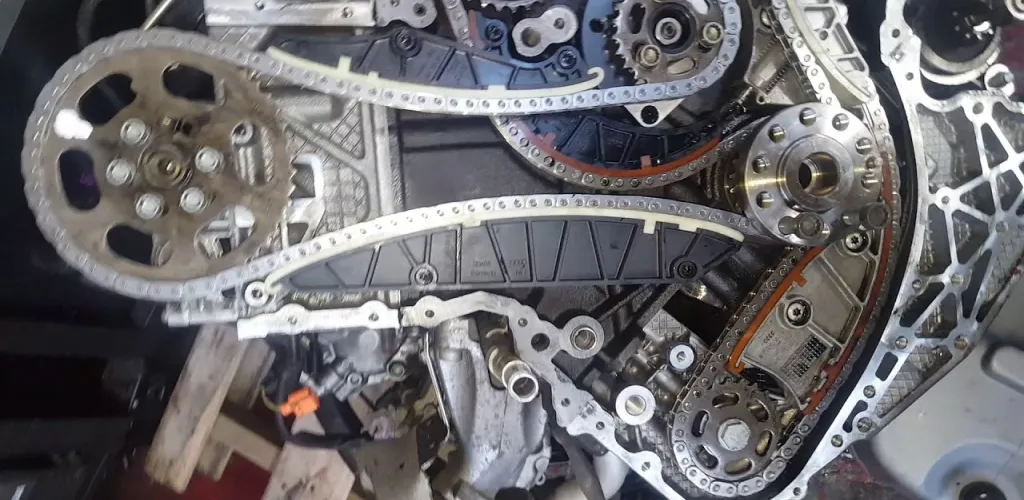
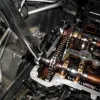
The timing chain, similar to a bicycle chain but much tougher, is designed to resist wear over the long term. Made from high-quality steel, it connects the crankshaft to the camshaft through a system of gears and metal guides. Chain tension is controlled by hydraulic tensioning devices, which use engine oil pressure to maintain optimal tension.
Advantages of the timing chain
Durability is the main advantage of the timing chain. Under normal operating conditions, a chain can last between 250,000 and 400,000 kilometers, sometimes for the life of the engine. This longevity is due to its solid metal construction and continuous lubrication by engine oil.
Another important advantage is that the chain does not require replacing the water pump at the timing service, reducing service costs. Additionally, the chain provides a more precise transmission of motion and is less susceptible to stretching over time compared to elastic materials.
Disadvantages and known issues
Despite the advantages, timing chains have significant drawbacks. Initial and replacement costs are considerably higher than for belts. A full timing chain service can cost between 2,000 and 4,000 lei (RON), depending on the make and model of the vehicle.
Serious issues have been reported on certain premium brands. Volkswagen TSI, BMW N47 and N57, and Mercedes-Benz OM651 engines have experienced premature chain failures, sometimes before 100,000 kilometers. These problems are often caused by:
- Hydraulic tensioner failures
- Poor material quality
- Design issues with guides
- Inadequate lubrication maintenance
Dependence on the lubrication system
The timing chain operates within the engine oil bath and depends critically on correct oil pressure. A drop in pressure below normal can cause improper operation of the tensioning devices, leading to chain jumping or breakage. For this reason, following oil change intervals and using high-quality oil are essential.
The timing belt: the classic and efficient solution
Evolution of belt technology
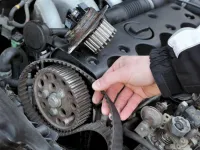
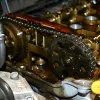
The timing belt was introduced in the 1960s as a cheaper and quieter alternative to the metal chain. Modern belt technology uses high-performance synthetic rubber reinforced with glass fibers, kevlar, or steel cords. This combination provides excellent tensile strength and the necessary flexibility for long-term operation.
Advantages of the belt system
Low cost is the main advantage of the timing belt. A complete timing belt kit typically costs between 800 and 1,500 lei (RON), making maintenance more affordable for vehicle owners. Quiet operation is another important advantage, with the belt helping to reduce overall engine noise.
The belt is also lighter than the chain, contributing to a lower overall engine weight. The mechanical tensioning system is simpler and more reliable than the hydraulic system used with the chain.
Limitations and maintenance requirements
Durability is the main drawback of the belt. Replacement intervals vary between 100,000 and 200,000 kilometers or 5–7 years, depending on usage conditions and manufacturer specifications. Factors such as extreme temperatures, humidity, and driving style can negatively affect belt life.
When replacing the timing belt, it is mandatory to replace the water pump as it is driven by the same belt and has a similar service interval. Tensioners and guides must also be checked and replaced if there are signs of wear.

Critical moments for the belt
The timing belt is most vulnerable at engine start and stop, when tensions are at their maximum. Cold temperatures can make the belt stiffer and more prone to cracking, while high temperatures can accelerate rubber degradation.
Direct comparison: chain vs timing belt
Evaluation criteria
Lifespan:
- Chain: 250,000–400,000 km (theoretical)
- Belt: 100,000–200,000 km (guaranteed)
Initial replacement cost:
- Chain: 2,000–4,000 lei
- Belt: 800–1,500 lei
Cost per kilometer:
- Chain: 0.005–0.015 lei/km
- Belt: 0.004–0.012 lei/km
Service complexity:
- Chain: Very complex, requires special expertise
- Belt: Medium complexity, standard service
Decision factors
Choosing between a chain and a belt depends on several factors:
- Engine type: Large engines (over 2.0 liters) typically use a chain
- Budget: Belts are more affordable in the short term
- Usage pattern: Chains are better for very high mileage
- Vehicle age: On older cars, belts may be more economical
Symptoms of a defective timing chain
Early recognition of timing chain problems can prevent costly engine damage. Modern diagnostic systems offer multiple indicators of belt timing status.
1. Check engine light comes on

The engine control unit (ECU) continuously monitors synchronization between the crankshaft and the camshaft via position sensors. When the chain stretches or jumps, the ECU detects timing discrepancies and triggers the check engine light. Common error codes include P0016, P0017, P0018, indicating timing problems.
2. Misfires and uneven running
Chain stretch can cause changes in valve opening/closing timing, affecting cylinder filling and exhaust. This manifests as:
- Rough idling
- Power loss
- Increased fuel consumption
- Higher exhaust emissions
3. Characteristic noises
A worn chain produces distinctive noises, especially at idle:
- Metallic rattling from the timing area
- Increased noise under acceleration
- Vibrations transmitted through the chassis
These sounds are more noticeable in the morning when the oil is cold and more viscous.
4. Metallic particles in the oil
Chain wear and guide wear produce microscopic metallic particles that accumulate in the engine oil. During an oil change, the technician may observe:
- Metal shavings in used oil
- Unusually dark oil
- Altered viscosity
These signs indicate advanced wear and the urgent need to replace the chain.

Recommendations for proper maintenance
For systems with a timing chain
- Regular oil changes: Strictly follow the manufacturer’s recommended intervals
- Oil quality: Use only oils with the correct specifications
- Oil pressure monitoring: Regularly check oil pressure
- Periodic inspections: Checks at 40,000–50,000 km
For systems with a timing belt
- Respect intervals: Do not exceed the recommended mileage
- Visual inspection: Periodically check belt condition
- Avoid oil contact: Oil degrades rubber quickly
- Full service: Replace auxiliary components as well
Future trends in timing technology
The automotive industry is moving toward hybrid and electric solutions, but internal combustion engines will remain relevant for some time. Manufacturers are investing in:
- Advanced materials for belts (carbon, kevlar)
- Electronic tensioning systems
- Belt geometry optimized for efficiency
- Intelligent monitoring systems
Conclusion
Choosing between the belt and the chain is not always at the owner’s discretion; it is determined by engine design. However, understanding the differences helps make correct maintenance decisions.
For most drivers, the timing belt represents the more practical solution due to predictable costs and clear service intervals. The chain may be more economical in the long term for high-mileage vehicles, but it requires closer attention to oil quality and lubrication system maintenance.
Regardless of the distribution type, following the maintenance schedule and using quality parts are essential for proper engine operation and longevity. Ignoring wear signs can lead to costly damage that far exceeds the price of preventive intervention.
Sursa foto: youtube.com, autobahnlogic.com, whichcar.com, toolsspecialist.com