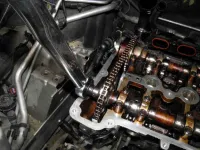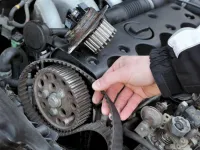
- Timing belt synchronizes crankshaft and camshaft to control valve timing.
- Interference engines (70%) suffer instant, catastrophic damage; replacement costs 8,000–20,000 RON.
- Non-interference engines (30%) cause bent valves, cylinder head damage; typical costs 2,000–5,000 RON.
- Visible cracks, missing teeth, oil contamination, squeals indicate belt wear.
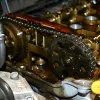
The timing belt is one of the most critical components of an internal combustion engine, and neglecting it can lead to costly damage and, in many cases, complete engine destruction. Understanding how this component works and the consequences of its failure is essential for any vehicle owner.
Statistics show that approximately 70% of modern engines are interference engines, meaning that a broken belt can cause irreversible damage in seconds.
How the timing belt operates in the engine system
- Crankshaft - converts the pistons’ linear motion into rotational motion
- Camshaft - controls the opening and closing of the intake and exhaust valves
- Timing belt - synchronizes these two components with a degree of precision, ensuring that the valves open and close exactly when needed. This perfect synchronization is vital for the correct operation of the engine.
Four-stroke operation cycle
In normal operation, the engine follows the Otto cycle:
- Intake - the intake valve opens, the piston moves downward
- Compression - both valves closed, the piston moves upward
- Power - both valves closed, the piston moves downward
- Exhaust - the exhaust valve opens, the piston moves upward
Engine types and the consequences of rupture
Non-interference engines (around 30%)
These engines, more common on older vehicles, have a design that allows a safety margin between valves and pistons. The consequences of a rupture include:
- Bent valves - the most common damage
- Damage to the cylinder head - requires machining
- Possible cracks in pistons - in extreme cases
- Repair costs: 2,000-5,000 RON
Interference engines (around 70%)
Modern engines, optimized for efficiency and compactness, do not provide clearance. The results are catastrophic:
Immediate damage:
- Bent or completely destroyed valves
- Cracked or shattered pistons
- Bent or broken connecting rods
- Cylinder head cracked
- Damaged engine block
Secondary damage:
- Oil pan cracked by thrown connecting rods
- Contamination with metallic debris
- Complete engine destruction
- Replacement costs: 8,000-20,000 RON
Signs of wear identification
Visual inspection
A routine check can prevent disaster:
Signs of normal wear:
- Fine cracks on the belt’s side surface
- Light wear on the teeth
- Slight darkening of the material
Signs of critical wear:
- Deep cracks that run across the belt
- Missing or severely damaged teeth
- Shiny and hard surface - rubber has degraded
- Oil contamination - indicates leaks from the engine seals
- Visible fibers - the internal structure is exposed
Audible symptoms
Warning noises:
- Squeal on cold start - worn belt tensioners or guide pulley
- Rhythmic metallic noise - possible issues with the hydraulic tensioner
- Squealing under acceleration - belt is slipping
Important: The belt can fail without prior audible warning.
Replacement intervals and influencing factors
Standard recommendations
Based on mileage:
- Inspection: every 30,000 km
- Standard replacement: 80,000-120,000 km
- Absolute limit: 160,000 km
Based on time:
- Maximum age: 7-10 years, regardless of mileage
- Material deterioration: rubber degrades over time
Factors that reduce durability
Operating conditions:
- Urban traffic - frequent start/stop cycles
- Extreme temperatures - severe winters or excessive heat
- High humidity - accelerates rubber degradation
Technical issues:
- Oil leaks on the timing belt
- Worn tensioners - incorrect tension
- Worn guide rollers - uneven wear
Related components and complete replacement
Complete timing kit
When replacing the belt, it is recommended to change simultaneously:
- Belt tensioner - maintains optimal tension
- Idler pulleys - guide the belt path
- Water pump (if belt-driven) - prevent future issues
- Seals - prevent oil contamination
Replacement procedure
Critical steps:
- Position at TDC - piston 1 at top dead center
- Mark positions - crankshaft and camshaft
- Replace components in a specific order
- Check tension - crucial for proper operation
Cost comparison and economic impact
Cost-benefit analysis
| Scenario | Cost (RON) | Repair time | Vehicle availability |
|---|---|---|---|
| Preventive replacement | 400-1,000 | 2-4 hours | Minimal downtime |
| Non-interference engine repair | 2,000-6,000 | 1-2 weeks | Prolonged downtime |
| New/rebuilt engine | 10,000-25,000 | 2-4 weeks | Major downtime |
Impact on vehicle value
- Preventive replacement: maintains resale value
- Major repairs: reduces value by 20-30%
- Engine replacement: severe impact on value
Prevention strategies by vehicle type
For new vehicles (0-50,000 km)
- Strictly follow the service schedule
- Perform only visual monitoring at service centers
- Plan financially for replacement at 80,000-100,000 km
For used vehicles (50,000-100,000 km)
- Immediate inspection of belt condition
- Consult the [car manual] for history
- Plan replacement within the next 20,000-30,000 km
For high-mileage vehicles (over 100,000 km)
- Immediate replacement if there is no recent evidence
- Full timing system check
- Consider preventive replacement regardless of visual condition
Difference between timing systems
Timing belt vs. timing chain
Timing belt:
- Quiet operation
- Lower replacement cost
- Requires periodic replacement
- More vulnerable to external factors
Timing chain:
- Superior durability (theoretically for the engine’s life)
- High repair cost when issues arise
- Can develop tensioner issues
- Noisier in operation
Safety and economy recommendations
Owner checklist
Monthly:
- Listen for unusual noises at startup
- Note any changes in engine behavior
At every service (15,000-20,000 km):
- Request a visual belt inspection
- Check the condition of auxiliary components
- Document the condition in the service log
Yearly:
- Assess replacement need based on age and mileage
- Plan a budget for replacement
Choosing a service and parts
Service criteria:
- Brand-specific experience
- Use of required special tools
- Warranty on workmanship and parts
Parts criteria:
- Prefer original or OEM parts
- Avoid questionable-quality parts
- Complete timing kit from the same manufacturer
Preventive timing belt replacement is one of the most important investments in vehicle maintenance. The relatively low cost of this operation, compared with the financial devastation of a destroyed engine, makes it a sensible decision for any responsible owner. Don’t let chance decide the fate of your engine—plan and act proactively.