- Timing belt synchronizes crankshaft and camshaft to prevent piston-valve damage
- It is rubber or reinforced material with teeth that may drive the water pump
- Belt advantages: quieter, cheaper, lighter; disadvantages: periodic replacement and sudden failure
- Signs of wear include hard starting, rough idle, power loss, and higher fuel use
Proper engine operation depends on perfect synchronization between its components. The timing belt is the part that ensures this vital synchronization between the crankshaft and the camshaft, preventing engine damage. Understanding its role and recognizing wear signs can save the engine from costly repairs.
As the engine goes through the four strokes - intake, compression, power, and exhaust - perfect synchronization between the crankshaft and the camshaft is essential. The crankshaft moves the pistons, and the camshaft opens and closes the intake and exhaust valves with Swiss-watch precision.
A single error in this perfectly synchronized system will cause an impact between the pistons and valves, meaning the engine would be completely destroyed. The timing belt thus plays an extremely important role, synchronizing the two shafts.

Timing belt construction
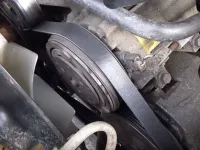
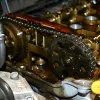
The timing belt is made of rubber or reinforced synthetic material for a longer life. On the inside, the belt has a fixed number of teeth that mesh perfectly with the toothed gears on the shafts. It is mounted at the top to the camshaft and at the bottom to the crankshaft, ensuring that the two shafts always work together.
In some cases, the timing belt also drives the water pump, as well as the alternator or the power steering pump. This makes timely replacement even more important, because a broken belt can affect several systems of the car.
Timing belt vs. timing chain
Many modern vehicles use a timing chain instead of a belt, each with its own advantages and drawbacks.
Advantages of the timing belt
- Much quieter operation
- Lower replacement cost
- Lighter weight, reducing fuel consumption
- Does not require additional lubrication
Disadvantages of the timing belt
- Must be replaced periodically (usually at 60,000–120,000 km)
- Can fail suddenly without warning
- Sensitive to extreme temperatures
- Deterioration due to oil or coolant exposure
Advantages of the timing chain
- Much greater durability; many manufacturers guarantee it for life
- Superior resistance to extreme temperatures
- Tends to start making noise before failure, giving time for replacement
- Does not require periodic replacement under normal conditions
Disadvantages of the timing chain
- Louder in operation
- Much higher replacement cost
- Requires constant lubrication with engine oil
- Heavier in weight
Signs of a worn timing belt
1. Engine not running normally
A worn timing belt can slip and skip a few teeth, meaning the synchronization discussed above has just disappeared. The intake and exhaust valves will be actuated with delay or even earlier than they should, causing the engine to run roughly.
Symptoms include:
- Difficult starting
- Loss of power
- Weak acceleration
- Irregular idle
- Increased fuel consumption
2. Check engine appears on the dashboard
Certainly several sensors will notice that the engine is not running properly, and the check engine light will warn you that there is a problem that must be investigated immediately.

Common fault codes associated with timing belt problems include:
- P0011 - Incorrect camshaft timing advance
- P0335 - Crankshaft position sensor
- P0340 - Camshaft position sensor
3. Unusual engine noises
As the belt wears, you may hear ticking or a squeal from the engine. The engine isn’t lubricated properly, and the tappets start to strike, producing these characteristic sounds. Worn tensioner pulleys can also create rubbing or chirping noises.
4. The engine won’t start
This is the case when the belt has broken — you’ll hear the engine attempting to start but failing. If the belt has snapped while driving, stop the engine immediately and do not attempt to restart, as this can cause severe damage to pistons and valves.
5. Low oil pressure
A slipping timing belt can affect the oil pump operation (if driven by the belt), resulting in low oil pressure and insufficient lubrication for the engine. This can be observed by:
- Oil pressure warning light on the dash
- Metallic noises from the engine
- Increased engine temperature
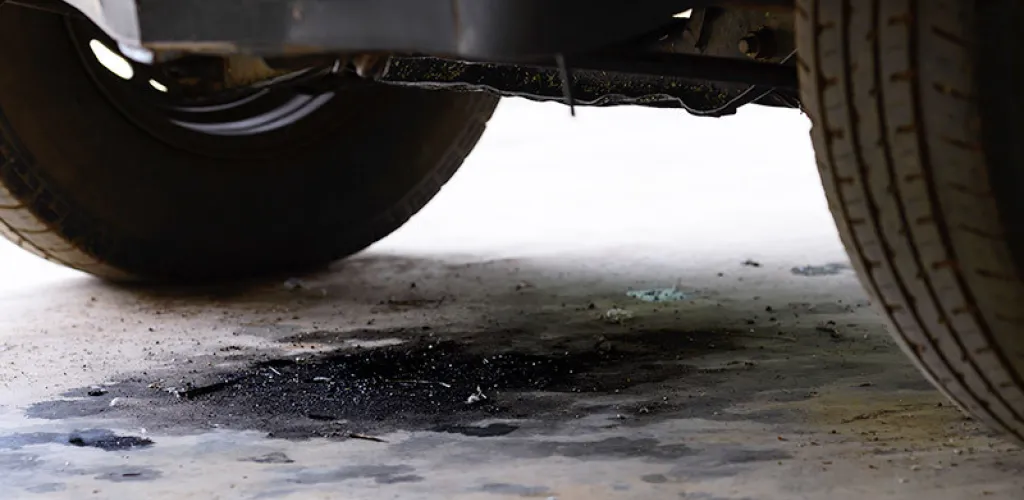
6. Oil leaks
At the end of the shafts there are pulleys on which the belt sits. Between these pulleys and the engine block there are oil seals that prevent oil from leaving the engine.
If the belt loosens, these seals are likely not sealing properly anymore and the engine may lose oil. Leaks usually occur in the areas:
- Crankshaft oil seal
- Camshaft oil seal
- Timing cover

When should the timing belt be replaced
Automakers specify clear replacement intervals, usually between 60,000 and 120,000 km, or after 5-7 years, whichever comes first. It is essential to follow these intervals, because a broken belt on an interference engine (most modern engines) can cause damage worth thousands of euros.
What is replaced during a timing belt replacement
When replacing the timing belt, the mechanic should also replace:
- All tensioner and idler pulleys
- Water pump (if driven by the belt)
- Shafts’ oil seals
- Timing cover gasket
Consequences of not replacing on time
If the belt breaks on an interference engine:
- Pistons strike the valves
- Valves bend
- Valve guides get damaged
- Pistons and rings may be affected
- The cylinder head may require replacement
- Repair costs can exceed the value of the car
Final recommendations
If you’re not sure when to replace the timing belt or chain, check the car’s manual or ask a mechanic during a service visit. At the same time you can visually inspect for:
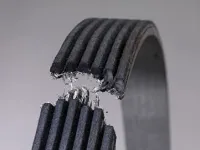
- Surface cracks
- Missing or damaged teeth
- Uneven wear
- Oil or coolant traces
Preventive maintenance is much cheaper than repairing a damaged engine. Do not delay timing belt replacement — it is one of the most important maintenance tasks you can perform for your car.
Photo sources: monitor.co.ug, businessinsider.com, autoguru.com.au