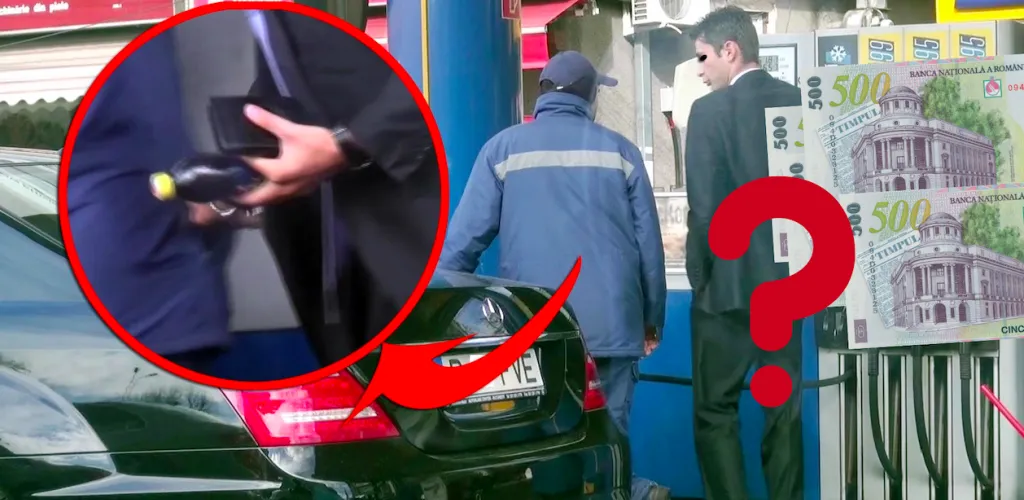
- Pump attendants fuel cars, wash windshields, check oil, and provide product info.
- They endure extreme conditions and low pay; tips can significantly boost income.
- Cash tips are common but fixed amounts may be used; card payments hinder tipping.
- Tipping at the pump aligns with service workers needing fair compensation.
Tip at the gas station is a topic that generates mixed opinions among drivers. Some see it as a natural gesture and appreciate the workers’ efforts; others view it as excessive or unwarranted. To understand this practice better, we should examine it from multiple perspectives—the customer’s, and the attendant performing the service.
In Romania, unlike other countries where self-service is the norm, many gas stations still offer full fueling services and quick windshield washing. This tradition raises legitimate questions about how we should reward these additional services.
Situations in which you can tip at the gas station
Payment at the checkout - the tipping challenge
First, the situation is paying at the checkout. Here things get tricky for several practical reasons. Most drivers now use card payments, which makes tipping nearly impossible. Even when you pay with cash, many customers feed fixed amounts—100, 150, or 200 lei—precisely to avoid receiving change.
Moreover, the cashier does not interact directly with your vehicle and does not provide a personalized service. They process the payment, issue the receipt, and move on to the next customer. While their work is important for the operation of the gas station, it does not involve the same level of physical effort or exposure to difficult conditions as other employees.
Services at the pump - where tipping makes sense
The second situation, much more relevant, concerns the additional services offered directly at the pump. Here we’re talking about employees who:
- Fuel the vehicle for you
- Wash the windshield and mirrors
- Check the oil level or tire pressure (on request)
- Provide information about available products
These employees work in conditions totally different from those inside. They are exposed to:
- Extreme temperatures — hot summers and cold winters
- Strong fuel odors
- Risk of contact with harmful substances
- Constant physical effort throughout the shift
- Lack of the comfort of an air-conditioned space
Why it’s worth tipping pump station attendants
Salary realities in the industry
Salaries in the fueling-station industry are not generous. A pump attendant typically earns the minimum wage or slightly above. For someone who spends 8-10 hours a day on their feet, exposed to the elements and fuels, this income is far from decent.

Tips can represent a meaningful supplement to base pay. For you, 2-5 lei tips are negligible. For the attendant, accumulating these sums over a day can mean the difference between having money for a meal or for transport.
Comparison with other services
Many drivers leave tips to restaurant waiters, couriers, or taxi drivers, but hesitate to do the same at the gas station. There is a clear logic for why the pump attendant deserves the same treatment:
- The waiter brings your order to your table, in an enclosed, climate-controlled space
- The pump attendant provides a service under much tougher conditions
- Both are paid by employers, but both depend on tips for a decent income
The service is optional
No one is obliged to accept that the attendant fills your tank or washes your windows. You can politely refuse and do everything yourself. However, if you choose to benefit from these services, it’s natural to reward them.
Consider the benefits:

- You won’t have gasoline or diesel smell on your hands
- You avoid the risk of getting fuel on your clothes or on the car’s steering wheel
- You save time — you can stay in the car in bad weather
- You have clean windows without having to search for a station with a washing function
How much tipping is appropriate
There is no strict rule, but here are some guidelines:
- 2-3 lei for simple fueling
- 5 lei if the attendant washed the windows or checked other aspects
- 10 lei or more if you received exceptional service or in extreme weather conditions
Important is to understand that you don’t have to leave large sums for the gesture to be appreciated. Consistency matters more than the amount — attendants remember and appreciate customers who leave tips regularly, even small amounts.
Arguments against tipping - a perspective
It’s true that some argue attendants are paid to do this job anyway and shouldn’t depend on tips. This argument has a solid theoretical basis — in an ideal world, salaries should be enough for a decent life without relying on customer generosity.
However, we live in Romania’s current economic reality, where many services are underpaid. Until the labor market and legislation change to ensure higher wages, tipping remains an important mechanism of support for service workers.
Conclusion - the decision is yours
In the end, tipping at the gas station is and remains a personal choice. There is no strict legal or social obligation. Yet, if you benefited from a service that made your life easier, if the attendant was polite and efficient, or simply if you want to recognize the work of a person who works in difficult conditions, then a few lei left as a tip can make a real difference.
For you, those 2-3 lei do not change your budget. For the pump attendant, accumulating these sums over a day can mean real extra income. Ultimately, the act of tipping says something about how we relate to the people who provide us with services and how we choose to contribute, even modestly, to improving their lives.