- Clutch life ranges from about 40,000 km to over 250,000 km depending on driving style and materials
- Soft pedal, harder gear engagement, clutch slipping, burning smell, and revs rising with little speed
- Engine revs without speed, unusual noises, and pedal sticking signal serious problems
- Driving style dramatically affects life; avoid excessive clutch use to double or triple lifespan
For many automotive enthusiasts, nothing compares to the experience of a manual transmission. Pressing the clutch and shifting gears quickly provides a sensation no automatic box can match. Yet the clutch is one of the components that wears out the most in a manual vehicle.
Although your car’s clutch is designed to withstand demanding use, it remains a part that can deteriorate over time. The clutch life varies considerably—from about 40,000 km to over 250,000 km—depending on driving style, usage conditions, and the quality of materials used.

Signs of clutch wear
Early recognition of wear signs can prevent complete system failure and the high costs associated.
Soft clutch pedal
Among the first symptoms you’ll notice is a change in the feel of the clutch pedal. It becomes softer or spongier than usual, indicating possible issues with the hydraulic system or wear of the clutch disc.
Difficulty shifting gears
When you struggle to engage a gear or the gears go in harder than before, that’s a clear sign of wear. A worn clutch will show the greatest difficulty at entering first gear or reverse, because those gears require the most precise synchronization.
The clutch slips
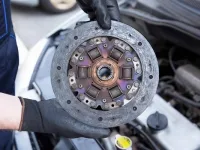
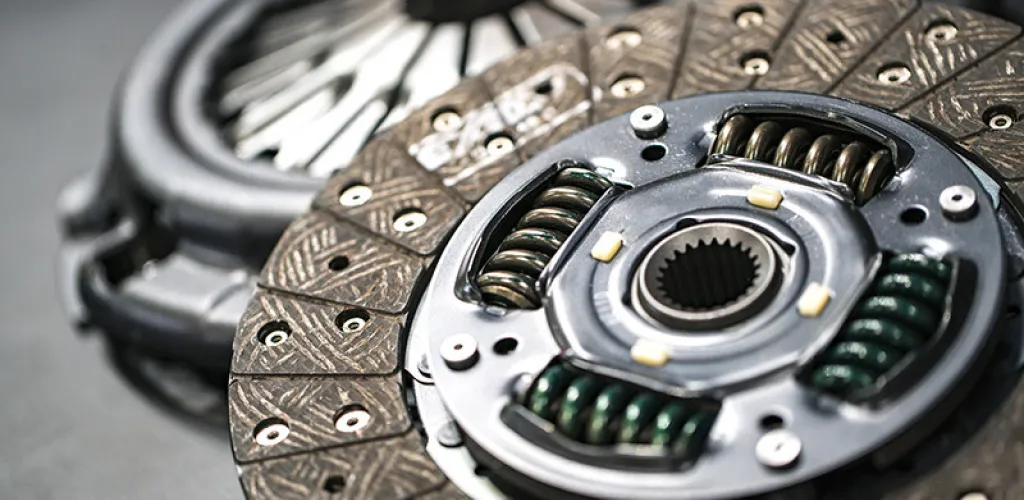
A worn clutch will slip in contact with the flywheel, which means the disc can no longer transmit the engine’s power fully to the gearbox. This phenomenon manifests as the engine RPM rising without a corresponding increase in vehicle speed.
the worn clutch will slip in contact with the flywheel, which means the disc no longer transmits engine power to the gearbox effectively. This phenomenon shows up as the engine revs rising without a corresponding speed increase.
Burning smell
A burning smell produced by the clutch is unmistakable — a sharp, heated-material odor. It appears when the clutch disc overheats due to excessive slipping.
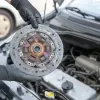
The engine revs without speed gain
This is one of the most obvious signs of a completely worn clutch. When you press the accelerator, the engine revs but the car does not accelerate accordingly. At this stage, the clutch needs urgent replacement.
Unusual noises
Metallic noises, thuds, or grinding sounds originating from the clutch release bearing or other worn components in the transmission can appear.
The clutch pedal sticks
When the clutch pedal sticks or does not return fully to its rest position, it indicates serious mechanical problems requiring immediate intervention.
How to extend the clutch life
Driving style dramatically influences clutch life. Adopting proper techniques can double or even triple its lifespan.

Driving techniques to protect the clutch
Avoid excessive use of the clutch pedal: Do not press the clutch pedal every time you brake. Many drivers have the bad habit of placing their foot on the clutch first when braking, then on the brake pedal. This practice prematurely wears the system.

At the stoplight, release the pedal: If you are waiting at a red light for more than a few seconds, do not keep your foot on the clutch pedal with the car in gear. Leave the car in neutral and engage a gear only 2-3 seconds before the light turns green.
Avoid abrupt starts: Aggressive starts with clutch slipping generate excessive heat and premature wear. Release the pedal progressively for a smooth start.
Do not use the clutch to hold the car on a slope: On hills, use the handbrake instead of keeping the car held by the clutch in a semi-engaged state.
Preventive maintenance
Regular checks: Inspect the brake fluid level in the clutch reservoir and check for leaks in the hydraulic system.
Proper adjustments: Ensure the clutch pedal travel is correct and that the engagement point is in the optimal position.
Timely replacement: Do not postpone replacement when early signs of wear appear, as a completely worn clutch can damage the flywheel or other costly components.
When to go to a mechanic
If you experience one or more of the symptoms mentioned above, schedule a visit to a mechanic. Early diagnosis can prevent further damage and higher repair costs. A clutch replaced in time will ensure the optimal operation of the manual transmission and preserve the driving pleasure of a manual car.
Photo sources: oards.com, autoguru.com.au, startrescue.co.uk