High oil consumption in a car, regardless of make and model, is a common situation that should be addressed carefully. From what may seem like a minor issue—after all, all engines consume oil (the problem is the amount consumed)—serious malfunctions can arise. These can affect the engine’s functionality and performance and may require costly repairs.
If you’re unsure about what constitutes high oil consumption, a reference point is that approximately 1 liter per 10,000 kilometers driven can be considered a maximum acceptable consumption.
Below, we provide the information you need about situations where the engine consumes oil, the solutions available, and the associated costs.
What Every Driver Should Know About Engine Oil
First and foremost, it’s useful to understand the purpose of this consumable for cars. Engine oil has multiple roles:
- Lubrication: It facilitates friction between the metallic parts of the engine.
- Temperature Regulation: It helps maintain an optimal temperature.
- Protection: It acts as a protective film and cleans parts of impurities, keeping them in good working condition.
We can say that engine oil is essential not only for the engine’s operation but also for extending its lifespan. As you know, the engine operates at very high temperatures. The oil’s thermal properties ensure an optimal operating temperature, thus avoiding overheating or the blockage of mechanical friction processes.
Because it helps clean the engine components and protects them from deposits, wear, and corrosion, engine oil needs to be replaced after a certain period. Not replacing it reduces its effectiveness in fulfilling all these roles.
The Optimal Interval for Changing Engine Oil in the Volkswagen Jetta
Each manufacturer recommends a specific time interval or mileage for oil changes to retain its properties. Recommendations can range from 7,000 kilometers up to 30,000 kilometers for new cars.
We recommend changing the oil every 10,000 kilometers for the Volkswagen Jetta, and for any other car as well. Pay close attention to time periods, not just mileage! If you don’t drive at least 10,000 kilometers in a year, consider changing the engine oil annually.
Top Common Situations Where the Volkswagen Jetta Engine Consumes Oil
Consuming engine oil in larger quantities than normal is a malfunction and should be treated accordingly. Remember that the engine achieves optimal performance only when all components, including engine oil, are in good condition.
If you regularly check the engine oil and notice minimal consumption, rest assured that all engines consume oil. The problem arises when the consumed amount is large, and the remaining level can no longer ensure efficient cooling and optimal lubrication—in other words, it can’t perform its functions effectively.
If your Volkswagen Jetta’s engine consumes more than 1 liter of oil per 10,000 kilometers, it’s clear there’s a cause behind this. We advise you to find out as soon as possible, and below we present some common situations.
Using Engine Oil That Doesn’t Follow the Manufacturer’s Recommendations
Engine oil, like other consumables necessary for the car’s proper functioning, must be chosen to precisely match the engine’s needs. An oil that’s too thin cannot provide the necessary consistency to properly lubricate the engine’s friction surfaces because it seeps too easily between them. If you don’t use the correct oil for your engine, you may notice not only higher consumption but also abnormal combustion, resulting in blue smoke coming from the exhaust pipe.
Worn Piston Rings
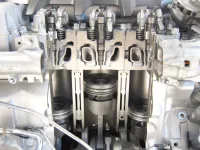
The engine’s piston rings are responsible for properly sealing the combustion chamber so that gases don’t escape and for facilitating piston movement. When the rings are worn, oil enters the combustion chamber and is burned along with the fuel. You’ll notice the same sign as in the first case—the car emits blue smoke.
Worn Turbocharger
This malfunction can obviously occur in cars equipped with a turbocharger. The turbocharger is designed to increase engine performance, but when it doesn’t function properly, it leads to high oil consumption and, of course, decreased performance.
To avoid problems caused by high engine oil consumption, it’s important to regularly check the oil level and not ignore signs such as:
- Oil stains under the car
- Oil-stained seals and engine block
- Coolant reservoir or coolant with traces of oil
If you discover that the spark plugs have traces of oil, you may already be facing a complicated situation that requires reconditioning or replacing the engine. It’s urgent to consult an experienced mechanic for diagnosis.
How Much Does It Cost to Solve Oil Consumption Issues in the Volkswagen Jetta?
When the engine consumes oil, it’s wise to take action at the first signs to minimize repair costs. The problem might be simple (for example, not using the oil type recommended by the manufacturer) and could be resolved just by replacing the oil. Remember that oil losses wear out the engine and decrease its performance until you might have to consider purchasing a new engine.
The most affordable way to prevent problems caused by oil consumption is to regularly change the oil every 10,000 kilometers or annually. In addition to the cost of the engine oil recommended by the manufacturer, you’ll need to pay labor costs of approximately 150–200 lei, depending on the service center.
When this maintenance operation is ignored, the engine can suffer severe damage. Consider how much it might cost to recondition or replace the engine when an oil change costs around 200 lei!
Our recommendation is to adopt a responsible approach to car maintenance and to pay attention to the signals your car provides.