- Stay calm and immediately activate hazard lights to alert others.
- Maneuver to the roadside, shift to neutral, brake with extra force.
- Turn off, ensure neutral or park, wait 10–15 seconds, then restart.
- If started, stay parked 5–10 minutes and monitor for issues.
Two things are certain when a car engine dies suddenly while driving: it is stressful and dangerous. When the engine stalls, you may lose not only propulsion but also essential electrical assists like power steering and brake assist. Knowing the correct procedures and understanding the possible technical causes can help you avoid dangerous situations and respond calmly and effectively.
Keep calm and activate hazard lights
The first and most important action is to stay composed. It is natural to feel anxious when the engine stops in traffic, but panic can impair your ability to make sound decisions and react promptly. If you panic, your body releases adrenaline that can lead to impulsive and potentially dangerous decisions.
As soon as you realize the engine has stopped, activate the hazard lights. This is crucial to signal other road users that your vehicle has a problem. The hazard light switch is usually marked with a red triangle and is located near the center of the dashboard for quick access in emergencies.
Maneuver the vehicle to a safe area
The second critical step is to move the car to a safe position, ideally on the roadside or on the shoulder. This maneuver can be more difficult than usual for the following technical reasons:
Loss of power steering: When the engine stops, the power steering pump (hydraulic or electric) stops working. The steering will become suddenly much heavier to turn, requiring significant physical effort. Do not panic — the steering still works, it just requires more effort.
Impact on brake booster: The braking system will continue to function, but you will notice the brake pedal becomes much firmer. The vacuum pump that assists braking no longer receives power from the engine. You will need to press the pedal harder, but the brakes will respond. In some vehicles, you may have 2-3 assisted presses left before the system becomes fully manual.
Correct stopping procedure:
- Shift the transmission to neutral
- Maintain as straight a line as possible
- Steer toward the nearest safe stopping point
- Press the brake pedal firmly, using more force than usual
- After stopping, engage the handbrake and leave the car in gear (first or second) for added safety
Try restarting the engine
Before calling for assistance, try to restart the engine. In some cases, a stop can be caused by a temporary onboard computer glitch or a minor electrical issue that can be resolved by resetting.
Steps to restart:
- Make sure the car is in neutral (manual) or in Park (automatic)
- Turn the key to OFF or press the start button to shut down the system completely
- Wait 10-15 seconds
- Try to start the engine again
If the engine starts, do not head out immediately. Stay parked for 5-10 minutes and monitor the following:
- Does the engine run smoothly, without stalling?
- Are the revs stable?
- Do warning lights appear on the dashboard?
- Are there unusual vibrations?
- Are there any strange noises?
If everything seems normal after this interval, you can drive cautiously to the nearest dealer or auto service. If the engine stops again or behaves abnormally, do not continue driving — call for a tow.
When to call for roadside assistance
If the engine refuses to start or dies repeatedly, the issue is almost certainly serious. In these situations:
- Contact your insurer for roadside assistance (if you have this option)
- Call a professional auto assistance platform
- Do not attempt to push the vehicle on busy roads
- If you are in a dangerous position (on a highway, in a sharp curve), contact the police for assistance
Main technical causes of sudden engine stop
Understanding possible causes helps you communicate more effectively with a mechanic and gauge the seriousness of the issue.
Battery discharge or alternator fault
The battery provides electrical power to start the engine and run electrical systems when the engine is off. The alternator takes over once the engine runs, recharging the battery. If the alternator fails, the car will run on the battery until it is completely discharged.
Warning signs:
- Battery warning light on the dashboard (battery symbol or ALT/GEN indicator)
- Lights fade gradually
- Electrical systems operate intermittently
- Difficulties starting on previous days
A worn battery (typically more than 4-5 years old) may fail to hold a proper charge. Corrosion on battery terminals (white-green deposits) interferes with the electrical connection and should be cleaned periodically with a metallic brush and a baking soda solution.
Fuel system faults
Internal combustion engines require a precise air-fuel mixture to run. Any interruption in fuel supply will cause the engine to stall.
Faulty fuel pump: The electric fuel pump (usually located in the tank) moves fuel under pressure to the injectors. With wear, it can run intermittently or stop altogether. Symptoms include misfiring, loss of power on hills, or sudden stalling.
Low fuel pressure: Can be caused by:
- Clogged fuel filter (recommended replacement at 30,000–40,000 km)
- Defective fuel pressure regulator
- Damaged or leaking fuel lines
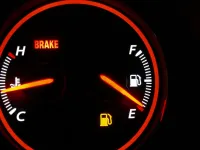
- Nearly empty tank (pump draws air instead of fuel)
Clogged injectors: Carbon deposits and impurities in fuel can clog injectors over time, hindering proper fuel atomization in the combustion chamber. Symptoms include increased fuel consumption, hard starting, and irregular engine operation.
Ignition system problems
Ignition coil: Converts low battery voltage to high voltage (20,000–40,000 V) needed to create a spark at the spark plugs. When a coil fails (often due to overheating), the spark fades or disappears.
Worn spark plugs: Have a limited service life (30,000–100,000 km depending on type). Electrodes wear over time, increasing the gap and producing weaker sparks. Dirty or oil-wetted plugs cannot produce efficient sparks.
Defective distributor cap (on older engines): The distributor cap carries high-tension current from the coil to individual plugs in firing order. Cracks, moisture, or carbon deposits can cause shorts and misfires.
Crankshaft position sensor: The engine computer (ECU) uses this sensor to determine piston position and optimal ignition timing. If the sensor fails, the ECU may not know when to trigger ignition, causing the engine to stall.
Other possible causes
Clogged air filter: The engine needs a large volume of air for combustion. A very dirty filter restricts airflow, effectively suffocating the engine.
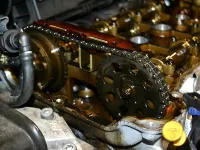
Broken timing belt: In engines with a timing belt (as opposed to a chain), belt failure instantaneously stops the engine and can cause severe internal damage if the engine is a “interference” type (valves and pistons occupy the same space at different times).
Faulty sensors: Temperature, air mass (MAF), intake manifold pressure (MAP), or throttle position sensors can send erroneous data to the ECU, causing sudden stalls.
Overheating: A severely overheated engine can seize (pistons sticking in cylinders due to excessive thermal expansion). This situation requires major repairs.
Preventive measures
Most of these problems can be avoided with regular maintenance:
- Follow the manufacturer’s recommended service intervals
- Check oil level and quality every 1000 km
- Replace the air filter annually or per specifications
- Test the battery before the cold season
- Use quality fuel from reputable stations
- Periodically add fuel system cleaners
- Do not ignore warning lights on the dashboard
- Have annual checks performed at a trusted service center
Conclusion
A sudden engine stop while driving is a serious situation that requires a calm, informed response. Knowing the correct safety steps and understanding the possible technical causes can help you manage this stressful scenario effectively. Whether you manage to restart the engine or require technical assistance, your top priority is always safety for you and other road users. Regular preventive maintenance remains the best protection against these unpleasant situations.