- Diesel nozzles are larger, preventing diesel fueling gasoline cars.
- Gasoline nozzles fit diesel filler necks, so gasoline into diesel cars happens more.
- Diesel engines deliver higher torque and efficiency for long-distance driving.
- Emissions concerns exist for diesel, but modern systems mitigate them.
The choice of fuel for a car is a fundamental decision that every driver must make from the outset. Whether we are talking about gasoline, diesel, or electric variants, this choice shapes the entire driving experience. Despite this, fueling confusion remains a recurring problem with significant financial consequences.
An interesting and seemingly counterintuitive phenomenon is that most fueling incidents involve gasoline being poured into a diesel car, not the other way around. The reason for this asymmetry has a simple yet essential technical explanation.
How to choose between gasoline and diesel
When it comes time to buy a vehicle, whether from a dealer or second-hand, the decision on the fuel type depends on several factors:
- Usage pattern: urban driving on short distances vs long-distance commuting
- Available budget: for both purchase and maintenance
- Market reality: fluctuations in fuel prices and availability
- Performance considerations: engine torque and specific fuel consumption
Diesel engines typically offer lower consumption and higher torque at low RPMs, making them ideal for long-distance travel. Gasoline engines are quieter, have lower maintenance costs, and are better suited to urban driving.
Evolution of public perception of diesel engines
In the last decade, the image of diesel vehicles has been significantly affected by scandals related to pollutant emissions. Controversies involving major players such as Volkswagen and Ford have raised serious questions about the future of this technology.
It is undeniable that the pollution level generated by diesel engines is higher than that produced by gasoline engines. Emissions of fine particulates and nitrogen oxides are a real concern for public health and the environment. However, diesel technology has evolved considerably:
- Diesel particulate filters (DPF) are increasingly efficient
- Selective catalytic reduction (SCR) systems with AdBlue
- Variable-geometry turbochargers to optimize combustion
- Compliance with Euro 6d and higher standards
Despite the controversies, last year’s statistics show that roughly one third of vehicles sold globally were diesel-powered, demonstrating ongoing interest in this technology.

Why fueling confusion at the pump happens in one direction
According to playtech.ro, there are numerous cases where drivers fueled gasoline instead of diesel, but the reverse situation is very rare. The explanation lies in a simple yet effective safety measure implemented by automakers.
Diameter difference – a physical barrier
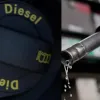
- Diesel nozzles have a larger diameter, making them impossible to insert into the filler neck of a gasoline car
- Gasoline nozzles have a smaller diameter and can fit into the filler neck of a diesel car
This physical difference acts as a mechanical barrier preventing diesel fueling of a gasoline car, but does not provide protection in the opposite direction. Therefore, drivers’ attention remains crucial when operating a diesel vehicle.
Consequences of fueling a diesel car incorrectly
Fundamental differences between gasoline and diesel
- Diesel has lubricating properties and ignition occurs by compression of hot air in the cylinders
- Gasoline is more volatile, lacks lubricating properties, and requires a spark for ignition
- The cetane rating of diesel (auto-ignition) is opposite the octane rating of gasoline (detonation resistance)
What happens immediately after the wrong fueling
- First kilometres: The car will continue to run using the diesel remaining in the lines and fuel system
- Gasoline entering the circuit: When gasoline reaches the high-pressure pump, damage begins
- Lack of lubrication: Without the lubricating properties of diesel, metallic components in the pump start to wear quickly
- Engine shutdown: The injection system can no longer operate correctly, and the engine stops
How to respond correctly
- Do not start the engine if you haven’t started it yet
- Shut off the engine immediately if you have started it
- Call a company specialized in draining the tank
- Do not attempt to drain the tank yourself through the refueling pump
If gasoline has already reached the fueling system and engine, the remediation procedure is complex:
- Complete draining of the tank
- Flushing the entire fuel circuit
- Cleaning or replacing the high-pressure pump
- Checking and possibly replacing injectors
- Cleaning fuel filters
- Checking the common rail system
Repair costs
According to playtech.ro, the cleaning and remediation operation is extremely costly:
- Drainage and washing of the fuel lines
- Cleaning or replacing the fuel pump (the most expensive component)
- Checking and potential replacement of injectors
- Cleaning the engine and components of the fuel system
- Specialized labor
The budget for such a repair can reach several thousand lei, depending on:
- The amount of gasoline poured
- The distance driven after the fueling mistake
- The model and make of the car
- The degree of damage to the components
Exceptions and variations
Although the general rules apply in most cases, there are some variations:
- The number of kilometers driven with the wrong fuel can vary depending on how much diesel remains in the system
- Older engines may be more tolerant, but damage remains inevitable
- The mix ratio influences the severity of the damage – the more gasoline, the more severe the consequences
Nevertheless, the final result remains the same: damage to the fueling system and high repair costs.
Preventive measures
To avoid this costly mistake:
- Check the label on the fuel filler door before each fueling
- Pay attention to the color of the nozzles at the pump (black for diesel, green for gasoline)
- Avoid fueling when you are in a hurry or distracted
- Inform other drivers who may use the car about the fuel type
- Use apps or reminder stickers on the dashboard
In the current context, as fuel costs have risen sharply and the vehicle becomes increasingly a luxury item, neglect at the pump can lead to significant extra costs. The investment of a few seconds to verify the fuel type can prevent thousands of lei in losses.
Understanding the technical differences between gasoline and diesel, as well as the consequences of fueling mistakes, is essential for every driver. The asymmetric protection provided by the differences in nozzle diameters works in only one direction, making the vigilance of diesel vehicle owners all the more important.