- Engine block heater warms the engine block and fluids for easier cold starts
- Works while the car is off and plugs into an external outlet
- Benefits include easier starts, battery protection, reduced wear, and lower early fuel use
- There are several types: plug-in immersion heaters and oil pan blankets
During harsh winters, starting a car can present serious challenges. Low temperatures increase engine oil viscosity, reduce battery efficiency, and can cause starting problems. The solution is the engine block heater, an electric device designed to prepare the vehicle for easy starts even at very low temperatures.
Modern vehicles are built to operate in all weather conditions, yet extreme cold remains a real technical challenge. If you’ve ever struggled to start your car on a frosty winter morning, you know what we mean.
What is an engine block heater
An engine block heater is a specialized electric device designed to warm specific components of the powertrain when the vehicle is not running. Unlike the car’s heating system, which operates only when the engine is on, this device works independently, powered from an external electrical outlet.
There are several types of heaters that use different methods to provide the necessary heat. Each type is tailored to particular situations and vehicle types, offering flexible solutions for various needs.
How it works and why it’s needed
The main function of this device is to heat the engine block and the internal fluids, especially the engine oil. The technical reason is simple: at low temperatures, engine oil becomes considerably more viscous, making it harder for it to circulate through the lubrication system.
When oil is cold and viscous:
- The engine must exert more effort to rotate the moving components
- Starting becomes difficult and strains the battery
- Initial wear of engine components is higher
- Fuel consumption increases in the first minutes of operation
Using an engine block heater, you’ll benefit from:

- Easier starts: The engine will start almost instantly, even at -20°C
- Battery protection: The battery won’t be overloaded by repeated attempts to start
- Reduced wear: Engine components are lubricated optimally from startup
- Energy efficiency: Fuel consumption is lower in the first minutes

Types of engine block heaters
There are several types of heaters, each with its own characteristics and applicability. The right choice depends on the vehicle type, usage conditions, and budget available.
Plug-in (immersion) heater
This type of heater heats the coolant directly using a heating element that comes into direct contact with the coolant. It is connected to the cooling system via a hose and works on the principle of natural convection.
Advantages:
- High efficiency in heating the cooling system
- Relatively simple installation
- Moderate cost
Disadvantages:
- Requires modifications to the cooling system
- Risk of leaks if not installed correctly
Engine oil pan heater blanket
Placed above the engine or attached to the underside of the hood, this “blanket” disperses heat evenly across the engine block. It works on the principle of thermal radiation and is ideal for vehicles with limited access to other components.
Advantages:
- Very simple installation
- Doesn’t require engine modifications
- Can be used for other components as well
Disadvantages:
- Less efficient compared to other types
- Can be affected by wind or moisture
Oil pan heater (magnetic pad or screws)
This device is essentially a magnetic pad or one that uses screws and attaches directly to the oil pan. It heats the engine oil by direct contact, being one of the most efficient methods to prepare lubrication.
Advantages:
- Directly heats engine oil
- Simple installation with strong magnets
- High efficiency for cold lubrication
Disadvantages:
- Works only on metallic oil pans
- Can be affected by dirt or rust on the oil pan
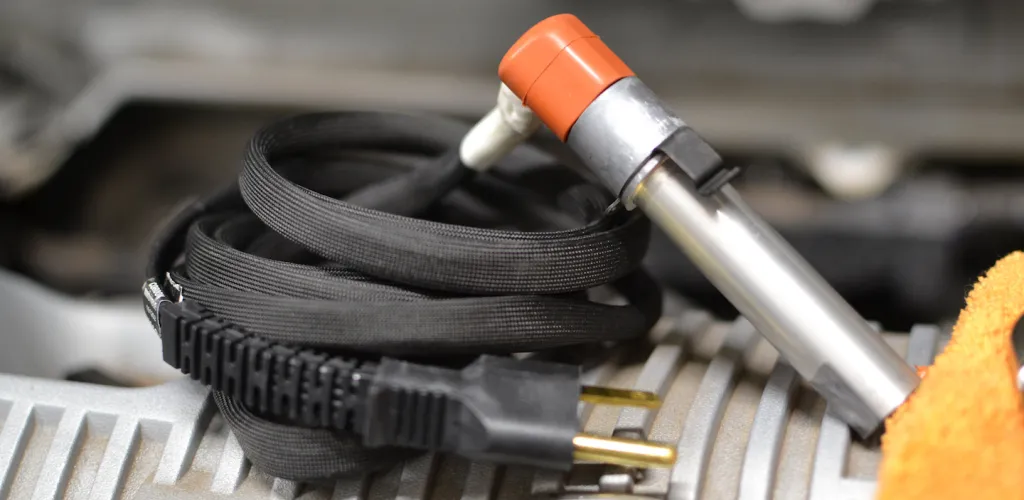
Dipstick heater
This heater replaces the original dipstick with a long heating element that heats the engine oil from inside the oil pan. It’s an elegant solution that does not affect the vehicle’s exterior appearance.

Advantages:
- Direct and efficient heating of the engine oil
- Does not affect the vehicle’s exterior
- Permanent installation, no external components
Disadvantages:
- More complex installation
- Higher cost
- Requires a special dipstick kit
In-line circulating heater
These heaters integrate into the cooling system via the coolant hoses. Circulating models use the existing water pump or an auxiliary pump to distribute the heated coolant through the entire system.
Advantages:
- Heats the entire cooling system uniformly
- Maximum efficiency
- Suitable for large or commercial vehicles
Disadvantages:
- Complex installation
- Higher cost
- Requires advanced technical knowledge
In-line non-circulating heater
Similar to circulating types, but heating is limited to the local area where the device is installed. They are simpler and cheaper, but also less efficient.
External screw-on heater
Attaches directly to the outside of the engine block and heats it by direct contact. It’s a practical solution for engines with easy access to the block.
Do you need an engine block heater?
The decision depends on several factors specific to your situation:
Factors that indicate the need for a heater:
- Frequent temperatures below -10°C in your area
- Repeated starting problems on winter
- Vehicle parked outside, without a heated garage
- Diesel vehicles (more sensitive to low temperatures)
- Vehicle with high mileage
- Battery performance reduced
Long-term benefits:
- Reduced engine wear
- Longer battery life
- Fuel savings
- Increased comfort (reliable starts)
- Reduced emissions at cold start
In Romania, where winters can be severe in certain regions, an engine block heater is a smart investment, especially for diesel vehicles or older models.
When and how long to use the heater
Efficient use of the heater is essential to maximize benefits without wasting electrical energy.
Optimal operation time:
- 3-4 hours before departure – the ideal timing for most vehicles
- 2 hours minimum for sufficient warming
- No more than 6 hours – extra heat is lost
Using a timer: Installing a programmable timer is the most efficient solution. You can schedule automatic heater activation several hours before your usual departure time.
⚠️ Important warning: Never drive with the heater still plugged in. This can cause serious damage to the power cord and pose safety risks.
How to install an engine block heater
Installation varies considerably depending on the heater type chosen:
Simple DIY installation:
- Magnetic oil pan heaters
- Oil pan blankets
- Some types with a dipstick
Professional installation recommended:
- In-line heaters
- Plug-in heaters for the cooling system
- Complex systems with a circulating pump
Considerations for installation:
- Access to an electrical outlet in the parking area
- Length of the power cord
- Protection from moisture and freezing
- Electrical safety (RCD, grounding)

Engine block heater vs. idling warm-up
Many drivers still believe that letting the car idle for 5-10 minutes is enough to warm up the engine. This practice has several drawbacks:
Idling warm-up drawbacks:
- Inefficiency: At idle, the engine warms up very slowly
- Pollution: Unnecessary emissions into the atmosphere
- Fuel waste: Fuel is wasted with no real benefit
- Wear: A cold engine runs under suboptimal conditions
- Legislation: In many countries, idling for extended periods is prohibited by law
Advantages of the engine block heater:
- Prepares the engine before starting
- Zero local emissions
- Superior energy efficiency
- Protects all engine components
Modern cars and the need for warming up
Although automotive technology has evolved considerably, winter warming remains relevant. Engineers acknowledge that:
For normal driving:
- Modern cars do not require prolonged warming
- After 2-3 seconds from starting, the lubrication system is functional
- Gentle driving is possible almost immediately
For driver comfort:
- Heating remains useful for defogging the windshield
- Cabin temperature is more comfortable
- Reduces startup stress
Expert conclusion: Engine block heaters are considered a “very good idea” by automotive engineers, even if not strictly necessary for modern vehicles. The long-term benefits and comfort they provide justify the investment.
Conclusion
The engine block heater represents an elegant technical solution to the specific challenges of winter driving. While modern cars are more resistant to cold, investing in such a device yields measurable benefits: easier starts, protection of engine components, reduced consumption, and greater overall comfort.
Choosing the right type depends on your vehicle, parking conditions, and budget. Regardless of the option you choose, proper use and professional installation when needed will ensure optimal operation and system safety.