How Important is the Timing System for an Seat Ateca? You can assess its importance by the damages that occur when the timing system fails due to not being replaced or serviced in a timely manner. In most cases, when the timing system fails while driving, the engine will require costly repairs.
A visit to the service center for timing system replacement should not be postponed indefinitely because if the timing system weakens or, worse, breaks, the engine will be damaged. The only cases where the damage could be less severe are those in which the engines have a different combustion chamber location than the valves.
To help drivers understand the importance of proper vehicle maintenance, let’s explore how the timing system works, what technical problems it can cause, the different types of timing systems, the components that make them up, why it should be replaced on time, and what “on time” means.
What You Need to Know About the Timing System and Its Role
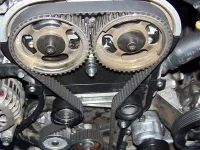
The timing system, like other components of the Seat Ateca engine, is essential for its operation. Since it consists of multiple parts rather than a single piece, the timing system can be considered a sub-assembly of the engine, with a control function.
The timing system, which includes the timing belt or chain, is responsible for coordinating the engine’s components. It transmits the movement from the crankshaft to the camshaft and actuates the injection/tandem pump and the water pump. It also synchronizes the timing of valve openings with the position of the piston or, if applicable, the injection timing (depending on the engine type).
In cases where the timing system is not replaced on time, and the belt or chain breaks, the crankshaft and camshaft will no longer function correctly; they become desynchronized. If the car is in motion when this happens, the situation is even more serious because all engine components will be affected. Typically, when this occurs, the remaining open valves bend, the piston head is damaged, and the cylinder head cracks.
What Does a Timing System Kit for Seat Ateca Contain?
A timing system kit consists of several parts, with the central component being the timing belt or chain, depending on the case. The timing belt is made from steel wires, synthetic material, and rubber, while the chain is made from steel or alloys. In the case of timing systems with gears, alloys capable of withstanding mechanical wear are used.

Another part of the kit is the tensioner pulleys, which are responsible for securing the belt or chain so that there are no weak points. If the belt or chain is not properly secured, not perfectly tensioned, or becomes slack, there is a risk of it jumping off the pulleys. On the other hand, if the belt or chain is excessively tight, it is not recommended because it can break due to the pressure.
Another component is the guide pulley, which helps guide the belt. The last part is the water pump. The water pump contributes to maintaining a constant coolant flow through the engine block. Water pumps used to be made only from metal, but over time, technology has evolved, and now they are made from plastic, which reduces production costs.
What Types of Timing Systems Exist for Seat Ateca?
In terms of components, we mentioned the belt, chain, and gears because there are several types of timing systems:
Timing Belt: This type of timing system is the most common. Most cars use timing belts, and it has been available in the automotive market since 1960. When properly maintained and replaced on time, it can be an excellent choice.
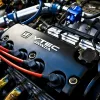
Timing Chain: This is the oldest type of timing system, dating back to 1890. It has continuously evolved and is still found in many car models today. Timing chains are advantageous because they are very durable. However, in recent times, even timing chains have become consumable and require more frequent servicing.
Timing Gears: This type of timing system is less common and is typically found in vehicles that require high durability, such as trucks and vans. Timing gears are very robust and durable. They are commonly found in engines produced by VW (vans) and VW in partnership with MAN, for example.
Which is More Advantageous: Timing Belt, Timing Chain, or Timing Gears?
Comparing the three types of timing systems is challenging because they serve different purposes. However, it can be said that:
Timing belts have the advantage of lower production costs. They are cheaper because they are made of rubber. Rubber is not only inexpensive but also quiet, effectively dampening noise.
Timing chains have the advantage of a long lifespan. They are more durable, although they are not as quiet as belts. In terms of service intervals, chains need to be replaced much less frequently than belts.
Timing gears are very noisy and are generally used in commercial vehicles. They prioritize durability and maintenance cost-efficiency. Unlike belts and chains, they rarely experience issues, and apart from the water pump, there are no components that require replacement.
How Often Should Each Type of Timing System be Replaced in an Seat Ateca?
It is crucial to adhere to the correct timing system service interval to avoid situations where it fails.
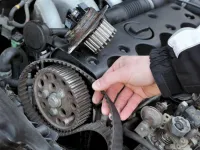
Timing belts should be replaced for the first time at 90,000 kilometers and then at 60,000 kilometers. If the car is not driven extensively, meaning it doesn’t cover many kilometers, the timing belt should be replaced every 5 years. When replacing the timing system, it’s ideal to use a complete kit, including the timing belt, guide pulleys, tensioners, water pump with a gasket, and other components. The tensioner pulleys also need replacement even though they have higher resistance than other components.
Timing chains in Seat Ateca should be checked at around 250,000 kilometers for older models. For newer models, it can be checked after passing 150,000 kilometers to ensure everything is in order. Currently, there are cases where even small-capacity petrol engines with timing chains can experience chain breakage and severe engine damage, so it’s crucial to check after 150,000 kilometers.
Timing gears are the most durable. Generally, only the water pump needs replacement at an interval of approximately 100,000 kilometers. In other respects, there are no components that cause problems or require replacement.
What Parts Should You Order When Timing System Replacement is Needed for Seat Ateca?
When replacing a timing belt, it’s ideal to replace the entire assembly, including the belt, guide pulleys, tensioners, water pump, and gasket. The common practice is to use a complete kit for the first replacement and then replace only the timing belt and water pump subsequently. However, the safest approach is to use a new, complete kit for every replacement.
For timing chain replacement, the chain, tensioner, gears (in certain models), and water pump should be replaced.
Our recommendation for those purchasing second-hand cars is to replace the timing system preventively using a complete kit. The costs of a timing system kit for an Seat Ateca range from 100 to 300 euros, a reasonable expense when compared to the costs of repairing engine damage due to timing system failure.
In the case of timing chains, it’s ideal to have a service check the system’s condition or listen to the engine when cold. A metallic sound from the engine when cold indicates that the timing chain needs replacement.
If you are planning to purchase a car and are unsure which type of timing system suits your driving habits, keep in mind that timing belts are better suited for those who don’t drive extensively, while timing chains are more cost-effective for those who cover long distances, with the costs being amortized over time.