- Calipers convert hydraulic pressure into clamping force on brake pads.
- Fixed calipers are rigid and have pistons on both sides.
- Floating calipers slide on guides with pistons on one side.
- Unused vehicles risk corrosion, seized pistons, pad sticking, and debris buildup.
Brake calipers are essential components of the braking system that convert hydraulic pressure into mechanical force to stop the vehicle. They clamp the brake pads against the discs, generating the friction needed to slow and stop the car. Although built to last for years, calipers can develop issues that affect safety and braking performance.
This guide explains the different types of calipers, common problems, when to replace them, and how to avoid issues in cars that sit unused for extended periods.
Types of brake calipers and their characteristics
Fixed calipers
Fixed calipers are mounted rigidly to the spindle or axle and do not move during braking. These calipers have pistons on both sides of the brake disc, which allows for uniform distribution of force across the disc surface.
Advantages of fixed calipers:
- Perfect distribution of braking force
- Superior performance and better pedal feel
- Quick and precise response to commands
- Increased durability and resistance to deformation
Disadvantages of fixed calipers:
- High production cost
- Heavier weight
- Technical complexity and costly maintenance
For these reasons, fixed calipers are predominantly found on premium and sports vehicles where braking performance is a priority.
Floating (sliding) calipers
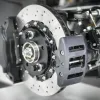
Floating calipers are mounted on guides and can move laterally relative to the brake disc. They have hydraulic pistons on only one side, while the opposite side moves via the guides to press the pad against the disc.
Advantages of floating calipers:
- Lower production cost
- Lighter weight
- Simple construction with fewer moving parts
- Easier maintenance and affordable spare parts
These characteristics make floating calipers the standard choice for most mass-produced vehicles, offering an optimal balance between performance and cost.
Common brake caliper problems
Although calipers are designed to operate trouble-free for long periods, they can develop various faults that affect vehicle safety.
Normal wear and replacement of components
Under normal use, the calipers themselves rarely require full replacement. Wear mainly concentrates on:
- Brake pads - wear due to friction with the discs
- Brake discs - wear and may develop grooves or distortions
- Pistons and seals - can deteriorate over time due to heat and corrosion
Problems specific to vehicles that sit unused
Vehicles that sit for long periods without use are prone to specific caliper issues:
Corrosion and rust:
- Pistons can rust and seize in their bores
- Floating caliper guides can corrode
- Metal components can deteriorate due to humidity
Pad sticking:
- Pads can stick to the discs due to corrosion
- The problem is more common on rear wheels
- Worsens when the vehicle is left with the parking brake engaged
Buildup of debris:
- Dust, leaves and other impurities can accumulate in calipers
- Can block the moving mechanisms
- Affects brake fluid circulation
Warning signs of brake caliper problems
Early recognition of symptoms helps prevent accidents and reduces repair costs:
Major symptoms:
- The car pulls to one side under braking
- The brake pedal becomes soft or spongy
- Unusual noises (squealing, grinding) during braking
- Steering wheel vibration when braking
- Noticeably longer stopping distance
Visual symptoms:
- Brake fluid leaks near the wheels
- Uneven wear of brake pads
- Discoloration of brake discs
- Visible corrosion on components
When brake calipers should be replaced
Replacement is necessary in the following situations:
Mechanical failures
- Piston sticking - due to corrosion or debris buildup
- Seal damage - causes brake fluid leaks and loss of pressure
- Cracks in the caliper body - extremely dangerous and require immediate replacement
- Wear of guides - in floating calipers, affects proper operation
Mileage and age
- Most modern calipers last about 150,000–200,000 km
- After 10–15 years, internal components can deteriorate even if they seem functional
- Vehicles used in severe conditions require more frequent inspections
Cost-effectiveness
- Sometimes repair costs nearly equal the cost of a full replacement
- For older vehicles, replacement can be more economical in the long term
Preventive maintenance of brake calipers
Proper maintenance can significantly extend caliper life:
For regularly used vehicles:
- Annual inspection at a specialized service
- Replace brake fluid at the recommended intervals
- Periodic cleaning of visible components
For vehicles not used frequently:
- Start and drive weekly for a few kilometers
- Avoid leaving the parking brake engaged for long periods
- Store in a dry place if possible
- Check the braking system more frequently
Conclusion
Brake calipers are critical components for vehicle safety that require attention and proper maintenance. While built to last many years, problems can arise, especially on vehicles that are not used frequently or in unfavorable environmental conditions.
Regular checks by a qualified specialist are essential, particularly when you notice symptoms such as the car pulling to one side during braking or unusual noises. The braking system can make the difference between life and death in an emergency, and investing in its proper maintenance is one of the most important decisions you can make as a vehicle owner.