- Bleeding removes air from the hydraulic brake system to restore performance
- Experts recommend brake bleeding every 2-3 years
- Signs include soft pedal, long travel, delayed response, or vibrations
- It should be done by a trained technician with proper equipment
Bleeding the brake system is a crucial maintenance operation that can make the difference between effective braking and a potentially dangerous situation. This technical procedure removes air trapped in the hydraulic brake circuit, restoring optimal system performance. Most specialists recommend performing it at regular intervals of 2-3 years to keep your brakes in peak working condition.
Why brake system bleeding is necessary?
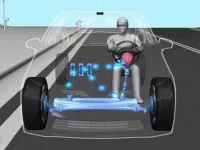
The hydraulic brake system works on the principle that liquids are incompressible, unlike gases. When you press the brake pedal, the force is transmitted through the brake fluid to the calipers, which press the pads onto the discs.
Over time, small amounts of air enter and remain in the brake system through various paths. This air is compressible, which means that part of the force applied to the pedal will be “spent” to compress the air rather than being transmitted completely to the brakes.
Signs that the brake system needs bleeding
- Soft brake pedal: It feels spongy and travels farther than usual
- Long pedal travel: You must press the pedal almost to the floor to achieve braking
- Delayed response: Braking does not start immediately when you press the pedal
- Unusual pedal vibrations during braking
In extreme cases, when large quantities of air accumulate in the [Brake system], it can fail completely, representing a major safety risk.
How air enters the brake system?
There are several ways air can enter the hydraulic circuit:
Main causes
-
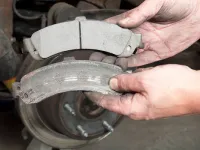
Advanced wear of components: [Worn brake pads] can introduce air into the [Brake system] through deterioration of seals
-
Incorrect component changes: An improper replacement of pads or other parts can allow air entry
-
Damaged hoses: A punctured, cracked, or poorly connected hose can let air into the system
-
Low brake fluid level: When the reservoir is partially depleted, air can be drawn into the system
-
Brake fluid aging: Old fluid can absorb moisture, which turns into vapor when heated

Bleeding the brake system procedure
Bleeding the brake system is not something you can perform at home without specialized equipment and experience. It is essential that an authorized specialist handles this work, as incorrect execution can compromise vehicle safety.
Equipment needed
- Specialized wrenches for bleed screws
- Transparent rubber hoses
- Containers for collecting used fluid
- New brake fluid of the type recommended by the manufacturer
- Systems pressure maintenance devices (optional)

System preparation:

- Check the brake fluid level in the reservoir and top up if necessary
- Identify bleed screws at each wheel (usually located behind the caliper)
Bleeding procedure for each wheel:
-
Positioning the hose: Behind the caliper there is a special screw that is loosened with a specialized wrench. A transparent rubber hose is placed over the loosened screw
-
Container preparation: The other end of the hose is placed into a jar containing fresh brake fluid, ensuring the end of the hose stays submerged in the fluid
-
Pumping the system: A second person repeatedly and rhythmically presses the brake pedal, creating pressure in the system
-
Air removal: The brake fluid will exit the system through the loosened screw, drawing air from the brake lines. The air will be visible as bubbles in the fluid in the container
-
Finishing: After no more air bubbles appear, the brake pedal is kept pressed while the screw is tightened back in place
-
Repeating the procedure: The process is repeated for each wheel, usually starting with the wheel farthest from the pump (right rear) and ending with the closest (left front)
Recommended order for bleeding
- Right rear
- Left rear
- Right front
- Left front
This order ensures complete removal of air from the entire system.
When should bleeding be done?
Preventive maintenance schedule
- At 2-3 years: Preventive bleeding to maintain optimal performance
- At 40,000-60,000 km: Depending on manufacturer recommendations
- When changing brake fluid: Always when the fluid is completely replaced
Situations that require immediate bleeding
- After any intervention on the braking system
- If the symptoms described above appear
- After a significant drop in brake fluid level
- If there is suspicion that air has entered the system
Importance of high-quality brake fluid
Brake fluid is not just a fluid for transmitting pressure – it must meet several critical functions:
- High boiling point: To withstand the high temperatures generated during braking
- Anti-corrosive properties: To protect metal components in the system
- Chemical stability: To avoid decomposition over time
- Compatibility with sealing materials: To prevent damage to seals in the system
Risks of improper bleeding
A poorly performed bleed can have serious consequences:
- Complete loss of braking: The most dangerous possible scenario
- Uneven braking: Differences in performance between wheels
- Premature wear of components: Due to uneven pressures
- System corrosion: If moisture is introduced
For these reasons, it is crucial to seek a specialized service for this operation.
Bleeding the brake system is an investment in your safety and in the safety of others on the road. Do not neglect this maintenance and always prioritize the technical condition of your vehicle’s brakes.
Photo sources: popularmechanics.com, hagerty.com