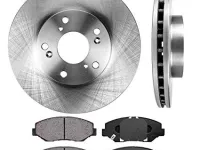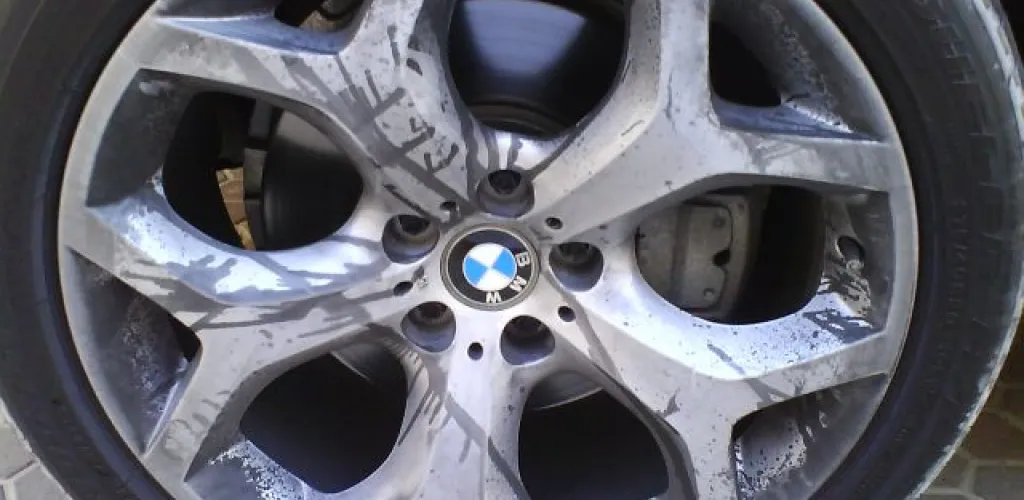
- Brake dust comes from friction as pads wear the discs.
- Metallic particles acquire electrostatic charge and stick to rims.
- Kevlar brake pads reduce dust but are costlier and may wear discs faster.
- Use specialized cleaners and ensure wheels are cool before cleaning to avoid damage.
Brake dust on wheels is a common sight for many car owners. This gray residue is not just an aesthetic issue — it is brake dust, a natural byproduct of how the braking system operates. Understanding its origin and the correct way to clean this dust is essential for keeping wheels in good condition and for safe driving.
In this article we explain what brake dust is, how it forms, and how to clean it effectively without damaging the rims.
What is brake dust and how it forms?
The braking system of a car works on the principle of controlled friction. When you press the brake pedal, two brake pads press against the brake disc on each wheel. This intense friction converts the vehicle’s kinetic energy into thermal energy, bringing the car to a stop.
During this friction process, both the brake pads and the brake discs wear down gradually. The material produced by this wear forms fine particles that make up brake dust.
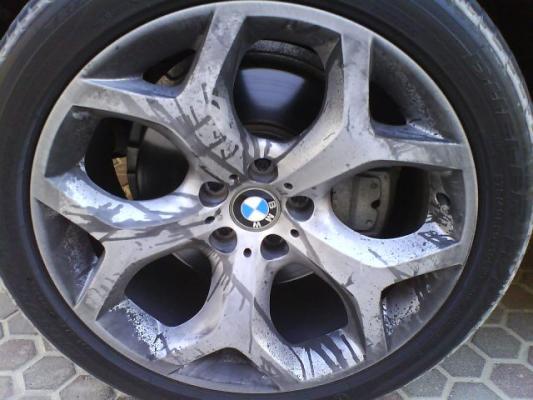
Chemical composition and electrostatic behavior
Brake dust is not just ordinary dust. Modern brake pads contain more than 30% metallic components in their composition, and brake discs are made from cast iron or carbon steel. The microscopic metallic particles produced by friction acquire an electrostatic charge that makes them adhere strongly to the metal surfaces of rims.
This electrostatic property explains why brake dust is so persistent and why it accumulates on the car’s wheels repeatedly, no matter how often you clean them.
Modern alternatives: Kevlar brake pads
In the aftermarket, there are brake pads made from Kevlar that do not contain metallic components in their composition. While these pads produce less dust, they also come with significant drawbacks:
- High cost - the price is considerably higher than that of conventional pads
- Accelerated wear of discs - Kevlar’s greater hardness can damage traditional brake discs
- Need for full replacement - for optimal performance, the discs must also be changed
Why is it important to clean brake dust?
Risks to wheels
Brake dust is not just an aesthetic problem. The microscopic metallic particles can have corrosive effects on aluminum or steel rims. If not regularly removed, this dust can cause:
- Localized corrosion - metallic particles can initiate oxidation processes
- Permanent stains - old deposits become increasingly difficult to remove
- Finishing damage - the wheel surface can be irreversibly affected
How to clean brake dust correctly
Specialized products
For effective cleaning of brake dust, it is recommended to use specialized products available commercially. These solutions are formulated specifically to dissolve metallic particles without damaging the wheel surface.
Step-by-step cleaning procedure
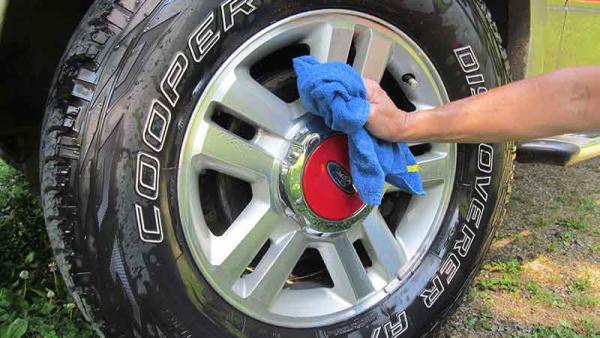
- Make sure the car is cool - never clean the wheels when the braking system is still hot
- Apply the specialized solution to the entire surface of the wheel
- Allow it to work for 3-5 minutes, following the manufacturer’s instructions
- Rinse thoroughly with water to remove dissolved residues
- Clean with a soft sponge to remove stubborn deposits
- Dry completely to avoid water spots
Safety precautions
Attention: Never spray water or cleaners on the braking system when it is hot. Thermal shock can cause cracks in brake discs or affect braking efficiency.
Recommended frequency
To keep wheels in optimal condition, brake dust should be cleaned:
- Weekly for intensive urban driving
- At every vehicle wash
- Immediately after long trips on mountain routes with frequent braking
Regularly cleaning brake dust not only maintains the vehicle’s appearance but also helps extend wheel life and preserve the car’s resale value.
Photo sources: autowise.com, splishsplashauto.com, shop.advanceautoparts.com