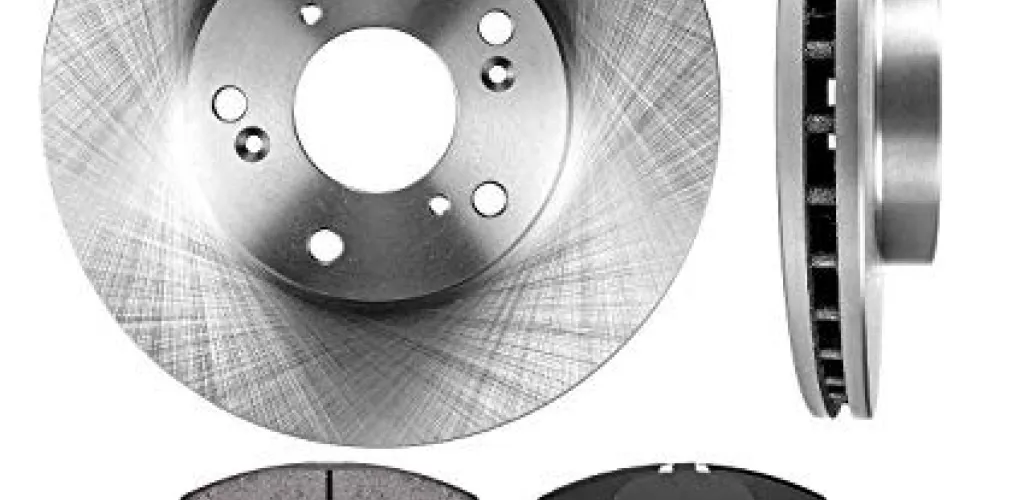
- Squealing brakes signal pad wear; grinding means possible metal-to-metal contact.
- Vibrations in brake pedal indicate warped discs or uneven pad wear.
- Slower stopping or a thump suggests pads are critically worn; replace immediately.
- Pad replacement costs: 200–600 RON; Disc replacement costs: 800–1200 RON.
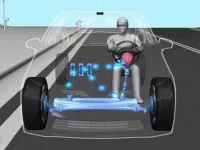
The vehicle’s braking system is one of the most safety-critical components, and brake pads and brake discs are the parts that wear most quickly. Understanding when to replace them and the costs involved can prevent dangerous situations and save lives.
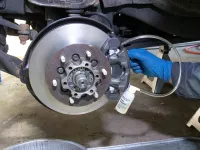
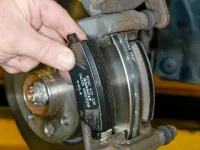
Brake discs and brake pads are essential components in any vehicle, because they allow the vehicle to slow down or stop every time you press the brake pedal. Each time you press the brake pedal, brake pads press into brake discs to stop the vehicle.
Brake Pad and Disc Wear Symptoms
Unusual noises when braking
Noise during braking will be the first sign you notice, whether for brake pads or brake discs. A squealing sound will appear as an early symptom — this is generated by wear indicators integrated in the pads. If you do not address the issue, a grinding noise will begin to be heard, indicating metal-to-metal contact.
It can be hard to determine the exact cause of this noise, whether it is the discs or the pads. A qualified mechanic would be able to provide a precise answer through visual inspection and measurements.
Vibrations in the brake pedal
If you feel vibrations when applying the brake, that means the discs are worn unevenly or thermally warped. These will often be irregular vibrations you feel in the brake pedal and in the car’s steering wheel.

You should also visually inspect the brake discs for unusual marks, cracks, or deformations — these are another sign that the braking system components need replacing.
Reduction in braking efficiency
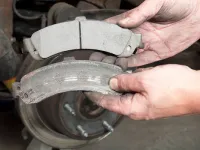
In addition to noises, worn brake pads will cause vibration in the brake pedal. This is similar to the vibration symptoms of worn brake discs, but you will notice the difference as you feel a sort of thump in your foot when braking.
If the car stops more slowly when you brake, that means the pads are critically worn, because worn pads slow the discs more slowly. You should replace the brake pads immediately to avoid the risk of an accident.
Average cost to replace brake pads and discs
The braking system components must be functional at all times, otherwise you put yourself and other road users at risk.
Factors influencing costs
Brake pads and brake discs are the most common braking system components that wear out. Replacing these components together can be substantial in cost, which is why some drivers neglect to do it — a highly dangerous decision.
Ultimately you will have no choice, because you will have trouble stopping the vehicle. This can lead to an accident that could injure you or others.
Prices for brake pads
Average cost to replace brake pads is between 200 RON and 600 RON, depending on several factors:
- Vehicle model and make
- Type of pads (organic, semi-metallic, ceramic)
- Installation complexity
- Region and service chosen
Prices for brake discs
Average cost to replace brake discs is between 800 RON and 1200 RON, just like for brake pads, and here factors include:
- Vehicle model and disc size
- Type of discs (ventilated, drilled, grooved)
- Need for resurfacing or full replacement
- Labor specific to the model
When to replace components together
For optimal operation and maximum durability, it is recommended to replace brake pads and discs simultaneously when:
- The discs are worn below the minimum thickness
- They show cracks or distortions that cannot be rectified
- New pads do not fit the worn surface of the old discs
This approach, although more expensive initially, ensures optimal braking performance and can prevent premature wear of the new components.
Source photo: amazon.com, knowhow.napaonline.com