- A clogged air filter raises fuel consumption and can cause engine damage.
- Indicators include higher fuel use, hard starting, misfires, and check engine light.
- Consequences include rich fuel mixture and deposits on valves and pistons.
- The air filter cleans air before intake, supporting efficient combustion.
The air filter is an essential component in the intake system of any car, playing a crucial role in filtering the air that enters the combustion chamber. Without this protection, dust particles, pollen, and other impurities from the atmosphere would enter the engine directly, causing premature wear and costly failures.
A clogged air filter can trigger a range of operating problems, from increased fuel consumption to engine damage. Therefore, understanding the optimal moment to change it is fundamental for maintaining the vehicle’s performance and longevity.
Role and Function of the Air Filter
As mentioned above, the filter cleans the air that enters the carburetor in cars equipped with a carburetor or at the throttle body in more modern machines. It is usually made from special paper, cotton, or foam and filters the air before it reaches the intake gallery.
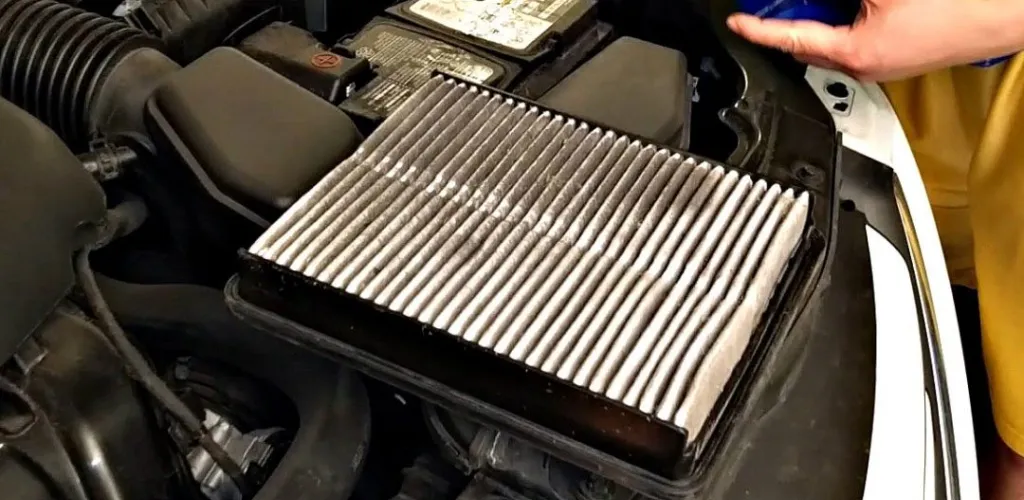
Often, this filter becomes clogged very quickly due to impurities in the air, and residues can significantly reduce the vehicle’s performance. Therefore, the air filter is one of the most frequently replaced consumables, requiring regular checks and replacement at each service. A missing filter can have serious consequences, which can sometimes lead to engine failure.

Air Filter Positioning
The air filter is always placed somewhere it can draw in the air necessary for the vehicle to operate. It is typically located at the front of the car, or on the side of the engine, or even down near the bumper. In new factory-fresh cars, the air filter is generally placed near the battery, behind the radiator.
This strategic location allows access to clean, cool air, essential for optimal fuel burning in the cylinders.
Signs the Air Filter Needs Replacement
There are a few indicators that help us determine when the air filter must be changed:
- Higher fuel consumption - you’re using more fuel and refueling more often
- Starting problems - Starting is harder, the engine sounds like it’s running on three pistons, or the engine begins to misfire
- Check engine light - the check engine light comes on
- Decreased performance - generally, if you feel the car’s performance dropping

Why These Problems Occur
A fire needs oxygen to burn. The same goes for the engine, which needs oxygen to burn the fuel in the tank. The air filter helps ensure this mixture remains in correct proportions.
As the filter becomes clogged, oxygen becomes rarer, and fuel takes its place in proportion. This leads to the issues described above, and over time the engine can deteriorate.
How does the engine deteriorate? As more fuel is burned, it creates fine carbon deposits that accumulate not only on the valves but can also damage the pistons.
Consequences of a Clogged Filter
A completely obstructed air filter can cause:
- Rich mixture - more fuel than oxygen in the combustion chamber
- Carbon deposits - on valves, pistons, and in the combustion chamber
- Premature wear - of engine components
- Increased pollutant emissions - incomplete combustion of fuel
- Reduction in engine power - up to 10% of nominal power
Air Filter Replacement Process
Any of the above symptoms should lead to replacing the filter, which is a very simple operation. Take the car to a service and ask a mechanic; the replacement won’t take more than 5 minutes.
Replacement can also be done by the owner, as it is one of the simplest maintenance tasks. You only need to open the filter housing and replace the old filter element with a new one.

Air Filter Replacement Interval
There is no universal term or standard interval. It can vary for each car, depending on where it is used (city vs. countryside), and the kilometers it covers.
Factors Influencing Lifespan
Driving conditions:
- Dusty or unpaved roads – more frequent replacement
- Driving in the city with heavy traffic – higher pollution
- Season – spring and summer require more frequent checks
General recommendations:
- According to the car’s manual, replacement should be done at every service
- Check every 10,000-15,000 km under normal conditions
- Every 5,000-8,000 km under severe conditions
- Monthly visual inspection to detect clogging
Check during service visits, but also pay attention in between if replacement is needed. A clean filter means a healthy engine and optimal long-term performance.
Photo sources: allstate.com, telesiscollision.com, midwesttransmission.net