- Installing a larger battery can cause shorts and fire hazards if it doesn’t fit.
- Battery group size defines fit, terminal layout, and mounting; match it exactly.
- Check space: clearance, height, terminal reach, and secure mounting before swap.
- Starting issues usually come from defective cells, sulfated batteries, worn starters.
Choosing the right battery size is essential for optimal vehicle operation. Many owners wonder if they can install a larger battery to fix starting problems or to power more accessories. In this article, we explore the technical and practical aspects of this decision.
Space under the hood is limited in most modern cars. Manufacturers try to minimize battery volume as much as possible to optimize space and reduce vehicle weight. Attempting to install a battery larger than the manufacturer’s specifications can lead to serious problems.
If the battery protrudes beyond the allocated space, it can come into contact with other metal components and cause a short circuit. This not only can damage the battery, but it can also affect the car’s electrical system or cause a fire. Therefore, respecting the recommended dimensions is essential for safety.
Under-hood space limitations
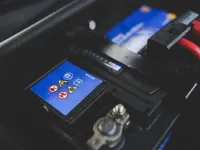
On the top of each battery is printed a group size. This code defines the physical properties of the battery recommended for your vehicle:
- General shape of the battery case
- Terminal layout (positive and negative)
- External dimensions (length, width, height)
- Terminal type (top, side)
The group size ensures that the battery will fit correctly in its dedicated tray and that the cables will reach the terminals without strain. Even if you find a higher-capacity battery, if the group size does not match, installation can be impossible or dangerous.
Decoding the battery group size
Before considering a larger battery, you must measure carefully:
- Free space on all sides - at least 1–2 cm away from any metal component
- Maximum height - also consider the possibility of closing the hood
- Terminal placement - existing cables must reach without tension
- Mounting type - the mounting system must be compatible
A battery that is not properly secured can vibrate during driving, which significantly reduces its life and can cause weak connections.
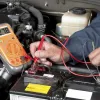
Battery capacity vs. starting problems
The size of the battery recommended by the manufacturer is always calculated with a safety margin above what is strictly necessary to start the engine. If you experience starting problems, the cause is rarely insufficient battery capacity.
Common problems that cause starting difficulties:
- Defective cell in the battery - dramatically reduces current delivery capability
- Old or sulfated battery - internal resistance increases
- Worn starter motor - draws more current than specifications
- Corroded connections - increases circuit resistance
- Defective alternator - does not charge the battery properly
- Parasite loads - drain the battery when the car is off
Diagnosing a defective cell
A standard 12V car battery has six cells, each producing about 2.1V. As the battery wears, usually one cell goes into short circuit or fails to produce voltage.
Signs of a defective cell:

- The battery reads over 12V on test (12.6V or more when fully charged)
- Starting amperage drops dramatically - this is the key indicator
- The battery discharges rapidly even when not in use
- Voltage drops abruptly under load
Although a voltmeter may show acceptable voltage, a defective cell reduces the battery’s ability to deliver the high current required for starting (200–400A or more, depending on the engine). Therefore, testing with a professional load tester is essential for accurate diagnosis.
Decoding the production code
On the side of the battery there is a code consisting of a letter followed by two or three digits. This code indicates the production date:
Format: Month (letter) + Day + Year (last digits)
- First letter = production month (A = January, B = February, up to L = December)
- Following digits = day and year
For example, the code C1523 means:
- C = March
- 15 = day 15
- 23 = year 2023
This code is important to determine the battery’s age. A battery stored for a long time before sale may already have reduced capacity. If you buy a battery with a 48-month warranty, check the code to ensure it wasn’t produced a long time ago.
When a higher-capacity battery is justified
There are situations where a higher-capacity battery is not only beneficial but necessary:
1. High-power audio system
- Powerful amplifiers draw a lot of current
- Subwoofers and systems with multiple speakers
- Risk of rapid discharge of a standard battery
2. Additional electrical accessories
- Additional lighting systems (LED bars, projectors)
- Car fridges
- Inverters to power devices at 220V
- Camping systems or professional equipment
3. Modified vehicles
- Higher compression engines
- Uprated electric motors
- Additional starting systems
4. Extreme operating conditions
- Frequent starts (taxis, courier services)
- Very low temperatures
- Long periods of parking
Technical parameters to check
When choosing a bigger battery, don’t just look at Ah (ampere-hours). Also check:
Cold Cranking Amps (CCA)
- The current the battery can deliver at -18°C for 30 seconds
- More important than capacity for starting the engine
- Must be at least equal to the manufacturer’s specifications
Reserve Capacity (RC)
- The time in minutes the battery can deliver 25A at 25°C
- Indicator of the ability to power consumers when the alternator is not functioning
Internal resistance
- Increases with battery age
- Affects the ability to deliver high current
Practical recommendations
Before installing a bigger battery:
- Consult the vehicle manual for exact specifications
- Check the charging system - the alternator must be able to charge the bigger battery
- Measure the available space carefully
- Check weight - a bigger battery is heavier and may require improved mounting
- Consider technology - AGM or gel batteries can offer more power in the same space
Alternatives to a bigger battery:
- AGM battery - higher capacity in the same size
- Lithium battery - much lighter, but more expensive
- Start capacitor - helps starting the engine
- Second battery - for accessories, separate from the starting battery
Conclusion
In most cases, a bigger battery is not necessary and can cause mounting and safety issues. The standard manufacturer-recommended size is calculated to cover the vehicle’s needs with a suitable safety margin.
If you have starting problems, first check the condition of the existing battery, electrical connections, and the charging system. A bigger battery will not fix issues caused by a defective alternator or worn starter motor.
Only when adding significantly more electrical equipment is a higher-capacity battery justified, and even then you must ensure it fits within the available space and that the alternator can handle charging it.