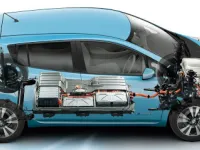
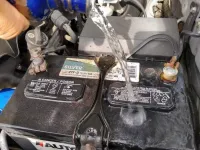
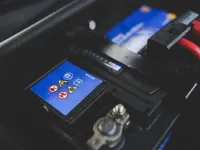
- Replacement cost ranges 4,000–25,000 lei, depending on model and labor.
- Lithium-ion packs offer higher energy density but higher replacement costs.
- Toyota Prius: first gen ~20,000 lei; later gens cheaper by 8–10k.
- Toyota failure rate ~1%; replacement cost 8,000–12,000 lei; lifespan 8–10 years or 150k–200k km.
Hybrid vehicles are gaining popularity on the Romanian auto market as an efficient solution to reduce fuel consumption. However, one of the main concerns for potential buyers remains the cost of replacing the hybrid battery and its expected lifespan.
Battery management in hybrids is a much more advanced technology than that used in ordinary electronic devices. Unlike laptops or smartphones, hybrid battery management systems provide precise information about charge level and remaining range, eliminating the risk of suddenly running out of energy.
Factors influencing the cost of replacing the battery
Battery types and technologies
In the last decade, the auto industry shifted from nickel-metal hydride (NiMH) batteries to lithium-ion technology. This transition brings significant improvements in performance and durability, but also higher replacement costs.
Batteries with lithium-ion offer:
- Higher energy density
- Lower weight
- Longer lifespan
- Improved charging efficiency
Current market prices
The cost of replacing a hybrid battery varies considerably depending on several factors:
- Price range: between 4,000 and 25,000 lei
- Vehicle model: premium cars have more expensive batteries
- Manufacturing year: newer generations benefit from lower costs
- Labor: represents a significant component of the total cost
Price evolution by generations
Toyota Prius case study
Toyota Prius, one of the pioneers of hybrid technology, provides an interesting perspective on cost evolution:
First generation:
- Battery replacement cost: approximately 20,000 lei
- Technology in development
- High production costs
Second generation:
- Cost reduction of 8,000-9,000 lei compared to the first generation
- Significant technological improvements
- Optimization of production processes
Third generation:
- 10,000 lei cheaper than the first generation
- Benefits of economies of scale
- Maturation of technology
Thermal management systems
Modern battery packs, such as the one manufactured by Sanyo for the Ford Escape Hybrid in 2004, include advanced cooling systems that maintain the optimal temperature for maximum performance and extended life.
Reliability and failure rate
Reliability statistics
Official data from manufacturers indicate remarkable reliability for hybrid batteries:

- Toyota failure rate: only 1%, with a downward trend
- Average replacement cost: between 8,000 and 12,000 lei
- Lifespan: generally over 8-10 years or 150,000-200,000 km
Factors affecting durability
Manufacturers pay special attention to several critical aspects:
- State of charge management: avoiding full discharges
- Temperature control: maintaining within the optimal operating range
- Charging cycles: optimized for longevity
- Real-time monitoring: early detection of issues
Future outlook
Reducing costs
With the ambitious plans of manufacturers—Toyota aims to produce 1 million hybrids annually—significant reductions in battery replacement costs are anticipated. Economies of scale and technological improvements will contribute to this trend.
Technological developments
The auto industry is heavily investing in:
- New chemistries for batteries: the promise of lower costs
- Improved energy density: smaller and more efficient batteries
- Advanced management systems: extending lifespan
- Recycling processes: reducing environmental impact
Recommendations for hybrid vehicle owners
To maximize battery lifespan and minimize long-term costs:
- Follow the maintenance schedule recommended by the manufacturer
- Avoid prolonged exposure to extreme temperatures
- Use recommended charging stations
- Regularly monitor the battery status via the diagnostic system
- Consult authorized specialists for any anomaly
In conclusion, while the cost of replacing a hybrid battery may seem high, increased reliability and the downward trend in prices make hybrid vehicles an increasingly attractive option for Romanian consumers.